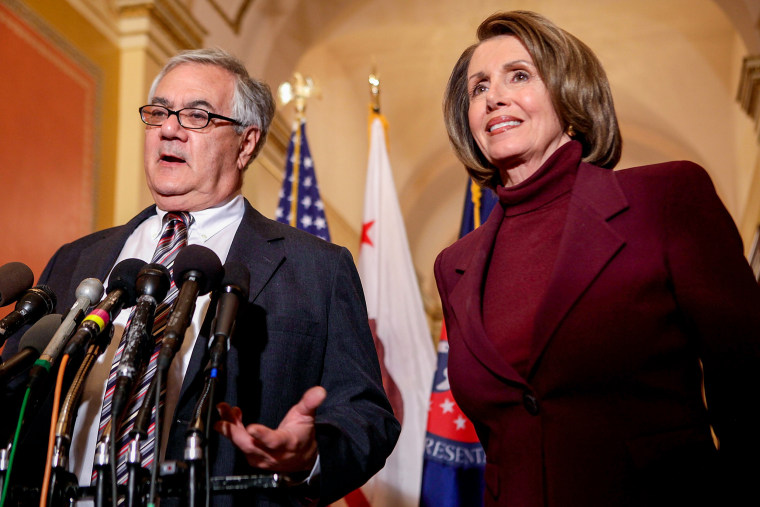
Barney Frank’s journey in politics began when he left Harvard to serve as chief of staff to Democratic Boston Mayor Kevin White from 1968 to 1971, a period marked by racial tension in the city. Following this, he worked as a staff assistant for Rep. Michael F. Harrington, representing Massachusetts’ 6th Congressional District.
In 1972, Frank transitioned to electoral politics, winning a seat in the Massachusetts Legislature. While accumulating experience, he earned his J.D. from Harvard Law School. His political ambitions led him to successfully vie for the U.S. House, narrowly winning the seat for the 4th Congressional District in 1980.
Frank’s first electoral victory in the U.S. House was tight with him capturing just under 52% of the vote. However, his subsequent re-election campaigns saw him winning comfortably 15 times, establishing himself as a prominent liberal figure in Congress.
In 1987, during his fourth term, Frank became the first member of Congress to voluntarily come out as gay, famously stating in an interview, “If you ask the direct question: ‘Are you gay?’ the answer is yes. So what?”
His career faced turbulence in 1989 when reports emerged of his relationship with a male sex worker who worked for him as a personal aide. Frank admitted to paying Steve Gobie for sex and later fired him upon discovering Gobie’s involvement in illicit activities at Frank’s apartment.
In 1990, despite facing a vote to reprimand him in the House (408-18), Frank continued to maintain the support of his constituents, winning re-election with a substantial 66% vote share.
Throughout his tenure, Frank championed progressive causes, advocating for abortion rights, environmental protections, anti-discrimination, and LGBTQ equality. He played a critical role in the repeal of “don’t ask, don’t tell” in the U.S. armed forces.
Frank’s legislative contributions include the Dodd–Frank Wall Street Reform and Consumer Protection Act, aimed at stabilizing financial markets post-2008 collapse. Although the act had opponents both on the left and right, it sought to protect consumers and curb the notion of “too big to fail” institutions.
His support for Fannie Mae and Freddie Mac, which facilitated mortgages for low-income customers, faced criticism during the housing crisis.
In 2010, Frank overcame a significant challenge from Republican tea party candidate Sean Bielat, winning with 54% of the vote. He chose not to seek re-election in 2012, succeeded by Joe Kennedy III.
That same year, Frank married Jim Ready. Reflecting on marriage, he remarked, “Life really hasn’t changed day to day, but I still feel that afterglow from the ceremony.”
Frank released an autobiography, “Frank: A Life in Politics from the Great Society to Same-Sex Marriage.” In 2015, when the Supreme Court legalized same-sex marriage nationwide, Frank tweeted “#lovewins.”
He is survived by his husband, Jim Ready, siblings Ann Lewis and David Frank, and his legacy in political advocacy continues to be remembered.
 Concerns Over Changes to Voter-Registration Form for Americans Abroad
  Trump’s 2024 Campaign Targets Young Men Through Cryptocurrency
  Trump’s White House Visitor Center Proposal Gains Bipartisan Support
  State Department Simplifies Passport Process with Online Applications
 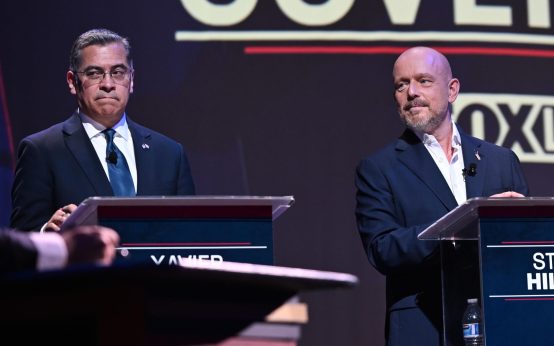 Becerra and Hilton Clash in California Gubernatorial Debate
  California Voters to Decide on $7.5 Billion State Research Fund