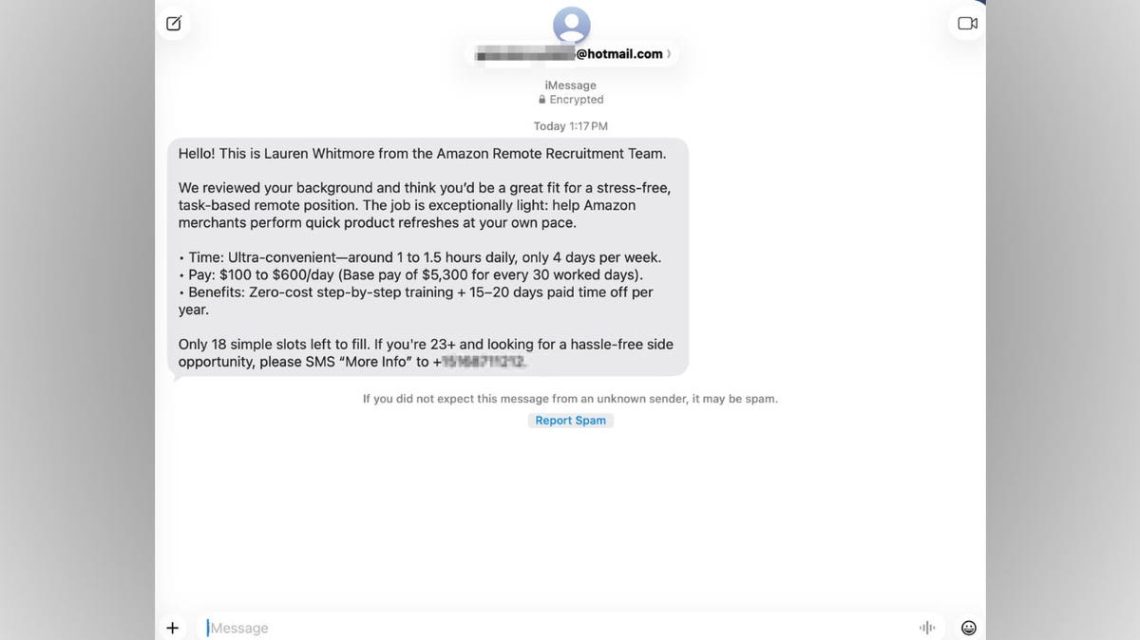
Imagine receiving a text message about a remote Amazon job you never applied for. The job supposedly takes an hour a day and offers pay up to $600. Tempting, right?
This message claims to originate from ‘Lauren Whitmore from the Amazon Remote Recruitment Team,’ indicating that Amazon merchants need assistance with quick ‘product refreshes.’ It sounds enticing, but it is a scam. Here’s a breakdown of how this Amazon job scam operates, warning signs to be cautious of, and steps to defend yourself.
Understanding the Amazon Job Scam
This scam message suggests your ‘background’ makes the job a perfect fit, yet there’s no mention of how they identified you. The suspicious job claims include:
- 1 to 1.5 hours of work daily
- Work four days weekly
- Daily pay from $100 to $600
- $5,300 base for every 30 days of work
- Free training
- 15 to 20 days of paid time off
- Only 18 open positions
The scheme instructs you to send a text for more info. Several warning signs should prompt skepticism.
Evidence of Similar Scams
A July 2026 BBB Scam Tracker report described an almost identical Amazon scam. Common themes include 60 to 90 minutes of work, four days a week, and the same base-pay figure.
Both scams insist there are only 18 positions and advise texting for more information, raising more red flags. Details change, but the message remains familiar.
Amazon’s Response and Recommendations
Amazon acknowledges these impersonation attempts. The company encourages reporting these scams to help protect customers and refer scams to authorities. Their guidance stresses not engaging with suspicious messages. Always verify job offers through Amazon’s official channels.
Shifting Strategies in Scam Tactics
Scammers persist by making minor tweaks, such as changing recruiter names or contact details. Yet, promises of easy remote work and high pay remain consistent.
Spotting Red Flags in Scam Messages
Here are notable signs in such scam texts:
- The message comes from an unprofessional email, like Hotmail.
- No application or résumé was submitted.
- Pay is overly generous for minimal effort.
- The job description lacks clarity.
- Claims of limited positions create urgency.
- An unrelated number is provided for further action.
- The minimum age requirement seems arbitrary.
Risks of Responding to Fake Job Texts
Replying could lead to requests for personal information, such as Social Security or banking details. Sometimes, victims may see earnings accumulate online, only to find out they need to deposit money to withdraw them. Once money is sent, retrieval becomes difficult.
Protecting Yourself from Job Scams
- Verify positions directly at Amazon’s official site, amazon.jobs.
- Ignore and report any suspicious offers.
- Safeguard personal information—do not provide sensitive data to unsolicited contacts.
- Employ robust antivirus tools to guard against potential threats.
- Consider data removal services to limit available personal info.
- Never pay to get hired; legitimate employers do not charge for employment prospects.
- Report suspicious Amazon recruitment scams to help Amazon and law enforcement tackle the offenders.
- Use spam reporting tools available on your device to manage unwanted texts.
Remain vigilant. Many scammers alter recruiter identities while maintaining appealing job offers. Always verify the authenticity of opportunities through official company channels to avoid falling victim to scams.
For further tips on technology safety and scam prevention, sign up for tech alerts and advice at CyberGuy.com.
 Addressing the Growing Threat of AI-powered Scams and Deepfakes
  President Trump Unveils New Super Intelligence Force
  Challenges in Managing Advanced AI Models
  The Risky Foundations of AI’s Economic Impact
  Meta’s Muse AI Assistant Sparks Cybersecurity Concerns
  Keurig Dr Pepper Launches Compostable Coffee Pods to Reduce Waste