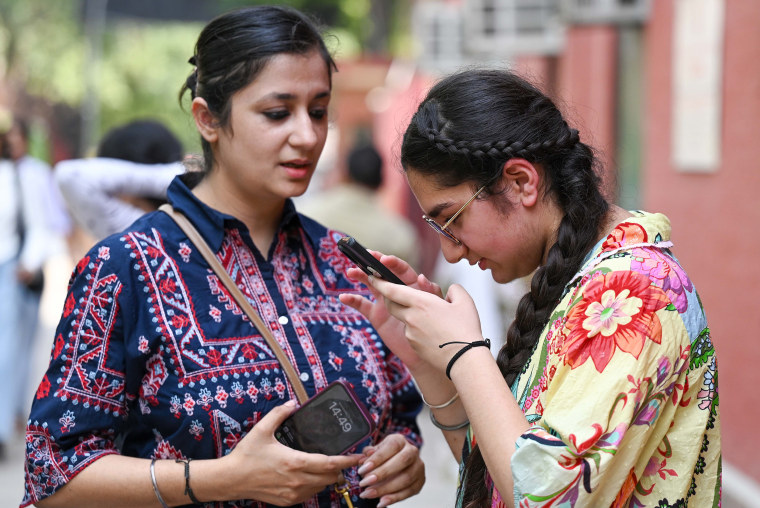
Ridhvi Saxena, 18, was prepared to become a cardiologist after three years of dedicated study. Her plans were disrupted when India’s testing agency announced that the NEET exam she took on May 3 was compromised by leaks. Candidates must retake the exam. Authorities responded by temporarily banning the Telegram messaging app, linked to cheating rackets selling leaked papers.
“I feel cheated,” Saxena said. “I was excited for college, but now I’m back where I started, feeling burnt out.” She is uncertain about her performance on the retest scheduled for Sunday.
The NEET exam is a critical test for entry into India’s medical schools, taken by over 2 million students. It is known for its rigor, demanding intense preparation in physics, chemistry, and biology, much like the engineering entrance exam, JEE.
Students who invested years of study were devastated by the decision to nullify their results. Saxena expressed her frustration, saying, “You sacrifice family time and remain confined with books for years, only to be let down.”
The Central Bureau of Investigation is looking into the leaked exam papers. Meanwhile, the Ministry of Electronics and Information Technology imposed a Telegram ban until June 22, citing concerns over national integrity.
Despite the crackdown, Telegram founder, Pavel Durov, argued that the ban unfairly affects 150 million users in India instead of targeting those leaking exam materials. He noted, “The leaks simply moved elsewhere.”
On Friday, the Delhi High Court denied Telegram’s appeal against the ban, raising concerns among digital rights activists. They worry that government actions increasingly suppress online dissent by removing social media content and blocking accounts.
The Internet Freedom Foundation warned on X that Telegram’s ban could have lasting effects on internet freedom beyond this incident.
India’s education system faced other problems this year. The high school exam board, CBSE, encountered criticism over technical issues in electronic marking. Protests erupted nationwide, led by the Cockroach Janta Party, demanding the resignation of Education Minister Dharmendra Pradhan.
While officials hope banning Telegram reduces embarrassment, students remain skeptical. With VPNs, they can still access Telegram, questioning if authorities address the security lapses effectively. The NEET exam leaks occurred previously in 2024 without prompting a retest.
Proton VPN reported a 120% increase in daily registrations from India following the ban, as noted by the company’s general manager, David Peterson.
“It feels like a temporary fix, not solving the core issues,” said Anoop Girijesh, another NEET taker. “It’s more about silencing complaints than fixing the leaks.”
The National Testing Agency reassured students on X about robust safeguards for the retest. Girijesh remains skeptical. “We are expected to perform well, but we constantly question the process’s security.”
The National Testing Agency and Telegram did not provide further comments.
 Legal Challenge Against School Funding Inequalities in West Virginia
  Potential Changes Loom for School Voucher Programs
  Regents Exam Elimination Raises Concerns Over Student and School Accountability
  Education Funding Disparities in West Virginia
  Defense Secretary Emerges as Key Player in the Trump Administration
  Hegseth’s Vision for the Military: Balancing Tradition and Innovation