Challenges in Managing Chemical Tank Overheating
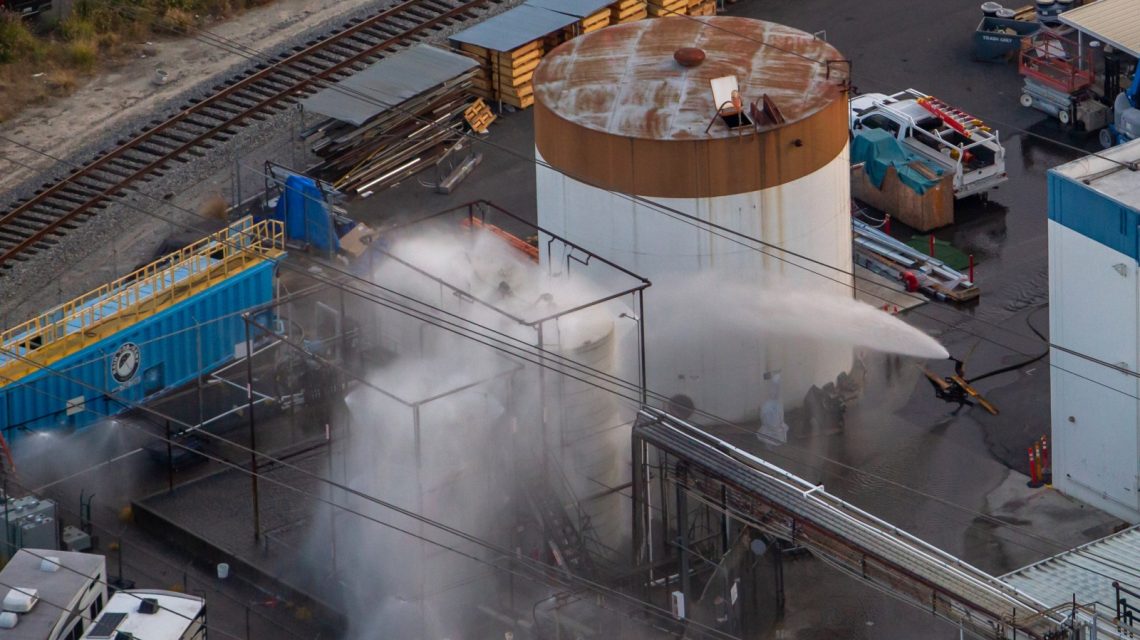
In Southern California, a chemical tank holding methyl methacrylate has caused a prolonged emergency. The tank’s internal temperature has reached at least 100 degrees Fahrenheit, worrying officials about a possible explosion. Fire crews in Garden Grove are working hard to stabilize the situation.
The tank’s temperature peaked on Sunday, raising fears of a thermal runaway reaction. This reaction could lead to a blast. To address the risk, over 40,000 people have evacuated Garden Grove and nearby cities. The threat remains serious, but two developments may help mitigate the risk.
Structural Breakthrough: Pressure Relief
An essential development was a crack discovered in the tank. Orange County Fire Authority (OCFA) crews found this crack during a high-risk inspection. This crack may act as a pressure-release valve, reducing internal pressure.
Interim Fire Chief T.J. McGovern highlighted the impact of this finding. It could change the response strategy to prevent a catastrophic failure. Pressurized tanks can rupture if there’s no pressure escape. However, a crack allows gradual pressure reduction.
The OCFA clarified reports of multiple cracks. There is one known crack in the tank, with peeling weather stripping but no active leak. Continuous monitoring confirms the absence of chemical leaks.
Weather Influence: Aiding Risk Reduction
Another supportive factor is the weather. Forecasts show temperatures in the low 70s during the day and 50s overnight. Mild weather helps slow heat build-up in the tank. Light winds minimize the spread of hazardous vapors.
Firefighters focus on cooling the tank using water, effective without extreme heat or environmental fluctuations. Weather forecasts predict wind gusts near Garden Grove may reach 20 mph, requiring ongoing monitoring.
Garden Grove Incident: A Complex Emergency
The emergency began on May 21 with overheating and vapor venting from a fault in a GKN Aerospace facility’s tank. Methyl methacrylate is flammable and releases toxic fumes. Crews face challenges due to a faulty valve preventing tank drainage.
Authorities recognize the incident as a complex hazardous materials emergency. Continuous monitoring and coordination among multiple agencies are crucial. Over 40,000 evacuated residents are facing disruption, with difficulties in accessing essentials.
Federal Engagement: Response by the White House
The federal response includes engagement from the Trump administration. The U.S. EPA integrated air monitoring at multiple locations around the area. FEMA deployed a Liaison Officer and a team for contingency planning.
EPA reports non-detect readings from air monitors in the community and works with local authorities. The President’s administration stays engaged, providing federal support.
The governor of California declared a state of emergency and requested federal aid. Resources aim to stabilize the situation and assist displaced residents.
Future Uncertainty: Continuous Monitoring Needed
Despite promising signs of reduced pressure, danger persists. Uncertain reaction status inside the tank and limited equipment capabilities maintain evacuation orders. Crews continue around-the-clock operations to assess pressure levels and prepare for possible outcomes.
 Swiss Glaciers Show Effects of Ice Loss Amid Global Warming
  Climate-Resistant Rock Glaciers: Hidden Water Resources
  TikTok Couple Arrested for Alleged Arson in West Virginia
  21-Year-Old University of Georgia Student Survives Eight-Story Fall
  Texas Authorities Arrest Suspect Over Potential Capitol Attack
  Senators Reach Bipartisan Agreement on Permitting Reform