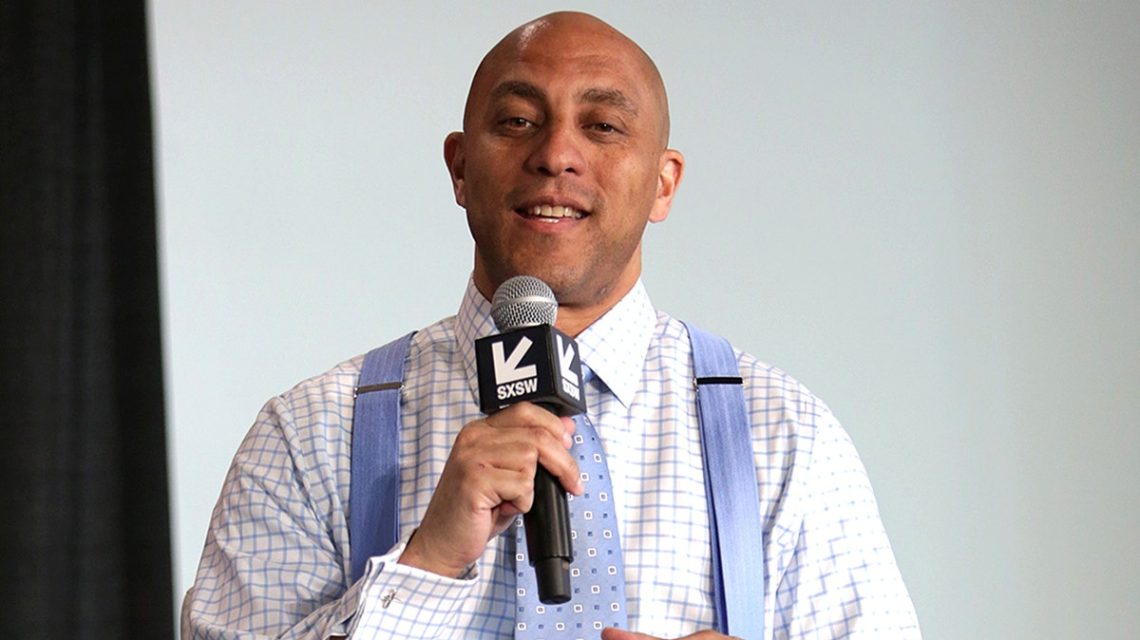
Hasan Kwame Jeffries, a history professor at Ohio State University and sibling of House Minority Leader Hakeem Jeffries, recently echoed some voices on the left advocating aggressive resistance against the current system. He suggested emulating John Brown, who notoriously killed white farmers supporting slavery. This stance has garnered attention as others similarly promote Brown’s methods as a model for contemporary action.
In a social media post highlighted by Libs of TikTok, Jeffries stated, “John Brown understood that the way to free Americans from the scourge of White supremacy was to get rid of White supremacists by any means necessary. He was right then. He is right now.” Such messages are interpreted by many as supporting political violence, adding to the growing climate of societal rage.
Other academics have previously praised Brown as a template for battling racism and other societal issues. Stacey Patton, a journalism professor at Howard University, discussed Brown’s approach in her blog “John Brown Didn’t Ask Enslaved People How to Be A Good White Ally,” urging White liberals to reconsider their roles.
“It’s a request to be taught, forgiven, and reassured, again and again. It’s another round of homework assigned to the wounded… It’s exhausting because it’s still a form of emotional outsourcing.”
Brown’s history includes his role in “Bleeding Kansas” and the Pottawatomie massacre in 1856, where he and others executed Kansas settlers suspected of supporting slavery. Captured during his raid on Harpers Ferry, Brown was eventually hanged. Some view him as a catalyst for the Civil War, despite his methods involving murder.
Frederick Douglass had mixed feelings about Brown, acknowledging his impact as a spark for freedom yet criticizing his violent methods. Douglass believed political efforts, rather than violence, should bring about change.
Interestingly, Abraham Lincoln also condemned Brown, suggesting he acted as an “insane zealot.” Lincoln compared Brown’s actions to historical assassination attempts, underscoring the isolation of such extreme measures.
Patton, along with Jeffries, appears to argue for the relevance of Brown’s methods. Patton emphasized Brown’s decision to confront racism decisively, even violently. She highlighted the importance of drastic action for substantial change.
While John Brown rejected nonviolent change, Professor Jeffries’s encouragement to follow Brown sparks debate on ethical and effective methods for societal transformation. His silence on his brother’s actions adds complexity to this discourse.
Discussion on Brown’s legacy and its implications today continues, touching on themes of justice and political power through historical precedent. The rise of extreme rhetoric, reflecting John Brown’s and others’ philosophies, remains a contentious topic.
 Democratic Hopes and Historical Warnings in 2026 Senate Race
  Republicans Face Challenges Amidst Cost of Living Concerns
  A Different Kind of Fall for Congress This Year
  Cornel West and Sean Hannity Discuss Differences on Podcast
  Trump Unveils AI-Powered America.gov Platform
  Cornell University to Investigate Handling of Alleged Assault Case