As of Friday, Cuba’s power grid experienced yet another collapse, affecting millions of residents across the island. This marks at least the sixth such incident since the U.S. imposed fuel restrictions in January. The Ministry of Energy and Mines confirmed the islandwide power outage, noting that efforts to restore service had begun.
Many Cubans are struggling with the persistent blackouts. Mercedes Rodriguez, a 60-year-old resident of Havana, expressed her frustration, stating, “No one can stand these constant blackouts. There isn’t enough food, there’s no water, there’s no electricity.” The blackout conditions have compounded the island’s existing hardships.
Authorities cited a transmission line failure in western Cuba, impacting areas as far as Matanzas province, and disconnecting the eastern regions. Additionally, weather conditions worsened the grid’s instability, as reported by the official newspaper Granma.
By nightfall, power had been restored to approximately 5% of users in Havana, which has around 862,000 customers. Efforts include creating small power-distribution “micro-islands” in Camagüey, Pinar del Río, and Granma provinces. Essential services for hospitals and emergency facilities are steadily reactivating.
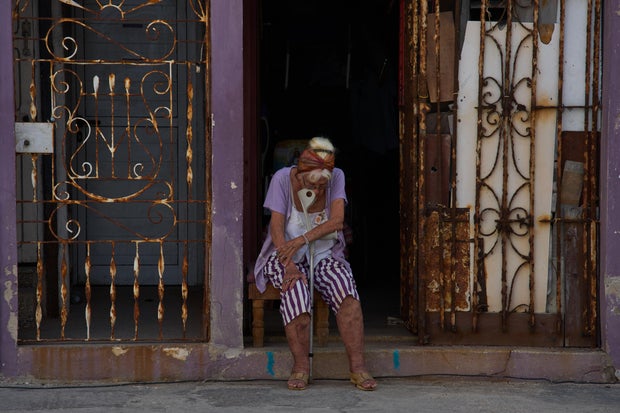
An elderly woman waits during a blackout in Havana, Cuba, September 18, 2026. — Ramon Espinosa/AP
Blackouts in Cuba have become more frequent due to an economic crisis exacerbated by the U.S. energy blockade. This blockade aims to press for changes in Cuba’s political system. The restrictions prevent importing crucial fuel and replacement parts, leading to significant energy shortages. Since the blockade, only one Russian tanker has delivered fuel in March.
Major nationwide blackouts also occurred in early August and several regional outages followed. Frequent outages continue even when the national grid functions, with some lasting over 30 hours. Ernesto Soberón Guzman, Cuba’s ambassador to the United Nations, labeled the situation as a “collective punishment.” These blackouts have disrupted transportation, reduced work hours, and caused flight cancellations, all while impacting daily activities like cooking and water supply.
In response to the situation, the Trump administration has explored various military options for Cuba, though no decisions have been made regarding action. Secretary of State Marco Rubio stated the U.S. prefers diplomatic solutions, yet progress in government transition talks has stalled.
President Trump has referenced the handling of Venezuela’s crisis, aiming for similar outcomes in Cuba. The administration continues to press for a technocratic government willing to implement economic reforms.
 Sen. Cotton Opposes Permanent Daylight Saving Time
  Steve Hilton’s Latino Outreach and Gubernatorial Ambitions
  The Need for Reform in Presidential Nominations
  Controversy Surrounds Performances at Gillette Stadium
  Celebrity Controversies Over Political Activism and Speech
  The Threat of Melting Glaciers: A Call to Action