The U.S. economy faces increasing challenges as President Trump’s trade policies impact inflation and consumer prices. Rising tensions with Iran have caused erratic gas prices. Simultaneously, substantial tax cuts have led to a national debt surpassing $40 trillion, creating a bond market crisis. A strict immigration policy further disrupts labor in key industries, increasing costs.
Approaching the midway point of Trump’s second term, his economic policies become a focal point for the upcoming midterm elections. Despite being re-elected on promises of economic improvement, the President now grapples with the consequences of his financial strategies.
Republicans find themselves defending policies that strain voters, while the White House claims these policies will ultimately be beneficial. Polls reveal that less than a third of Americans approve of Trump’s economic management. A University of Massachusetts Amherst poll indicates only 22% view the economy positively.
Aaron Klein from the Brookings Institution notes that voters form strong opinions of the economy based on conditions in spring and summer, rather than November. Economic optimism is scarce as disputes with Canada further complicate matters for Republicans in critical Senate races.
Reports of corruption and costly government projects under Trump lessen public confidence. Susan Collins, a Maine Senator, criticized tariffs imposed on Canada, viewing these as obstacles in securing reelection. Trump’s assertions of a robust economy and manufacturing growth face skepticism as midterms approach.
House Speaker Mike Johnson from Louisiana notes the midterms will reflect on Trump’s legacy and America First policies. Some Republican incumbents, like Tom Barrett of Michigan and Zach Nunn of Iowa, distance themselves, skipping a Texas GOP convention organized by Trump.
Joanne Hsu from the University of Michigan’s Survey of Consumers highlights the public’s frustration, particularly with gas prices affected by the Iran conflict. Confidence might not recover until consumers see lower pump prices.
Vice President JD Vance acknowledges rising gas prices due to Iranian threats to commercial shipping, stating unknown timelines for price reductions. Despite efforts, diesel prices have hit record highs, notably exceeding $7 a gallon in California.
Trump emphasizes the Strait of Hormuz’s stability, asserting U.S. Navy involvement has mitigated potential oil price spikes. He cites an agreement with Venezuela to explore oil reserves, forecasting eventual lower prices for Americans, though uncertain if changes will occur before elections.
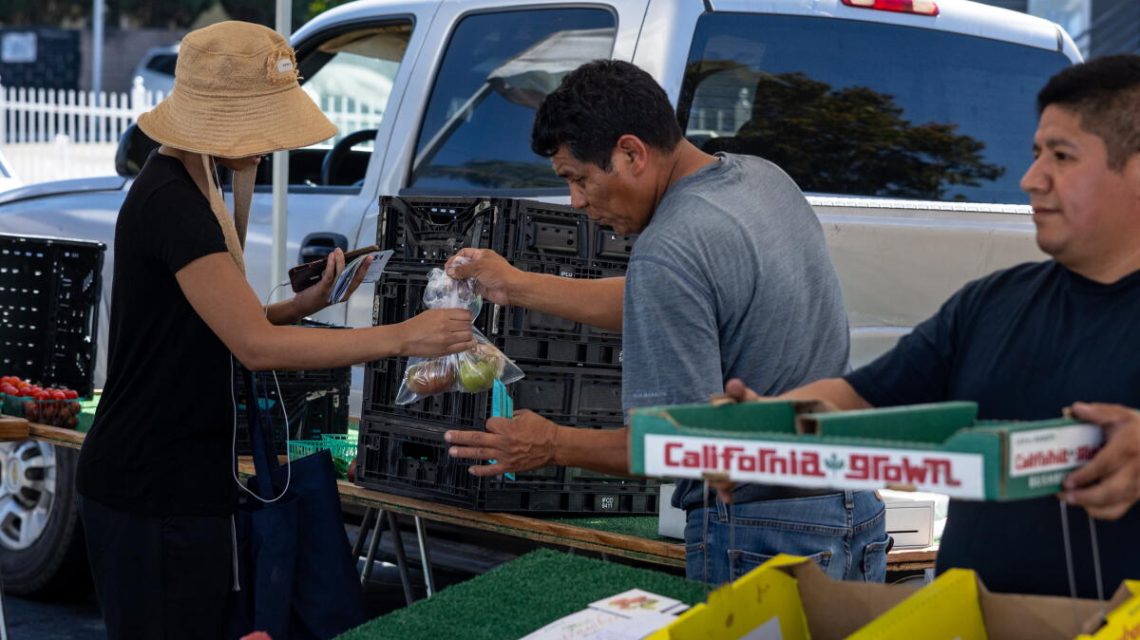
Amid economic pressures, voter sentiment is shifting as the midterms approach. Monica Escalante, a home care provider, faces financial strain due to tariffs and the Iran conflict, reflecting broader public concerns about economic policies and their real-world impact.
 The Surveillance Threat to U.S. Federal Agents
  Trump Administration Distributes ACA Refund Checks
  Trump Administration’s Approach to Illegal Alien Deportations
  New Jersey Voter Fraud Prompts Renewed Push for SAVE Act
  Historical Events in Chicago on October 1st
  Concerns Over Changes to Voter-Registration Form for Americans Abroad