
The armed forces of Iran reported attacks on U.S. military sites located in Bahrain and Kuwait. This action followed U.S. airstrikes on several Iranian sites and the reinstatement of sanctions targeting Iranian oil sales.
The Pentagon confirmed its strikes responded to Iranian actions against three commercial ships in the Strait of Hormuz. These developments intensified the challenges for U.S.-Iran negotiations aimed at reducing hostilities, while also raising concerns about energy supply disruptions through the strategic waterway.
The Khatam al-Anbiya Central Headquarters, representing the Iranian military, condemned the U.S. strikes in southern Iran as a direct act of hostility. Iranian state media broadcasted warnings that Iran would deliver severe retaliation and cautioned the U.S. against intervening in Iran’s control over the Strait of Hormuz.
Subsequently, Iran’s Islamic Revolutionary Guards Corps stated it attacked 85 U.S. military locations in Bahrain and Kuwait. The Iranian military also claimed the downing of an American MQ-9 drone during this confrontation. Meanwhile, the Kuwait Army reported that its air defenses were actively engaging incoming missiles and drones without identifying their origins.
In a post on social media, U.S. Central Command revealed striking over 80 targets in Iran. These included air defense systems, command networks, and anti-ship missile capabilities. The operation aimed to impair Iran’s ability to persist in endangering international trade routes through the strait. The U.S. military also targeted over 60 small naval craft belonging to the Iranian Revolutionary Guard Corps within and near the strait.
Iran has not acknowledged responsibility for the recent attacks on commercial vessels, which included a Saudi oil tanker and a Qatari liquefied natural gas transporter.
Mohammad Bagher Ghalibaf, Iran’s chief negotiator and Parliament speaker, accused the U.S. of breaching a preliminary agreement. This accord reopened the Strait of Hormuz to international navigation. Ghalibaf condemned U.S. actions, stating that the era of coercion is finished. He posted on social media criticizing the U.S. for reinstating oil sanctions, executing strikes in southern Iran, and alleging continued Israeli aggression in Lebanon.
U.S.-Iran negotiations are currently on hold, pending the conclusion of funeral rites for Ayatollah Ali Khamenei, Iran’s supreme leader killed during the U.S.-Israeli offensive.
President Trump, attending a NATO summit in Turkey with over 30 global leaders, criticized European allies for insufficient support in the confrontation with Iran.
Oil Market Impact
Energy prices surged as a result of the renewed military actions between the U.S. and Iran, with oil prices climbing nearly 5% to over $76 per barrel. Although still below earlier conflict peaks, prices remain above the baseline of $72 per barrel before the hostilities.
Disruption in Shipping
This week’s attacks on commercial vessels risk obstructing the resumption of energy transport via the Strait of Hormuz, which had seen partial recovery. Maritime data shows 36 ships passed through the strait recently, compared to more than 100 daily prior to the conflict.
Iran requires vessels to pass closer to its shores. Analysts speculate Iran might charge ships for passage. The middle of the strait poses dangers due to mined areas by the Iranian military.
Stock Market Reaction
Stock markets worldwide displayed mixed reactions, showing more interest in prospects for tech companies and AI advancements than the Iran-U.S. conflict. Japanese and South Korean markets faced declines, whereas Hong Kong and Shanghai saw gains. In preliminary trading, European and U.S. futures remained unchanged.
Concerns linger over investments in AI potentially not yielding expected results. A conclusion to the Iran conflict might serve as a stimulus for a significant relief rally, some market analysts predict.
Amid ongoing hostilities, Iran reiterated its stance on controlling Strait of Hormuz traffic and issued warnings of further retaliation if U.S. interventions continue.
 British Police Arrest Man Suspected of Terror Plot
  Activists Push for Nationwide Ban on Child Marriage in the U.S.
  Investigation into Alleged Incident at Cornell University
  Rising Drone Threats Highlight Vulnerabilities in Moldova’s Airspace Defense
  Bolivia Faces Security Test Amid Unrest
 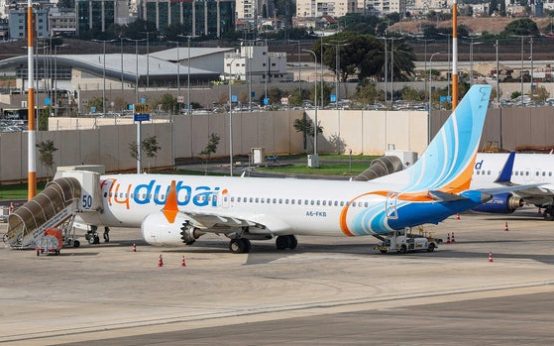 Incident on FlyDubai Flight Raises Security Concerns