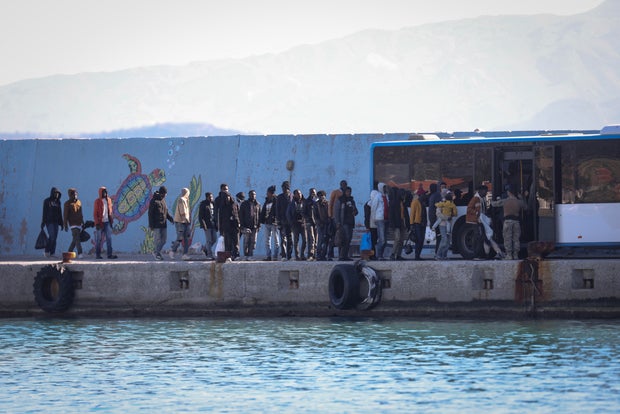
The European Union has taken steps toward deporting asylum seekers whose applications are rejected. Five EU countries—Greece, Germany, Austria, Denmark, and the Netherlands—are set to begin deportations to third countries, potentially in Africa. This development comes after the EU approved new regulations facilitating such practices.
The Concept of Return Hubs
The five countries involved in this effort have agreed on a framework to establish ‘return hubs’ outside the European Union. These hubs aim to transfer individuals who have exhausted legal avenues to remain in Europe if their return to their countries of origin is not possible. Danish Interior Minister Morten Bødskov expressed optimism, stating the initiative is advancing well. Denmark targets readiness to transfer the first irregular migrants by 2027.
Greek Migration Minister Thanos Plevris shared similar sentiments, with Greece planning to initiate a pilot project in the first half of the upcoming year. While no specific countries have been confirmed as destinations for these hubs, Rwanda is rumored to be a possible partner in this project.
EU’s Strategy Against Irregular Migration
The EU present the return hubs as a potential deterrent to irregular migration. A discussion document by the EU’s governing European Council suggests the hubs may encourage voluntary returns by posing the threat of transfer if deportation orders are ignored. Furthermore, it hopes the policy may dissuade those lacking valid asylum claims from undertaking perilous journeys to Europe.
Legal Framework for Returns
The newly adopted EU regulations provide a legal framework for member states to establish bilateral or unilateral agreements with non-EU nations respecting human rights standards. The agreements must conform to international law principles, including the principle of non-refoulement, ensuring individuals are not returned to countries where they risk enduring torture or degrading treatment.
Influence of U.S. and U.K Policies
The Trump administration’s approach to third-country deportations has been influential, with over a hundred deportees sent to African continents like Liberia, Rwanda, Eswatini, and Sierra Leone. Greek Migration Minister Thanos Plevris has praised these methods, advocating for similar policies in Europe.
Britain previously explored deportation of asylum seekers to third countries such as Rwanda, but the policy was ruled unlawful by the U.K. Supreme Court before implementation, due to potential risks of persecution. Despite heavy financial investment, the plan was eventually abandoned when the Labour Party took power, leaving minimal success in voluntary relocations.
Litigation Risks and Deterrence Policies
Peter Walsh from the University of Oxford highlights the legal challenges associated with such policies, noting potential litigation risks even if third countries seem less controversial than Rwanda. He cautions that while these policies are framed as deterrents, the credibility hinges on substantial transfers actually occurring.
Despite geographical relocation of issues, governments still face courts, individual rights concerns, logistical challenges, potential non-cooperation from countries, and significant costs.
Broadening European Immigration Policy
The push for return hubs represents part of a wider strategy by European countries to tighten immigration rules amidst growing pressure to remove individuals devoid of legal residency rights. Jacob Reynolds from think tank Freedom and Sovereignty Initiative Europe commends the EU’s decision but insists on more rigorous border control measures. He warns against merely outsourcing migration issues to third countries.
Reynolds advocates for substantial reform to address Europe’s asylum policies, asserting that the overarching issue persists due to the generous refugee regimes on the continent.
 The Threat of Melting Glaciers: A Call to Action
  Police Discover Ancient Roman Artifacts Off Sardinian Coast
  Urgent Need for Action in East Africa’s Food Crisis
  Suspected Plague Death in Siberia Sparks Health Measures
  G7 Nations Agree to Release 100 Million Barrels of Oil Amid Fuel Price Surge
  Co-Pilot Attempts Hijack on Flight to Tel Aviv