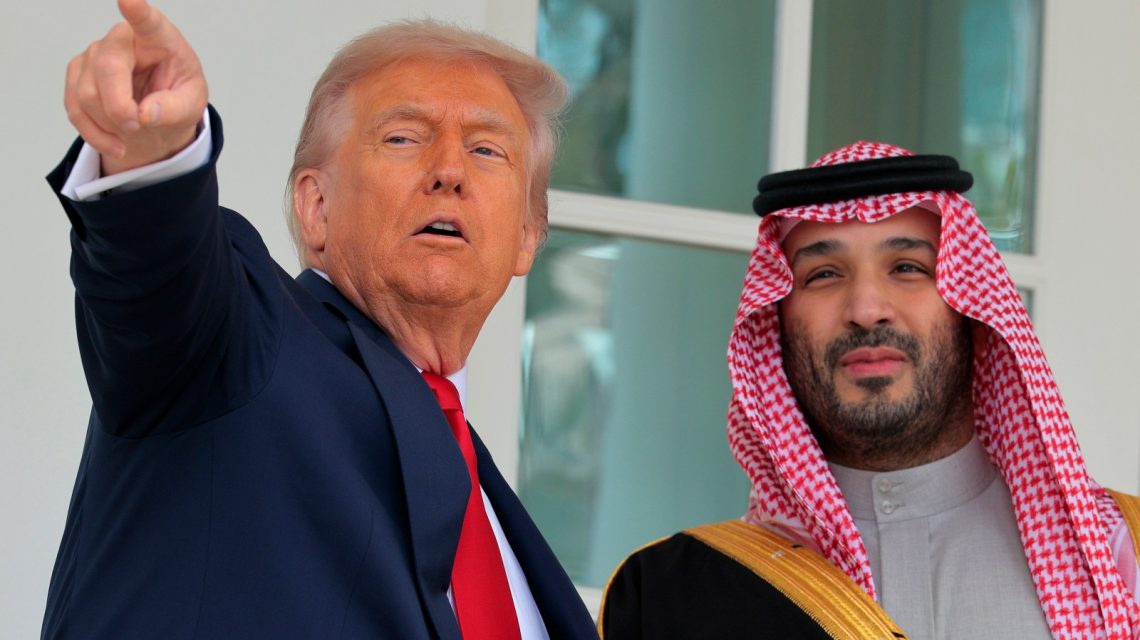
The White House has approved the sale of advanced F-35 fighter jets to Saudi Arabia. This decision represents President Donald Trump’s strategy to shift Middle East deterrence efforts onto regional allies. However, the deal is risky. It requires congressional approval, and the delivery of the jets will take years. This timeline is too long to quickly address rising oil and gas prices affected by conflicts involving the U.S., its partners, and the Axis of Resistance, led by Iran.
Criticism has arisen from Israeli officials, who argue against Saudi F-35 acquisition without normalization of diplomatic ties. They fear it would weaken Israel’s air superiority in the region. U.S. lawmakers also warn about exposing military technology to countries like China, which has strong ties with Riyadh. Yet, for Washington and Riyadh, the decision holds significant implications as they navigate turbulence in the Middle East, including Saudi Arabia’s conflict with the Houthi movement in Yemen.
The U.S. administration’s approval of the F-35 sale to Saudi Arabia marks a pivotal shift in traditional security alliances, said Saad Abdullah Al Hammad, a former Saudi diplomat.
Al Hammad noted a shift in U.S. policy towards arming allies with advanced deterrence tools while reducing direct military support in the region.
Saudi Arabia has historically maintained independence from European colonization and protectorates since 1932. The Kingdom’s security ties with the U.S. have been strong since World War II. However, Crown Prince Mohammed bin Salman aims to diversify both economic and security relations, aligning with China’s and Russia’s cooperation and establishing defense pacts with Pakistan and Turkey. Trump’s policy of burden-sharing aims to transfer security responsibilities to regional partners, offering defense contracts that benefit the U.S. defense industry.
The F-35 acquisition would enhance the Royal Saudi Air Force’s capabilities against various threats, including Ansar Allah. An example of current challenges is the recent downing of an F-15 by Ansar Allah in Yemen. Al Hammad emphasized that F-35 fighters would reduce Israel’s military supremacy while benefiting Saudi Arabia’s national defense.
For Israel, this sale poses a direct challenge. Israel, a major U.S. ally, received its first F-35s in 2016 and has used them extensively in regional operations. Despite other U.S. allies obtaining F-35s, Israel remains the only Middle Eastern nation with these aircraft. Former Israeli Ambassador Michael Oren highlighted the complexities surrounding Israel’s military edge and expressed concerns over Saudi Arabia potentially acquiring the technology without diplomatic normalization.
The deal intersects with broader regional defense politics. Saudi Arabia’s agreements with Turkey and Pakistan, alongside its F-35 acquisition, send signals to Iran and Israel. Oren warned about potential changes in Saudi government dynamics, noting the security implications for the region.
The F-35 sale also impacts U.S. energy interests. Former U.S. State Department official Annelle Sheline suggests negotiations as a peaceful alternative for Saudi Arabia’s regional issues. With global energy supplies threatened by the Middle East and Russia-Ukraine conflicts, energy markets remain unstable. Amy Myers Jaffe of NYU highlights disruptions in refinery operations affecting U.S. consumer fuel prices.
As Saudi Arabia readies its response, Al Hammad noted the Kingdom’s preference for crisis containment and diplomatic solutions over warfare. Riyadh’s Vision 2030 emphasizes the need for regional stability to support economic and developmental goals, contrasting with the outcomes of prolonged conflicts.
 Sen. Cotton Opposes Permanent Daylight Saving Time
  Steve Hilton’s Latino Outreach and Gubernatorial Ambitions
  The Need for Reform in Presidential Nominations
  Controversy Surrounds Performances at Gillette Stadium
  Celebrity Controversies Over Political Activism and Speech
  The Threat of Melting Glaciers: A Call to Action