
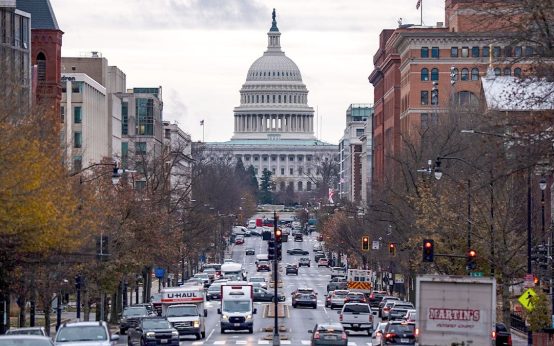
Recent debates highlight that gas prices are more affected by policy decisions made in Washington, D.C., rather than being under the control of major oil companies like ExxonMobil or Chevron. The basic economic principle of supply and demand dictates price setting. Yet, policies play a significant role in influencing these factors.
This week, President Donald Trump criticized Chevron and ExxonMobil for reporting substantial profits during ongoing geopolitical tensions with Iran. Chevron’s earnings reached a quarterly high of $12.1 billion. Meanwhile, ExxonMobil reported $14.5 billion, nearly double its profits from the same period last year.
These figures raise questions about the influence of corporate profits versus governmental policy on energy prices. As the global situation evolves, further scrutiny on policy impacts may be necessary to understand the true drivers behind fuel costs.
 Maryland First State to Restrict Electronic Pricing in Grocery Stores
  Activists Push for Nationwide Ban on Child Marriage in the U.S.
  Democratic Hopes and Historical Warnings in 2026 Senate Race
  Republicans Face Challenges Amidst Cost of Living Concerns
  A Different Kind of Fall for Congress This Year
  Cornel West and Sean Hannity Discuss Differences on Podcast