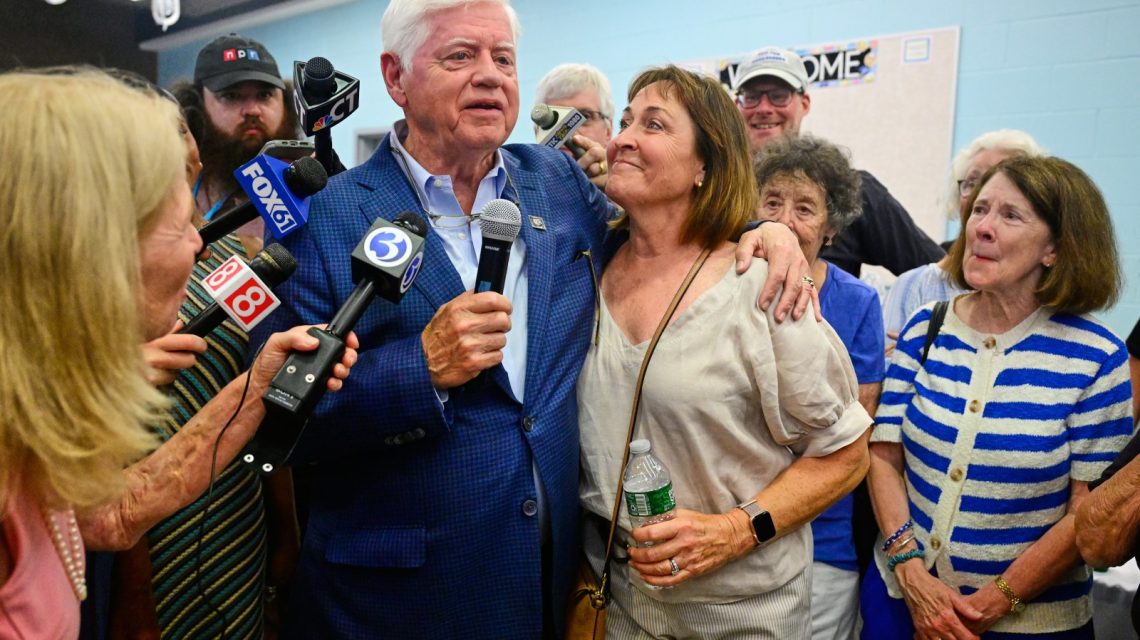
Long-serving U.S. Representative John Larson was defeated in Connecticut’s Democratic primary, adding to a series of incumbent losses in primaries this year. Former Hartford Mayor Luke Bronin, aged 47, succeeded in unseating the 78-year-old Larson, marking a significant shift towards generational change within the Democratic Party.
This outcome highlights growing debates about party leadership as some Democrats seek younger, often more progressive alternatives. A political expert noted voters’ apparent demand for change. Larson became the seventh House Democrat to lose a primary this year, matching the record set in 2012.
The Age Factor
These primary defeats occur amid discussions on age within the Democratic Party, following Joe Biden’s withdrawal from the 2024 election due to concerns about age and mental fitness. This paved the way for Donald Trump’s return to the White House.
Many successful candidates this year have emphasized the need for generational change. Democratic voters appear to favor younger candidates, removing five incumbents aged over 60. Larson’s age played a key role in his primary. He had faced no primary challenge since his 1999 election until this year when his age and health came under scrutiny following an incident where he stopped speaking in Congress due to a seizure.
Bronin campaigned on the need for younger leadership in Congress and the party. Addressing his supporters, he emphasized the need to bring new energy to fix the party’s issues, warning that change would originate from the grassroots if necessary.
A Progressive Revolt
Some incumbent defeats are attributed to the progressives’ rising influence. In New York City, left-leaning candidates ousted Adriano Espaillat and Dan Goldman. Darializa Avila Chevalier defeated Espaillat, running on a progressive platform. Brad Lander won against Goldman, with support from Zohran Mamdani, notable for emphasizing working people’s needs in politics.
Representative Al Green, at 78, lost to a younger opponent, Christian Menefee, 38, in Texas’ 18th Congressional District. Despite his progressive stance, Green’s age worked against him, compounded by Republican-led redistricting.
What It Means for Democrats
The incumbent losses do not suggest a full ideological shift within the Democratic Party. Costas Panagopoulos from Northeastern University pointed out that these results indicate a voter fatigue with gerontocracy, desiring generational change.
Dissatisfaction with aging politicians, including Donald Trump, Biden, and Mitch McConnell, seems to fuel this sentiment, with voters favoring fresh faces and ideas. Boris Heersink from Fordham University explained the challengers’ success stems from progressive critique on issues like American-Israeli relations and generational change arguments.
Heersink noted potential challenges for Democrats if they secure a slim House majority. Uncommitted candidates could complicate the Speaker selection process, emphasizing the need for the party to navigate shifting voter preferences.
What’s Next for the Democratic Party?
The upcoming Democratic National Committee meeting in Austin, Texas will be crucial. Scheduled for August 13-15, party leaders will assess the primary landscape and set the strategy for the general election. Further primaries in Delaware, New Hampshire, and Rhode Island in September are pivotal.
Post-primaries, attention shifts to the general election campaign, culminating on November 3, 2026. All 435 House seats and 35 Senate seats will be contested. How the party adapts to younger candidates will influence its success in November and shape the party’s direction heading into the next presidential cycle.
 Trump’s 2024 Reelection and Evolving Voter Dynamics
  Defense Secretary Emerges as Key Player in the Trump Administration
  Hegseth’s Vision for the Military: Balancing Tradition and Innovation
  Significant Funding Boosts Ken Paxton’s Texas Senate Campaign Amid Tight Race
  U.S. States Extend Gas Tax Waivers Amid Rising Fuel Costs Due to Iran Conflict
  USCIS Raises Immigration Fees