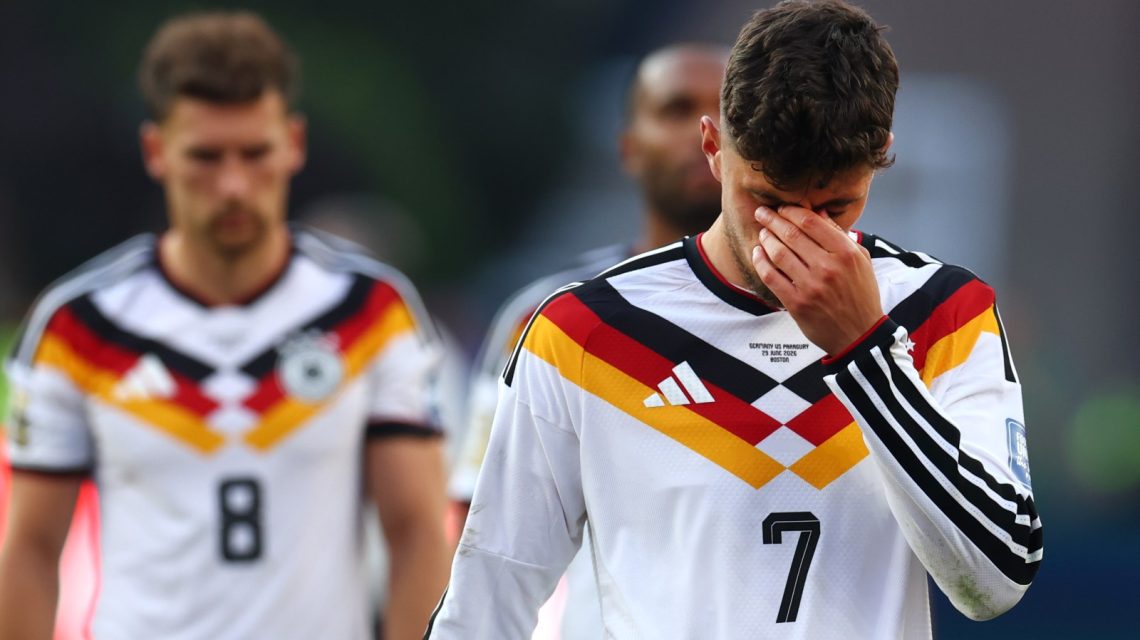
In July 2014, Germany achieved a milestone by winning the FIFA World Cup in Rio de Janeiro, a moment described by Newsweek as heralding a ‘century of German success.’ This triumph was perceived by players, pundits, and politicians as a turning point, with Germany’s technocratic model signaling future dominance not just in sports but also across various sectors globally.
At the time, the nation was experiencing steady economic growth, declining unemployment, and decreasing government debt, contributing to a secure economic and political landscape. Clemens Fuest, President of the Ifo Institute for Economic Research, noted that Germany’s position was stable. Fast forward to the present, Germany has faced early elimination in another World Cup, losing 4-3 in penalties to Paraguay after a 1-1 draw, marking its first-ever penalty loss in a World Cup. This setback reflects a broader, undeniable decline extending beyond football.
Germany’s 2014 Triumph
Germany’s victory against Argentina came after a resounding 7-1 win over Brazil. Many saw this success as setting a benchmark for technical excellence in international football. The World Bank praised the win as a ‘triumph of strategy,’ reflecting Germany’s mastery in ‘hyperefficient’ national planning. The triumph also underscored Germany’s status as an economic powerhouse, driven by robust exports, a solid labor market, and leading manufacturing expertise.
Politically, Germany played a pivotal role in the EU, serving as a mediator during the eurozone debt crisis while maintaining strong relations with both Brussels and Washington. Under Chancellor Angela Merkel, Germany was popular and considered, by many, the de facto ‘leader of Europe.’ The national football team’s success allowed Germans a sense of national pride, often challenged by their history.
The Decline After 2014
While 2014 exemplified Germany’s standing as a global leader, the following years have seen a erosion of those achievements. According to Fuest, the decline of the national football team parallels Germany’s diminishing economic performance and political cohesion.
An Economy Losing Momentum
Germany’s economic model, built on industrial might and export leadership, faces challenges today. Since 2019, economic growth has stagnated, with GDP and private investment struggling to surpass 2015 levels, marking a ‘lost decade.’
The EU forecasts indicate slow emergence from economic stagnation, projecting modest growth. Since the COVID-19 pandemic, Germany experienced one of the weakest recoveries among advanced economies. Factors like Chinese competition and U.S. tariffs have contributed to ongoing stagnation.
The loss of Russian resources after Ukraine’s invasion exacerbated the situation, raising industrial costs and reducing global competitiveness. As Chinese manufacturing replaced German imports in core sectors, Germany’s dominance in machinery exports diminished, trailing behind the U.S. and China.
Deindustrialization Pressures
Germany’s automotive sector, once the cornerstone of its prosperity, faces crises. Car production has declined from a peak of 5.65 million vehicles in 2017 to an expected 4.1 million by 2026. Transitioning to electric vehicles exposed structural weaknesses, leaving manufacturers struggling with high costs and weakened demand.
As noted by analyst Constantin Gall, 2026 will be another challenging year for Germany’s automotive industry, marked by losses in critical markets like the U.S. and China.
Political Fragmentation
Economic challenges are accompanied by political fragmentation. The rise of the far-right Alternative for Germany (AfD) has disrupted traditional political dynamics, achieving record support in regional elections. Polls show AfD leading in Bundestag voting intentions, with potential implications for right-wing movements across Europe.
Immigration has emerged as a divisive issue, impacting traditional party alliances and contributing to the collapse of the 2014 political consensus represented by Merkel’s ‘Grand Coalition.’
Beyond Germany’s borders, its diminished influence within Europe reflects a shift from 2014 when it seemed Europe was ‘run by Berlin.’ Experts note Germany’s increased reliance on France in defense and economic matters, marking a departure from previous dominance.
A Cautionary Tale
Despite current challenges, Germany remains a wealthy, developed nation with strengths including a skilled workforce, robust institutions, and industrial expertise. It still ranks as the third-largest exporter globally and the most influential EU member. Recent military investments indicate Germany’s awareness of geopolitical shifts, positioning it as a significant military leader in Europe.
However, the contrast with 2014 is evident. Economic headwinds, industrial disruptions, political fragmentation, and declining football fortunes highlight a nation navigating rapid changes in global dynamics. The recent World Cup loss symbolizes a nation once characterized by precision now facing increased uncertainty and doubt.
 Dutch Review Board’s Euthanasia Ruling and International Debate
  Israeli PM Commends Heroic Actions in Flight Emergency
  Rabbi and Jewish Leaders Criticize Adam Brody for ‘Genocide’ Comment
  Flydubai’s Emergency Landing Highlights Cockpit Security
  Former Israeli PM Naftali Bennett Commends Passengers and Crew for In-Flight Heroism
  Diplomatic Complexities Unfold at U.S. National Archives Visit