President Trump declared victory after announcing the end of his 106-day conflict with Iran. Within a few days, he signed an initial agreement at Versailles that promised a resolution. This marked a clearer conclusion than previous assurances from Secretary of State Marco Rubio and other officials.
The administration’s portrayal of the war as a “decisive military victory” diverges from reality. While Iran’s military and economic conditions are weaker, its leadership remains intact, continuing its nuclear pursuits and support for regional groups. Trump highlighted that during the cease-fire, ships would travel through the Strait of Hormuz without charges, a situation that existed before the conflict began. Furthermore, the U.S. plans to release Iranian assets, lift sanctions, and collaborate on a $300 billion reconstruction effort. The war has already cost the U.S. over $100 billion, impacting Trump’s political standing as many Americans viewed the war negatively.
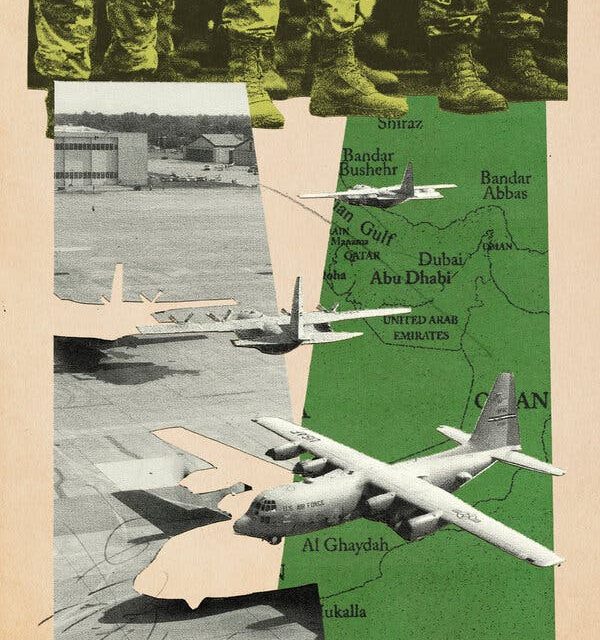
The war’s repercussions are broader than financial. It strained U.S. military bases in the Middle East, known for their strategic importance and promise of security to allies. The Navy’s base in Bahrain was evacuated before sustaining damage, and the Al Udeid Air Base in Qatar is nonfunctional. Vali Nasr, a political scientist, noted how the U.S. struggled to defend these bases, signifying a significant nonmonetary loss.
Across the globe, 51 nations host American military bases, projecting power and providing security. However, this war has caused allies to reconsider their alliances. Maryam Al-Kuwari from Qatar University indicated that these nations now question the benefits of hosting U.S. bases.
The U.S. administration’s conflicting claims reveal more than intended. The world perceives a shift in American dominance, recognizing that U.S. protection is not guaranteed. The Iran war symbolized the fading illusion of U.S. omnipotence.
Such transitions in power have historically been accompanied by denial and misdirection. The mixed messages about the cease-fire underscore a stark reality: the U.S. grapples with acknowledging its strategic loss, as observed by Narges Bajoghli of Johns Hopkins.
 Maryland First State to Restrict Electronic Pricing in Grocery Stores
  British Police Arrest Man Suspected of Terror Plot
  Activists Push for Nationwide Ban on Child Marriage in the U.S.
  Democratic Hopes and Historical Warnings in 2026 Senate Race
  Republicans Face Challenges Amidst Cost of Living Concerns
  A Different Kind of Fall for Congress This Year