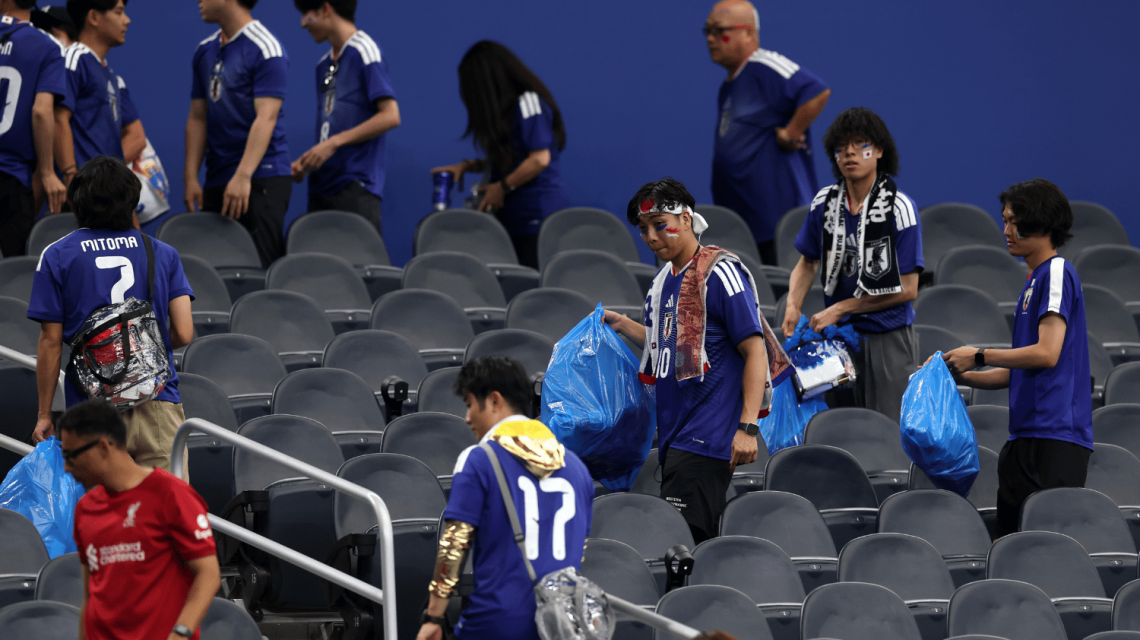
Following a World Cup match between the Netherlands and Japan, Japanese fans demonstrated an impressive commitment to cleanliness and respect. Rather than taking the time to celebrate, they focused on cleaning up trash at the Dallas Stadium. This act, captured on video by FIFA and viewed over 6.3 million times, took place after Japan’s 2-2 draw with the Netherlands on June 14.
One fan explained, “It’s the culture, but it’s like a respect for everything—respect for the players, supporters, and also for the stadium. We are honored to be here, so we don’t want to make the mess and then leave it.”
A Tradition of Cleanliness and Respect
Japanese fans are known for such activities, having gathered international recognition in past tournaments. They frequently stay behind to clean their section of the stadium. These gestures have been noted at events such as an earlier friendly at Wembley Stadium in England where they were lauded for their neatness.
Massive Event, Massive Waste
The World Cup is among the largest sporting events globally, leading to significant waste. The 2026 tournament, scheduled in the U.S., Canada, and Mexico, will host 104 matches. With an estimated 6 to 8 million fans, individual waste will add up significantly. Each fan is expected to produce roughly 0.6 to 0.8 pounds of waste. This includes items like cups, food containers, and merchandise packaging, possibly totaling 4 to 5 million pounds of waste.
In Miami, host city officials anticipate more than half a million pounds of waste from seven matches. The challenge is substantial for these cities.
Waste Management Plans for 2026
FIFA and local organizers are prioritizing sustainability and waste reduction for the 2026 tournament. Dallas, with a stadium capacity of over 70,000 and set to host nine matches, leads these efforts by implementing a thorough waste management program. Officials are focusing on recycling, composting, limiting single-use plastics, and public awareness campaigns encouraging waste sorting.
Previous World Cup tournaments have tested similar initiatives. At the 2022 World Cup in Qatar, 80 percent of stadium waste was successfully recycled or composted. This involved processing thousands of tons through sorting systems.
 Nick Saban’s Comments on ESPN Spark Debate Over College Sports Regulations
  Freddy’s American Adventure: From Soccer to College Football
  Brock Purdy’s Impressive Start in the 2026 NFL Season
  The Value of Retaining Miles McBride for the Knicks
  Penguins Make History with Dominant Season Opener
  Sonny Gray Expresses Frustration After Game Against Yankees