
Lake Mead, located on the Arizona-Nevada border near Las Vegas, has reached its lowest water level since its creation nearly 90 years ago. As of Friday, the water level stood at 1,040.4 feet (317.1 meters) above sea level, slightly below the previous record of 1,040.58 feet (317.27 meters) noted on July 28, 2022.
This new record comes after the Colorado River Basin experienced its lowest snowpack on record. Snowmelt from this region feeds the Colorado River, a critical water source serving over 40 million people across seven U.S. states, tribal nations, and Mexico. It supports farmers, industries, wildlife, and hydropower generation.
Federal officials recently proposed a short-term measure to mitigate the crisis plaguing the river system. This step followed unsuccessful negotiations among the involved states — California, Colorado, Arizona, Nevada, New Mexico, Wyoming, and Utah — to devise a long-term water-sharing plan. The proposal includes water cuts shared by California, Nevada, and Arizona.
Years of excessive water use, drought, and increasing temperatures have severely depleted Lake Mead and Lake Powell, the second-largest reservoir in the U.S. These reservoirs have not been this low in nearly seventy years. Faced with this challenge, federal officials decided not to release cooler Lake Powell water from Glen Canyon Dam. This action aims to protect a threatened native fish species whose habitat lies between the reservoirs.
In 2022, severe drought conditions at Lake Mead, held in place by the Hoover Dam, led to the exposure of human remains. This situation forced Las Vegas water officials to extract water from deeper parts of the reservoir to maintain supply for millions of residents.
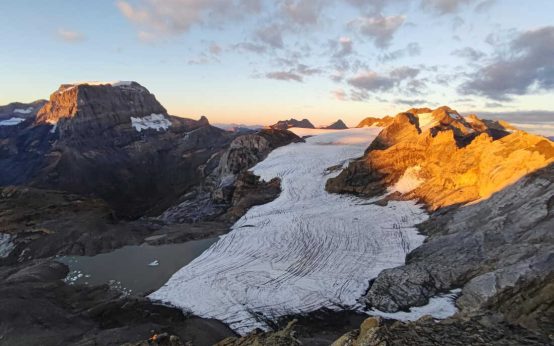 Swiss Glaciers Show Effects of Ice Loss Amid Global Warming
  Climate-Resistant Rock Glaciers: Hidden Water Resources
  Senators Reach Bipartisan Agreement on Permitting Reform
  Experts Warn of Critical Period for the Colorado River
  Future Cities: Ambitious Projects Aiming for Innovation and Sustainability
  Supreme Court Case Suncor vs. Boulder: Implications for Accountability in Climate Change