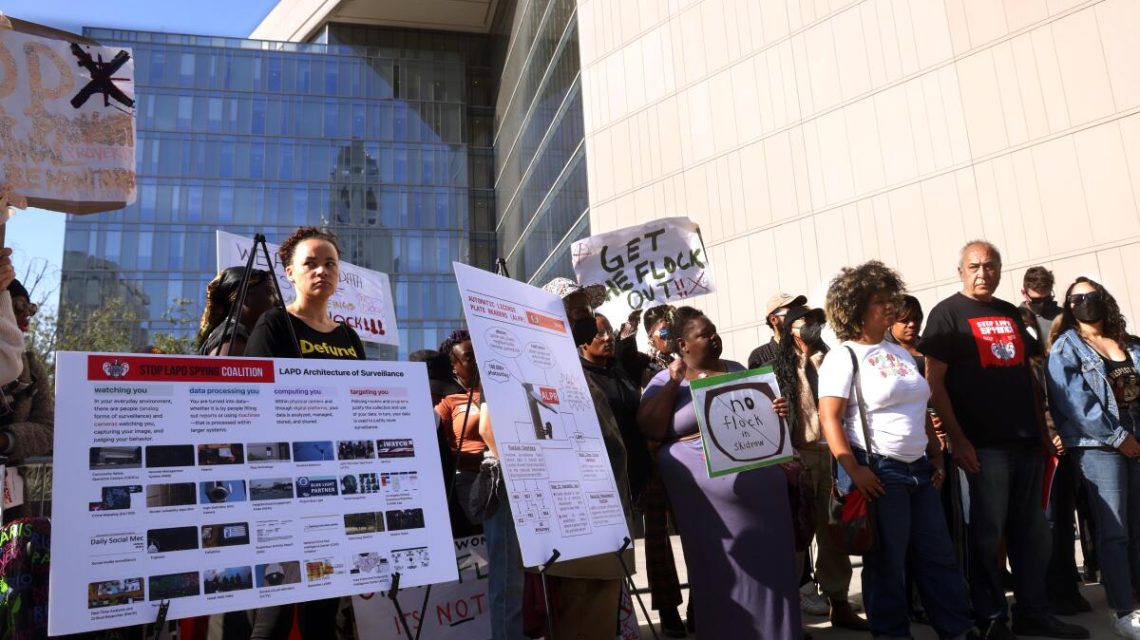
Since its establishment over a century ago, the Los Angeles Bureau of Street Lighting has primarily focused on managing lampposts. However, recent events have drawn this lesser-known city agency into intense debates about the use of surveillance technology by Flock Safety, particularly concerning its role in providing data during immigration enforcement activities.
In Los Angeles, Flock has installed numerous automated license plate readers that enable authorities to track vehicles reported as stolen or associated with fugitives. These devices are typically mounted on municipal light poles, demanding the Bureau of Street Lighting’s involvement in their installation. Concerns have arisen after reports that Flock shared license plate data with U.S. Immigration and Customs Enforcement. This has led many smaller cities nationwide to suspend their partnerships with Flock, yet in Los Angeles, several entities, including the LAPD, continue to engage with the company.
Emails sourced by The Times illustrate the pressure exerted by LAPD supporters, homeowner associations, and politicians to accelerate the installation of plate readers. Flock, based in Atlanta, collaborates with about 5,000 U.S. law enforcement agencies and insists that its technology complies with existing California laws limiting federal data sharing. MoMo Zhou, a company spokesperson, highlighted the platform’s focus on transparency, accountability, and local control, with data deletion policies as standard practice. According to Zhou, Flock’s services assist communities with crime prevention and locating missing persons.
The Bureau of Street Lighting, with a workforce of 177 and an annual budget of $49.4 million, might seem an unlikely participant in police surveillance debates. Its primary responsibilities include repairing over 210,000 streetlamps and maintaining electric vehicle charging stations. The increasing demand for plate readers coincides with calls for the LAPD to disclose details about their interactions with Flock.
In March, the Police Commission requested an assessment of what information Flock’s technology collects and shares. Recently, the commission refused donations of Flock cameras, while groups like the Stop LAPD Spying Coalition openly oppose Flock Safety’s engagement with the LAPD. The commission’s Inspector General is set to audit the LAPD’s use of license plate technology, with findings anticipated by summer.
A motion put forth by Councilmember Ysabel Jurado asked the commission to avoid agreements with Flock Safety. Despite official hesitations, council offices and community groups persistently advocate for Flock’s involvement. An exchange from Councilmember Katy Yaroslavsky’s office highlighted concerns over structural issues with some city light poles, prompting a response that underscored the importance of careful installations.
Frustrations arose in communications within the Bureau regarding optimistic timelines. The Los Angeles Police Foundation, a nonprofit supporting LAPD equipment acquisitions, expressed dissatisfaction with installation delays. The foundation successfully facilitated the donation of Flock cameras, predominantly distributed in affluent neighborhoods.
On May 2025, Dana Katz, the foundation’s executive director, approached the mayor’s office to request waivers for permit and rental fees tied to new reader installations, citing prohibitive costs. Katz suggested using Flock’s proprietary poles, previously approved by Los Angeles County, to address locations lacking city-owned poles.
“Flock has its own pole that has been accepted by the County of Los Angeles for these situations, and we would like the City to accept the use of them, too,” Katz wrote to Robert Clark, Los Angeles’ former deputy mayor of public safety.
Email exchanges continued well into August, particularly regarding long waits for Flock’s reader installations in selected neighborhoods. Katz persistently advocated for expedited processes, citing negative impacts on public safety. Although the mayor’s office refused intervention, as stated by its spokesperson, records show Flock engaged the Bureau since early 2024 with invitations for discussions about potential public-private partnerships.
Executive Director Miguel Sangalang met with former City Councilmember Joe Buscaino and Flock representatives to explore collaborative opportunities. Following regional wildfires, Flock willingly contributed over 50 plate readers, providing them gratis for six months to bolster security in the Palisades area.
Throughout early 2025, numerous city officials advocated for streamlined approval procedures for Palisades installations. LAPD Chief Jim McDonnell supported the initiative, working closely with the City Attorney’s office to define contractual terms. This intricate network of interactions continues to unfold, underscoring the complexities of integrating surveillance technology into city infrastructure.