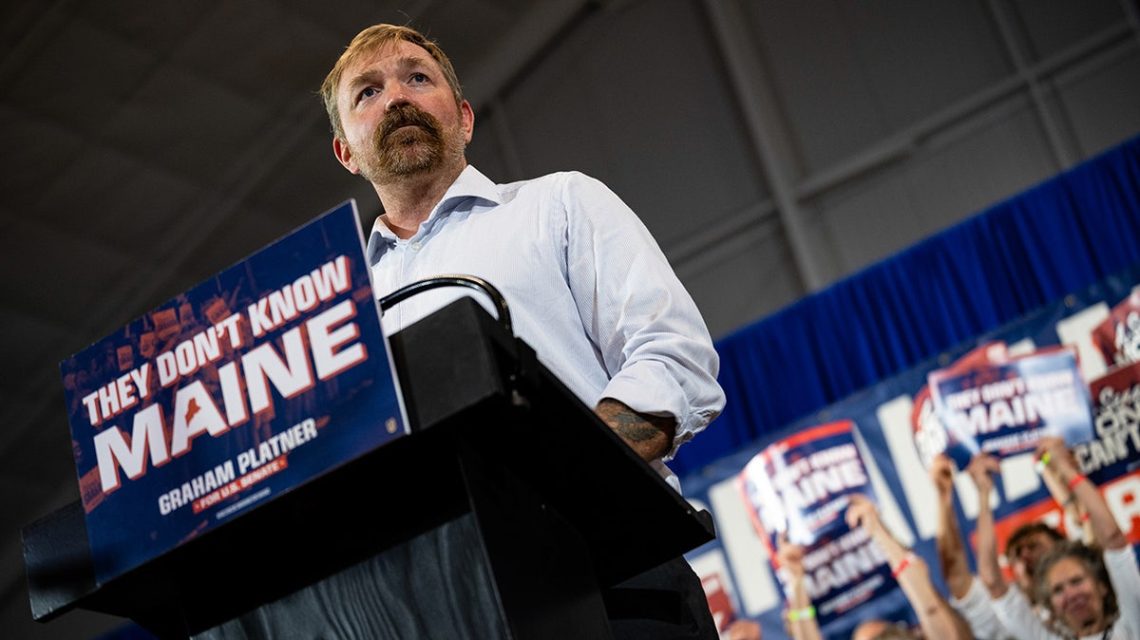
Maine Senate candidate Graham Platner finds himself at the center of a controversy following accusations of sexual assault by a woman from an incident five years ago. Platner firmly denies these allegations, describing them as false and politically driven. With this controversy gaining media attention, Democrats are pressing for Platner to withdraw from the Senate race.
As Democrats strategize to retake control of the Senate from Republicans during the midterm elections, Maine’s seat is crucial. The state, which often leans Democratic in presidential elections, has a Republican and an Independent senator who aligns with Democrats.
Platner’s candidacy has deteriorated amid calls from leading Democrats in Maine and nationwide for him to end his Senate campaign. The controversy further diminishes the party’s chances of winning back the Senate in the upcoming elections.
The forced implosion of Graham Platner does not make life any easier for Democrats.
Platner, who transitioned from a military career to oyster farming, was previously supported by progressive leaders. He was set to challenge veteran Republican Senator Susan Collins in the upcoming election. This high-profile and costly race is crucial in deciding whether the GOP retains its slight Senate majority.
If Platner exits the race before the deadline, the Maine Democratic Party can replace him on the ballot. This decision must be made promptly to challenge Collins, who’s serving her fifth term. Despite predictions of her defeat six years ago, Collins won against the Democratic challenger Sara Gideon by a notable margin.
With the current political atmosphere influenced by inflation and former President Trump’s low approval ratings, Collins could be vulnerable. However, the Platner incident is advantageous for her and the Republican party. Republicans are now criticizing other Democrats for previously supporting Platner.
A Democratic strategist remarked that the upheaval in Maine complicates the quest to regain the majority, emphasizing the significance of Platner’s replacement.
This controversy arose shortly after Democratic primaries in Michigan also turned chaotic. State Senator Mallory McMorrow withdrew from her campaign due to declining poll numbers and insufficient fundraising. The primary, featuring progressive Abdul El-Sayed and establishment-backed Rep. Haley Stevens, is crucial in shaping the party’s direction.
Republican Mike Rogers is set as the likely GOP nominee in Michigan, aiming to succeed retiring Democrat Gary Peters. This seat is a primary target for Republicans, and Democrats must defend it while also seeking wins in other battleground areas.
The Democrats’ strategy involves gaining seats in Maine and North Carolina while securing more in Republican-leaning states such as Ohio, Alaska, Iowa, or Texas. They must also keep positions in Michigan, New Hampshire, and Georgia.
The situation in Maine amplifies tensions within the Democratic party. Moderate Democratic Sen. John Fetterman criticized Bernie Sanders for endorsing Platner, demanding an apology on a television broadcast.
A Republican strategist highlighted that internal divisions within the Democratic party add layers of complexity in their bid for a Senate majority.
Paul Steinhauser reports on the national campaign trail for Fox News.
 The Trump Team’s Challenge to the Military Leadership
  Maryland First State to Restrict Electronic Pricing in Grocery Stores
  Activists Push for Nationwide Ban on Child Marriage in the U.S.
  Democratic Hopes and Historical Warnings in 2026 Senate Race
  Republicans Face Challenges Amidst Cost of Living Concerns
  A Different Kind of Fall for Congress This Year