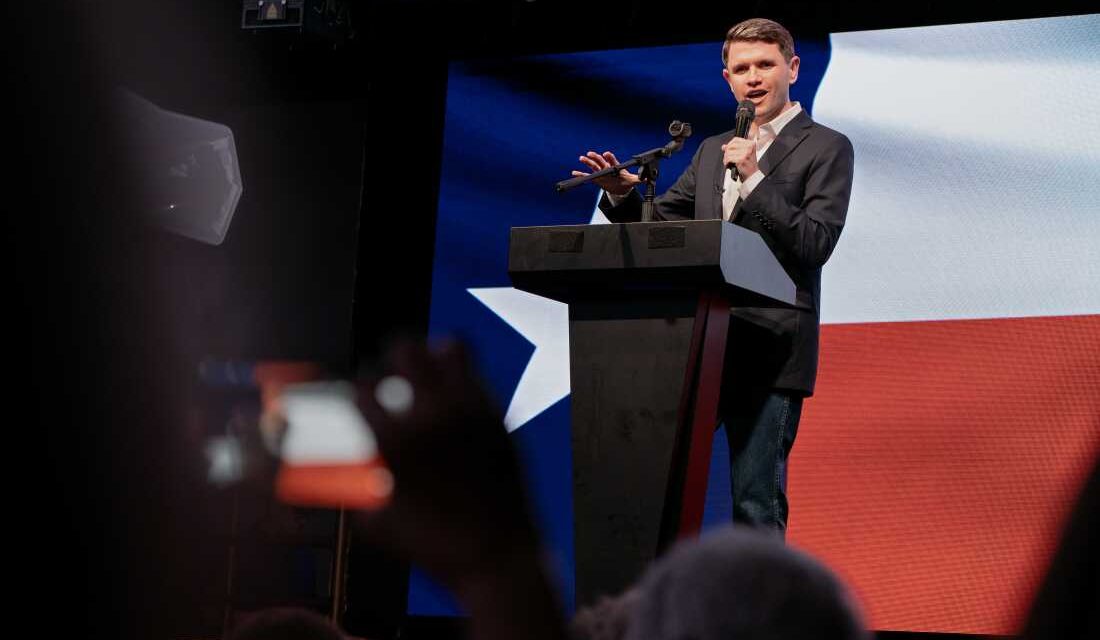
Democratic Senate candidate James Talarico addressed a rally on May 27 in Houston. After Texas Attorney General Ken Paxton secured victory in the state’s Republican Senate primary, he launched a series of personal attacks targeting Talarico. Paxton’s comments, which included derogatory nicknames, aimed to undermine Talarico’s masculinity. This tactic stems from influences seen in recent American politics, particularly under former President Trump.
The Insults and Their Impact
Paxton employed humor and ridicule, labeling Talarico with names like “tofu Talarico” and “six-gender Jimmy.” These are references to Talarico’s previous statements and positions. Some refer to his acknowledgment of scientific views on gender, suggesting a spectrum rather than a binary. Misinterpretations of his views led to further comments from figures like Stephen Miller and Jesse Watters, who incorporated misleading labels without factual basis.
Response to the Attacks
Talarico, in response, maintained that his diet includes meat, countering claims on his lifestyle made by Paxton’s camp. He drew attention to Paxton’s scandals, like a 2015 indictment on securities fraud. Republican strategist Brendan Steinhauser mentioned that these masculinity-based comments might appeal to certain demographics in Texas. However, progressive strategist Cliff Walker argued that most voters likely prioritize economic concerns over discussions about manliness.
Legacy of Trump’s Influence
Paxton’s approach is influenced by Trump’s political style, where masculinity played a central role. Trump’s era popularized using nicknames to undermine opponents. This tactic continues to resonate with some Republican circles aiming to revive “traditional” masculinity. Walker noted the emergence of figures promoting hypermasculinity, shaping discourse within and outside political forums.
The Broader Political Shift
Dan Cassino, a political scientist, observes that direct conversations about masculinity are surfacing in political dialogues today. This rhetoric, often more explicit, borrows language from online communities focused on gender roles. Cassino highlighted that these discourses emerge as reactions to perceived threats against established hierarchies, particularly when figures like Talarico advocate for compassion and challenge traditional norms.
 The Trump Team’s Challenge to the Military Leadership
  Maryland First State to Restrict Electronic Pricing in Grocery Stores
  Activists Push for Nationwide Ban on Child Marriage in the U.S.
  Democratic Hopes and Historical Warnings in 2026 Senate Race
  Republicans Face Challenges Amidst Cost of Living Concerns
  A Different Kind of Fall for Congress This Year