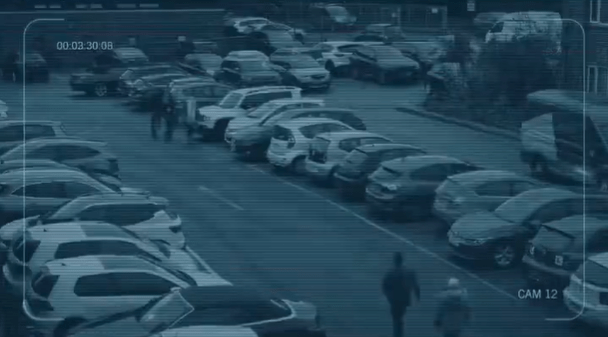
Montana Senate candidate Seth Bodnar released a provocative campaign video featuring him shooting a Flock Safety surveillance camera with a shotgun. This gesture deepens the already heated debate over automated license plate readers as the 2026 midterms approach, highlighting the growing political pressure on states, tech firms, and law enforcement agencies involved with this expanding surveillance technology.
Montana voters now confront a race where digital privacy, police data access, and the future of AI-driven monitoring could influence policies beyond the state’s borders. The video aligns with federal probes, statewide bans, and criminal cases against the controversial cameras.
Bodnar declares, “Flock off, man!” in the video, critiquing the cameras for tracking Americans during routine activities like shopping, attending church, or visiting a doctor. His message emphasizes concerns over constant monitoring, arguing that these devices capture more than traffic data, storing identifying details that could be misused.
Flock Safety, with over 120,000 cameras in 49 states, asserts it does not sell or access user data and that law enforcement holds the collected information. Bodnar connects the cameras to a larger economic system aimed at trading personal data.
Legal consequences for Bodnar hinge on who owned the destroyed camera and the incident surrounding its destruction. As of September 14, no law enforcement agency has publicly disclosed an investigation, and no evidence suggests the camera featured in the ad was a functional government surveillance device.
The controversy arrives amid similar clashes in other states. In Tennessee, House candidate Adam Lee Heimerman faced arrest and felony vandalism charges for allegedly damaging four operational Flock cameras. His case underscores how these devices have become symbols of government overreach for some candidates and a source of evidence for prosecutors.
The Tennessee arrest gained national attention as candidates elsewhere employed anti-Flock rhetoric to engage voters wary of surveillance technology. The incident also demonstrated the cameras’ deep integration into local policing, making them a political focal point and essential infrastructure.
Nationally, the debate has intensified. Senator Josh Hawley initiated a congressional investigation accusing Flock Safety of creating an unauthorized surveillance network scanning 20 billion vehicles monthly. This probe has spurred calls for federal regulation, with privacy advocates cautioning that AI monitoring could exceed existing legal protections.
Some states have begun addressing these concerns. Florida Governor Ron DeSantis ordered automated license plate readers removed from state highways, citing privacy issues, while Rhode Island’s Governor Dan McKee suspended new camera installations in response to public dissent. These actions illustrate how the issue has evolved from niche discussions to major political battles.
Montana has emerged as a leader in digital privacy. The state closed the “data broker loophole,” preventing law enforcement from purchasing sensitive digital information, such as precise geolocation, without a warrant. Montana’s new law, SB 282, adds to efforts restricting facial recognition, safeguarding genetic data, and treating digital information as constitutionally protected from unjustified searches.
In the ad, Bodnar critiques Republican candidate Kurt Alme for not taking a stance on automated license plate readers, pledging not to remain silent “by a long shot” before firing his shotgun. This move highlights Bodnar’s aim to use the surveillance issue to distinguish himself in a competitive four-way race.
A Montana Free Press-Rutgers Eagleton poll conducted between August 27 and September 7 showed Republican Alme leading independent Bodnar with 38 percent to Bodnar’s 30 percent, and Democrat Alani Bankhead at 16 percent. Bodnar’s ad could consolidate votes from those wary of both government surveillance and large-scale tech data collection.
Bodnar brings noteworthy credentials: West Point valedictorian, Rhodes Scholar, Green Beret, and former University of Montana president. His experience at General Electric, overseeing digital locomotive systems, enriches his perspective on data infrastructure. However, his record has faced scrutiny, such as a sex-discrimination lawsuit from his time at the University of Montana settled in 2024, which alleged a discriminatory atmosphere under his leadership.
Whether Bodnar’s campaign video will close his polling gap remains uncertain, but the momentum against surveillance technology in the political realm is undeniable. As Montana advances on digital privacy laws, the Senate race may become a key indicator of voter reactions to AI surveillance and candidate responses against its expansion.
 State Department Simplifies Passport Process with Online Applications
 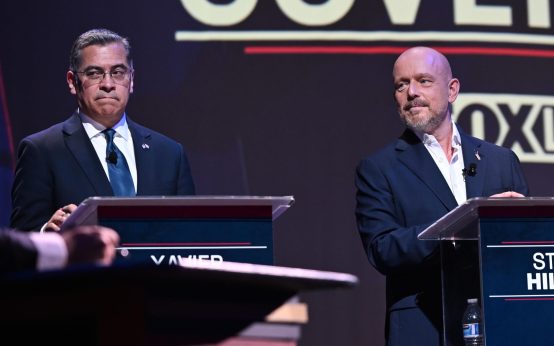 Becerra and Hilton Clash in California Gubernatorial Debate
  California Voters to Decide on $7.5 Billion State Research Fund
 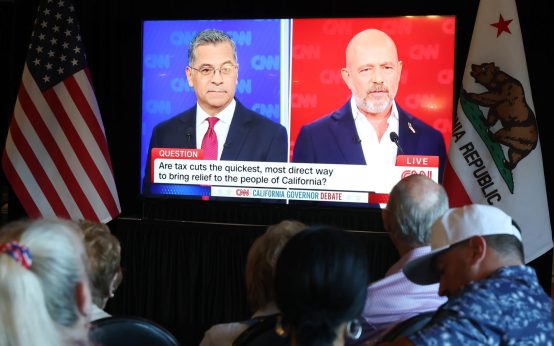 Highlights from the California Gubernatorial Debate: Becerra vs. Hilton
  Becerra vs. Hilton: The Debate and Key Issues in the California Governor Race
  Senate Confirms New Labor Secretary