A new opportunity has emerged for aspiring astronauts who dream of reaching the moon. NASA is now accepting applications for its astronaut program. Those chosen will not only test spacecraft but also live and work on the future moon base, as shared by NASA Administrator Jared Isaacman on Saturday.
“These missions require technical skills, good judgment, teamwork, and bravery,” Isaacman stated. “NASA’s astronaut corps seeks remarkable individuals ready to embrace immense challenges for the nation.”
Currently, NASA’s astronaut corps consists of 32 active members. The agency has selected 370 people for astronaut training since the 1960s. Applying is highly competitive. For the last astronaut class, only 10 out of more than 8,000 applicants were chosen.
Any U.S. citizen can apply, with no official age limits. However, candidates need a master’s degree in a STEM field, such as engineering or mathematics. Notably, nursing degrees now qualify as well. “Master’s-level nursing degrees meet the educational requirement,” announced NASA spokesperson Anna Schneider.
Applicants must also have at least three years of related professional experience post-degree. Alternatively, PhD candidates in STEM fields, physicians, or pilots with significant flight experience are eligible.
This detail of a July 20, 1969, photo shows astronaut Neil Armstrong reflected in Buzz Aldrin’s helmet on the moon’s surface — a reminder of past lunar achievements.
Selected astronauts face two years of intensive training. Their preparation will involve tackling crucial missions, like landing near the moon’s South Pole. Aiming to return humans to the moon in 2028, NASA collaborates with companies like Blue Origin and SpaceX for developing spacecraft systems.
During a press briefing on Nov. 7 regarding Artemis III’s progress, Isaacman expressed confidence in a 2027 launch. The starting salary for astronauts will be $164,395, and applications are open until Dec. 3.
 Mini-Moon 2026 QQ8 Temporarily Orbits Earth
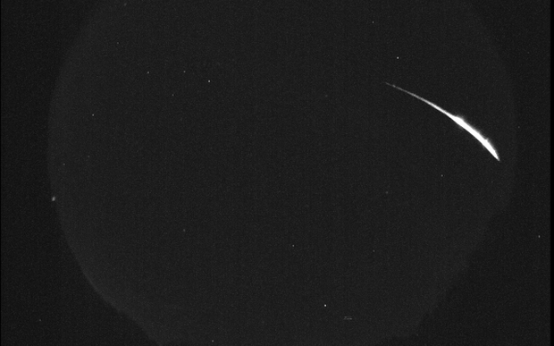 Meteor Lights Up Skies Over North Carolina and Tennessee
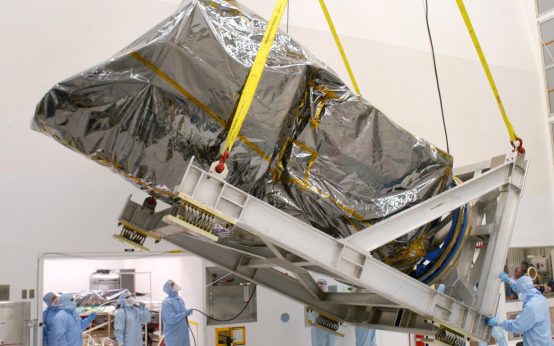 Swift Observatory Set to Re-enter Earth’s Atmosphere: What to Expect
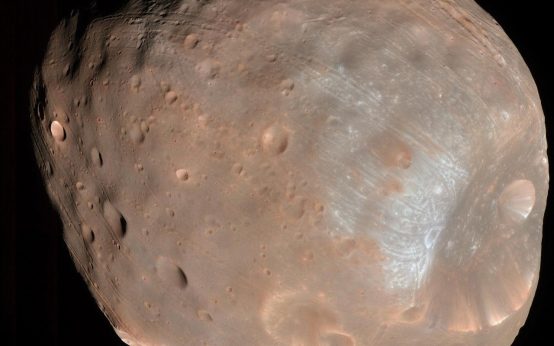 Japanese Spacecraft Embarks on Mars Moon Exploration
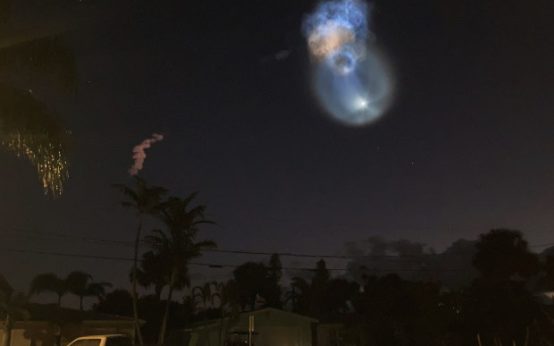 SpaceX’s Dawn Cargo Mission Creates ‘Space Jellyfish’ Phenomenon
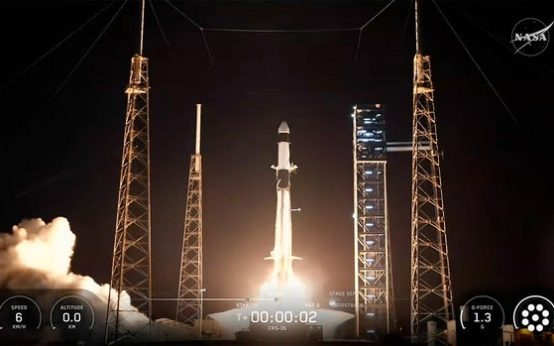 SpaceX Falcon 9 Delivers Cargo and Solar Arrays to ISS