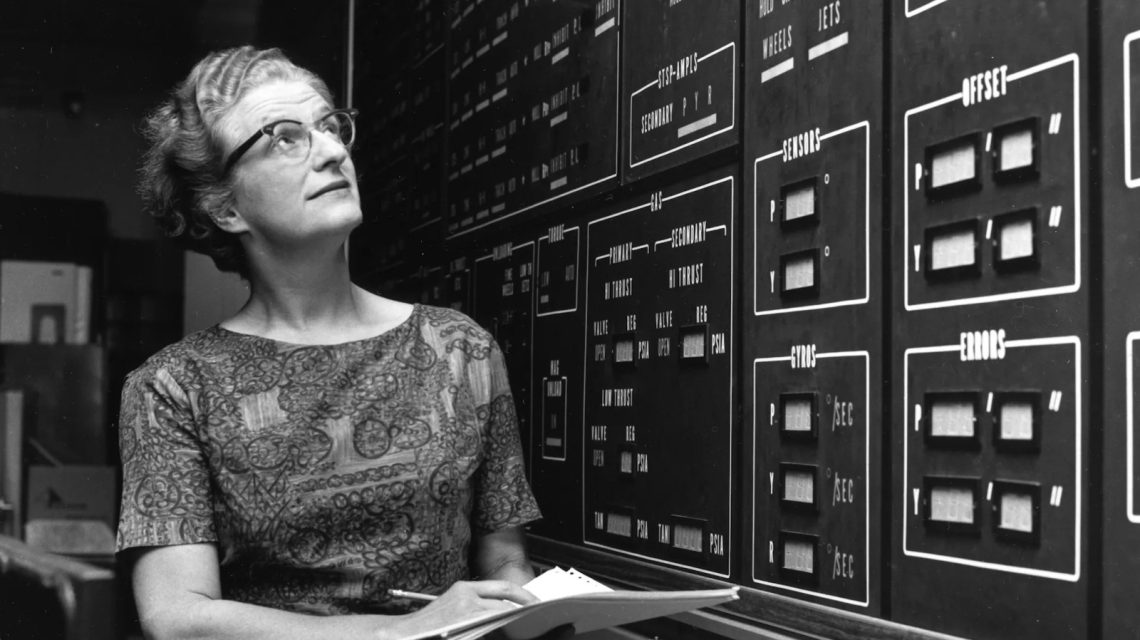
NASA’s Nancy Grace Roman Space Telescope launched on Sunday aboard a SpaceX Falcon Heavy rocket, commencing a mission aimed at exploring the universe’s profound secrets. The telescope, valued at $4.3 billion, bears the name of Nancy Grace Roman, a pioneering astronomer recognized as the “Mother of Hubble” for her significant contributions to NASA’s space astronomy program.
This launch marks a pivotal moment for NASA, as officials emphasize the telescope’s vast field of view. It will enable astronomers to map extensive areas of the universe much faster than previous observatories, thereby complementing the work conducted by the Hubble and James Webb space telescopes.
Nicky Fox, the NASA science mission director, stated that the observatory is expected to discover “thousands of supernovae, tens of thousands of planets, billions of galaxies, and tens of billions of stars.” The findings from the telescope may transform our understanding of galaxy formation, planet development around stars, and the universe’s evolution over billions of years.
Who Was Nancy Grace Roman?
Nancy Grace Roman served as NASA’s first chief astronomer, leaving an indelible mark on American space science. Born in 1925, she embarked on a career in astronomy when women faced considerable challenges. Upon joining NASA during its formative years, Roman played a crucial role in establishing its astronomy program. She fervently advocated for deploying telescopes above Earth’s atmospheric interference, which ultimately led to the creation of the Hubble Space Telescope. Her tireless efforts earned her the title “Mother of Hubble.”
Roman devoted her life to advancing scientific research and fostering opportunities for women in astronomy. She passed away in 2018 at 93.
What Is the New Telescope Being Used For?
The Nancy Grace Roman Space Telescope is designed to undertake extensive wide-field surveys of the universe, surpassing prior achievements from space. NASA highlights that its field of view is over 100 times larger than the Hubble Space Telescope, enabling rapid imaging of vast sky regions while maintaining comparable sensitivity.
The observatory will journey for over three months to reach its location near the second Lagrange point, a gravitational balance area roughly 1 million miles from Earth, shared by the James Webb Space Telescope.
Throughout its anticipated five-year mission, Roman aims to search for exoplanets, map billions of galaxies, investigate black holes, and study dark energy and dark matter. By surveying broad portions of the sky, scientists hope to unearth previously unseen objects and phenomena.
 SpaceX Successfully Launches Starship Flight 14 into Orbit
  Pentagon Confirms US Possession of Space Weapons Amid Rising Tensions
  Countering Fear: A Pilot’s Approach to Calm Nervous Flyers
  Challenges in Establishing a Unique Identity for the United States Space Force
  NASA Launches Major Space Telescope for Cosmic Exploration
  President Trump Establishes U.S. Space Academy to Train Future Space Professionals