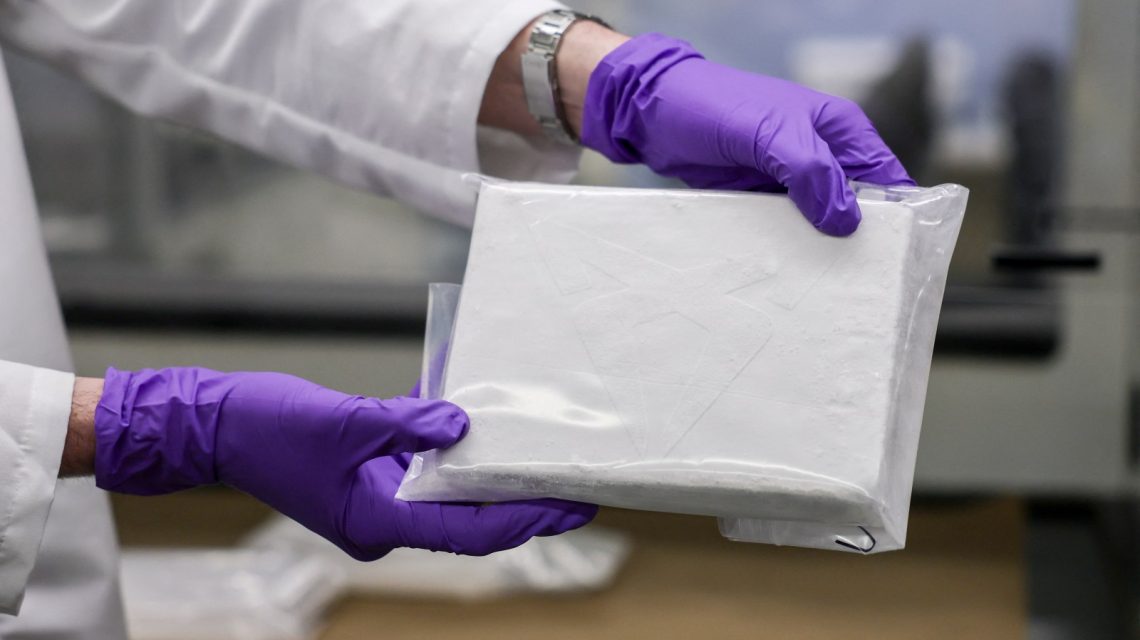
Emergency calls related to opioid overdoses are increasing in Austin, Texas. The spread of cychlorphine, a synthetic drug said to be 10 times more potent than fentanyl, is a major concern. According to local station KXAN-TV, Austin’s emergency medical services (EMS) recorded 98 opioid overdose calls in September, compared to 73 from the same period a year prior.
Impact on Narcan Use
Captain Christa Stedman of the Austin-Travis County EMS (ATCEMS) reported that out of these 98 cases, nine required more than two doses of Narcan to reverse the overdose. Typically, only one to two doses are needed. In contrast, only two cases out of 73 required more than two doses of Narcan in September last year.
ATCEMS does not specifically test for cychlorphine but has noted that it often requires multiple Narcan doses to treat. The increase in overdose calls is not isolated to Texas. Other states also report heightened cychlorphine-related overdoses. Tennessee, for example, has recorded a significant number of deaths linked to the drug.
Cychlorphine: An Overview
Cychlorphine, also known as N-propionitrile chlorphine, is a synthetic opioid responsible for numerous deaths in the U.S. over the past year. Although not new, its presence in illegal drug trafficking has increased recently. The compound originates from a Belgian lab’s 1960s research into synthetic opioids like “orphines” for pain relief.
The formula for cychlorphine was published in academic journals and is accessible online. This has led to its unauthorized production, as explained by Keith Humphreys, a Stanford professor and former senior drug policy adviser under the Obama administration. The drug has surfaced in Europe, Canada, and the U.S. in recent years.
Comparing to Fentanyl
The Drug Enforcement Administration (DEA) cautions that cychlorphine often mixes with fentanyl and counterfeit pills, complicating detection. Fentanyl test strips generally fail to identify cychlorphine. Experts estimate that cychlorphine is up to 10 times stronger than fentanyl.
Widespread Detection
The DEA first identified cychlorphine in Florida in April 2024. It has since spread across the U.S., with detections increasing rapidly.
In 2025, the Office of National Drug Control Policy (ONDCP) noted 106 instances of cychlorphine across 10 states. Concentrations are high in the South, Midwest, and Northeast regions. Between 2025 and early 2026, at least 55 deaths nationwide were linked to cychlorphine. Tennessee’s Knox County reported 64 deaths over a specific period, raising concerns of broader undetected cases.
Chris Thomas, chief administrative officer of Knox County’s Regional Forensic Center, believes increased surveillance has helped identify more cases. However, drug-related deaths dropped 16 percent in the first half of 2026.
By July, cychlorphine had caused approximately 140 deaths across nearly 20 states and Canada, as reported by Alex Krotulski of the Center for Forensic Science Research and Education (CFSRE). Tracking methods vary by state, complicating national toll compilation.
What Lies Ahead
Health officials urge caution over cychlorphine due to its potential to worsen the opioid crisis. Chris Thomas warns of the drug’s lethality in small amounts. In 2026, street-level drugs are more deadly than ever.
The Knox County RFC works to raise awareness and collaborates with authorities to trace these drugs back to their source. Meanwhile, the United Nations Office on Drugs and Crime (UNODC) reported cychlorphine in 17 countries across Europe and North America.
For assistance with substance abuse, contact the SAMHSA National Helpline at 1-800-662-HELP (4357).
 The Rise of Bokashi Fertilizer Among Zambian Farmers
  AI Steps into Health Care with Medication Prescriptions in Utah
  Understanding the Rise in Stroke Risk Among Young Americans
  A Headache Leads to a Life-Threatening Discovery for Julie Nashawaty
  Advocates Step In as Official Channels Struggle with Family Homelessness
  From Birth to Bravery: A Story of Overcoming Clubfoot