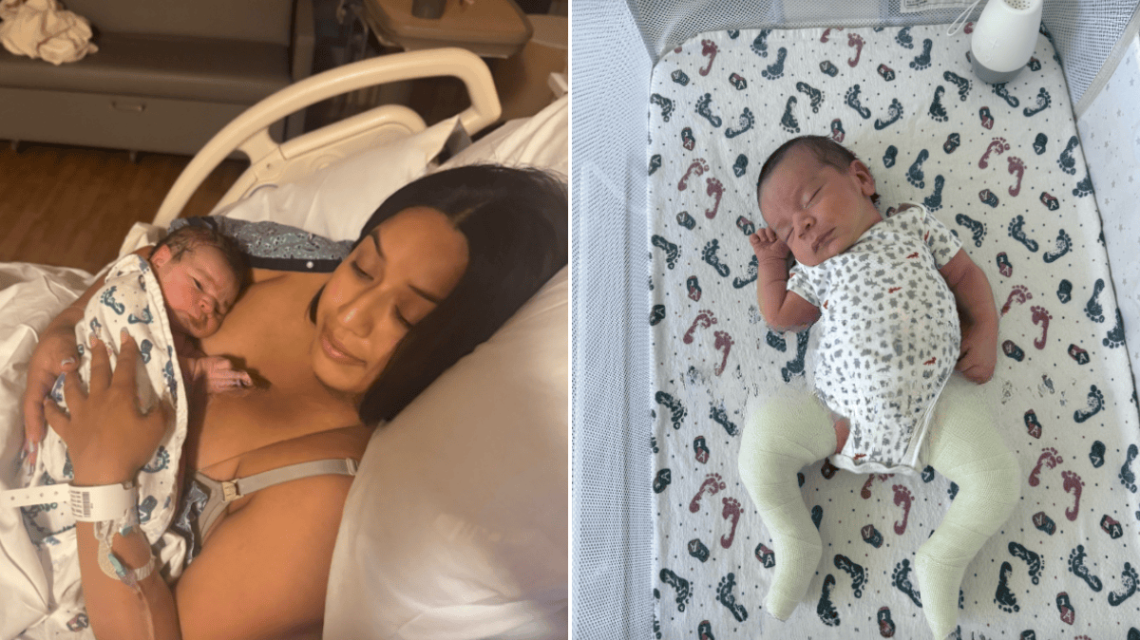
From the start, Michelle Reyes, a mom from Buena Park, California, sensed her son was different. Her third pregnancy felt the hardest, leaving her physically overwhelmed. She requested a chair at work due to difficulty standing for extended periods. Despite these challenges, every medical test showed no concern.
Michelle expected to give birth to a healthy boy. However, upon Tommy’s birth, she immediately noticed his feet turned severely inward. Nurses reassured her, suggesting it was nothing to worry about, attributing it to his position in the womb.
A specialist visited while Michelle was still in the hospital, arranging X-rays for Tommy’s feet.
That marked the first moment they learned Tommy had been born with severe bilateral clubfoot, a condition affecting one in 1,000 U.S. births according to the CDC. This revelation shocked Michelle who recalled randomly stumbling upon a clubfoot video a few weeks prior, something she ignored at the time.
Initially, she blamed herself—wondering if a lack of movement or another factor might have contributed. Her doctor clarified that babies sometimes naturally develop clubfoot with no specific cause.
At six days old, Tommy received his first casts, which covered from his thighs to his toes. Every two weeks, appointments involved removing and applying new casts, slowly straightening his feet. After five sets, he underwent an Achilles tenotomy to enhance his foot’s movement.
Once the final cast was removed, Tommy wore special boots joined by a metal bar 23 hours daily for six months. The duration decreased to 14 hours per day thereafter, worn during sleep and naps.
The Ponseti method, endorsed by the American Academy of Pediatrics, boasts a 90-100% initial correction rate. A Journal of Pediatric Orthopaedics study backed this success, noting a 93% success rate with consistent treatment and bracing.
Michelle observed remarkable improvement in Tommy’s feet, delighted that he could perform typical baby activities—crawling, starting to walk, swimming. She envisions a future where clubfoot won’t hinder Tommy’s growth.
Her family’s experience aims to inspire hope among parents facing similar situations, encouraging them to recognize the possibility for their children to live fulfilling lives despite early health challenges. Michelle wants to instill in Tommy the toughness he exhibited through his early struggles.
She believes sharing their journey gives other parents reassurance that initial overwhelm is normal, yet hope persists. Children can achieve milestones and thrive despite early adversities.
 Advocates Step In as Official Channels Struggle with Family Homelessness
  Exploring Beverages for a Longer Life in Blue Zones
  Growing Support for Government-Run Health Insurance in the United States
  How Health Leaders Can Prepare for Unpredictable Crises
  Coyotes Caught on Camera Sparking Nighttime Barking Mystery
  Addressing Family Misunderstandings and Communication