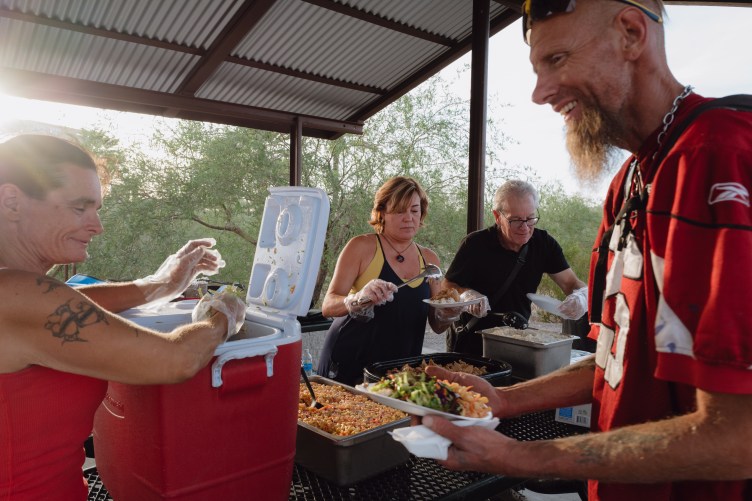
For the past year, Austin Davis has been inundated with requests for assistance from people experiencing homelessness in the Phoenix area. A school worker sought help for a homeless family unable to find shelter space. Could Davis arrange a hotel room? Another case involved a mother of five living in a storage unit. Despite reaching out to a homeless service organization, they referred her to Davis. Passersby provided his contact information to a mother panhandling with six children. ‘I feel like the worst mother,’ she messaged him despairingly.
Most individuals contacting Austin Davis, a poet and advocate for the homeless, previously tried the 211 helpline, exploring official aid routes. Yet, these avenues often advised months-long waits for shelter or housing. His phone transformed into an unofficial emergency shelter hotline, drawing calls and texts from caseworkers, educators, police, and healthcare workers. Even 211 and Family Housing Hub personnel directed people his way.
ProPublica exposed that attempting to access assistance through official channels often leads to dead ends, leaving families hopeless. Davis’ nonprofit, AZ Hugs, provides food distribution at ‘The Hill,’ attracting attention and scrutiny from local officials.
Davis remarked: ‘In a region of nearly 5 million, why is a man in the park the primary hope for assistance?’
AZ Hugs operates nightly meals for homeless people in a suburban Phoenix park. The effort led to 35 trespassing and permit violations. The city of Tempe revised its ordinance, and Davis withdrew a related lawsuit. His efforts now focus on spotlighting the ‘family homelessness crisis,’ fundraising via social media to finance hotel stays for families with young children.
Despite constant requests, Davis admits he can’t keep up. A larger, coordinated effort involving nonprofits and government is essential, he insists, as official channels falter. This year, Maricopa County reported 2,103 individuals in homeless families, the highest since 2015. Families on waiting lists for shelter numbered nearly 200 in late September.
Among those affected is Candice Ortiz, who sought stable housing for months as her 8-year-old grappled with health issues. Text exchanges with Davis reveal his attempts to help her through bureaucracy. Ortiz’s experiences with official channels were frustrating, finding little assistance despite repeated inquiries.
This summer, nonprofits like UMOM faced extraordinary demand, their resources stretched thin amid record heat. Davis tried to push for broader intervention, initiating an online petition urging Arizona’s governor to declare an emergency, potentially unlocking essential funding. With over 5,000 signatures, the initiative underscores a stark plea for action.
While acknowledging these challenges, the state’s response remained limited. The governor’s office emphasized eviction prevention and housing efforts but hesitated over emergency declarations, traditionally reserved for natural disasters.
Davis continues his nightly pleas online for funds to secure temporary shelter, aware that solutions remain temporary amid a deepening crisis. His organization temporarily hosts families in a church, offering respite but acknowledging the broader, unresolved issue of family homelessness in the region.
 Record Book Bans in U.S. Schools Amid Debate
  A Headache Leads to a Life-Threatening Discovery for Julie Nashawaty
  Memphis City Council Meeting Turns Chaotic Over Data Center Vote
  From Birth to Bravery: A Story of Overcoming Clubfoot
  Exploring Beverages for a Longer Life in Blue Zones
  Growing Support for Government-Run Health Insurance in the United States