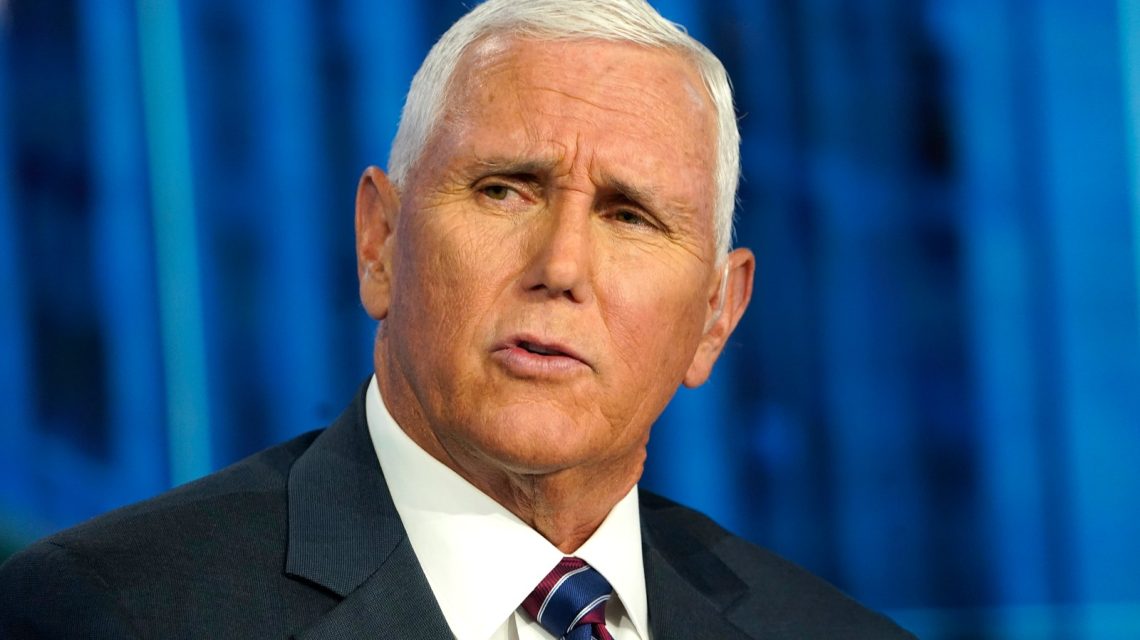
Former Vice President Mike Pence has expressed concerns about reported U.S. concessions to Iran. He described these concessions as much more than a mistake, warning they could act as a lifeline for Tehran. Speaking with CNN’s Kaitlan Collins, Pence praised former President Donald Trump’s decision to strike Iranian nuclear facilities, labeling it a historic move that enhanced America’s safety. He pointed out that this marked the first instance in decades where a U.S. president directly confronted Iran’s ruling regime.
Pence also described the reported details about a memorandum of understanding as resembling appeasement. He urged Trump to maintain a firm stance against Iran, stating this is no time to withdraw. Newsweek contacted the White House via email for comment on Tuesday night.
Background on the Trump Administration’s Actions
Pence indicated that the Trump administration was right initially to pursue diplomacy following the strikes. When questioned by Collins about whether this agreement represents a mistake, Pence responded that it was far larger than a mistake.
“When the president took that historic step to strike those nuclear facilities last year, it was the first time in 47 years that a U.S. president had acted directly against the mullahs in Tehran. America was safer as a result,” he stated.
Pence noted that Trump initially tried diplomacy the following year but eventually acknowledged the need to confront Iran directly. He named this strategy Operation Epic Fury, crediting the military for their response. However, Pence expressed concern over the continuous leaks suggesting immediate concessions, such as sanctions waivers, which he considered misguided.
Critics of the Iran deal expressed worries that the agreement might strengthen Tehran’s regime, without adequately restricting its nuclear operations. Pence advised Trump to revert to his initial instincts of peace through strength, doubting the effectiveness of ongoing negotiations without stronger leverage.
Details of the Reported Agreement
The agreement, as seen in a draft memorandum reported by Bloomberg News, would entail the U.S. and Iran ending hostilities permanently and starting a 60-day negotiation process towards a final deal. The draft proposed that the U.S. lift its naval blockade of Iran, provide sanctions waivers for Iranian oil and petrochemical exports, and collaborate with regional partners on economic development, potentially ensuring up to $300 billion in financing. Conflicting reports emerged about the alleged $300 billion reconstruction fund for Iran.
Vice President JD Vance remarked on Fox News about the situation, saying, “not a single cent of American money under any circumstance, no matter what the Iranians do, goes to Iran.” The draft also highlighted the future removal of U.S., United Nations Security Council, and International Atomic Energy Agency-related sanctions as part of a timeline to be finalized in a comprehensive agreement.
In return, Iran would reaffirm its commitment never to develop nuclear weapons and resolve outstanding nuclear issues in a future accord. Bloomberg also noted the draft’s provision to sustain the current status quo on Iran’s nuclear program during the negotiations.
Developments in U.S.-Iran Relations
The U.S. and Iran have reached a preliminary agreement to conclude months of conflict in the Middle East, according to Trump’s announcement. On Truth Social, Trump mentioned ships moving through safe, secure routes in the Strait of Hormuz, rejecting rumors of a U.S. financial payment to Iran.
Rajan Menon, professor emeritus of International Relations at the City College of New York, commented in Newsweek that Iran’s longstanding pledge against nuclear weapons dates back over two decades. He noted that Iran’s stance is not a new achievement of the prospective deal, as Iran has renounced nuclear weapons since the 2015 JCPOA signed under the Obama administration.
Trump also declared the authorization to open the Strait of Hormuz and the removal of the U.S. naval blockade.
 Rabbi and Jewish Leaders Criticize Adam Brody for ‘Genocide’ Comment
 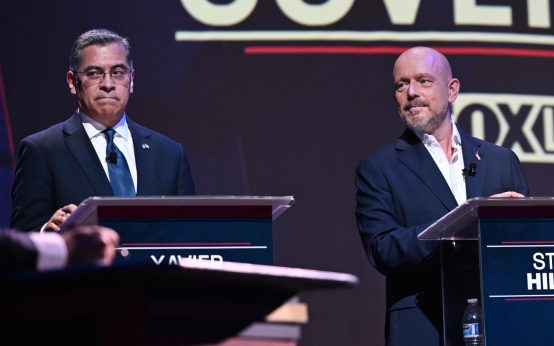 Xavier Becerra and Steve Hilton Debate on California’s Future
  Wisconsin Gubernatorial Race: Tiffany vs. Crowley in a Tight Contest
 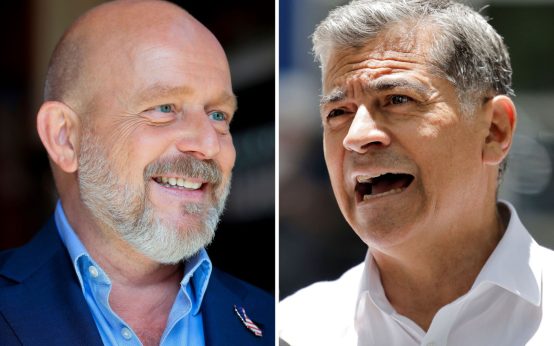 California Gubernatorial Debate: Becerra vs Hilton
 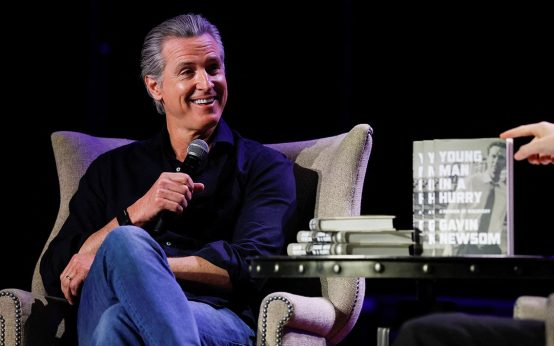 Gavin Newsom Seeks Inspiration from Bill Clinton for Potential Presidential Run
 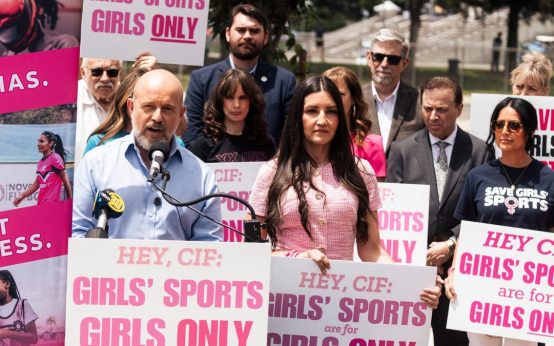 California Superintendent Candidate Stands Firm Against Teachers Union Criticism