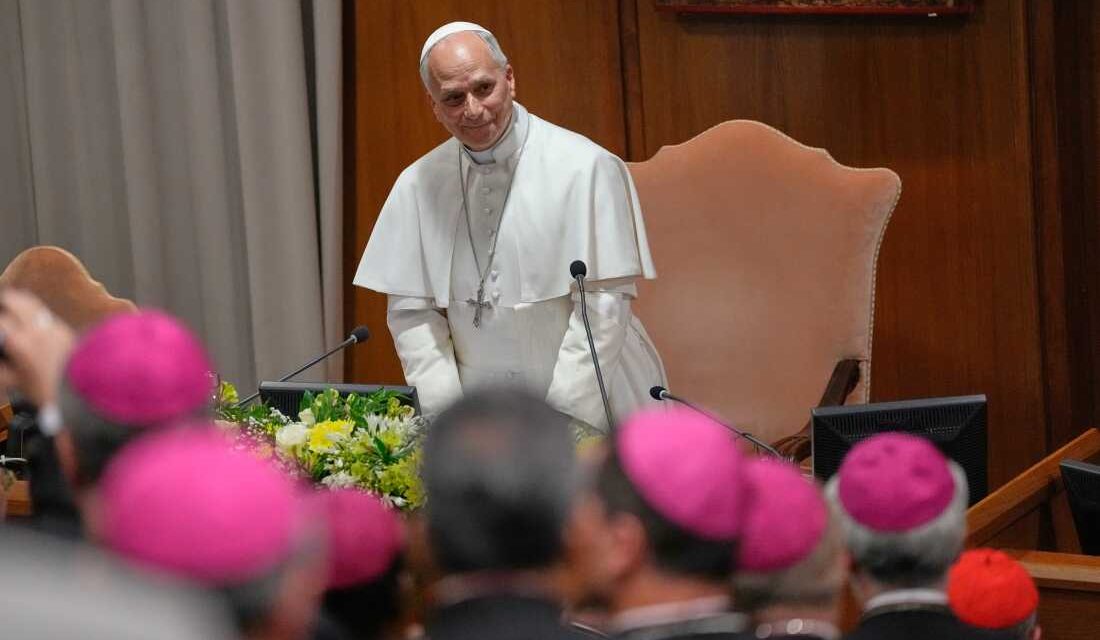
Pope Leo XIV presented his inaugural encyclical, “Magnifica Humanitas” (Magnificent Humanity), at the Vatican on May 25, 2026. In this significant document, the Pope expressed concerns about the influence of Big Tech and the potential risks of artificial intelligence (AI) to society, democracy, and human dignity.
The encyclical portrays AI as a transformative force akin to the industrial revolution. The Pope warned that without ample regulation, AI could widen socioeconomic divides and jeopardize democratic values. He called for the “disarmament” of AI, emphasizing its detachment from military and economic motives and advocating for inclusive involvement in its future development.
Disarming AI does not imply abandoning technology, the Pope stated, but rather preventing it from overpowering humanity. He criticized the concentration of digital power among affluent individuals and companies, which could increase inequality and diminish social justice.
During the presentation at the Vatican’s Synod Hall, Pope Leo drew parallels with the 1891 encyclical “Rerum Novarum,” which addressed industrialization challenges. He stressed the importance of balancing faith, reason, and the concerns of the marginalized in approaching technological advancement. He called for wide participation in AI regulation and governance to ensure its equitable and ethical use.
Chris Olah, co-founder of Anthropic, echoed these sentiments, highlighting that AI development can conflict with ethical considerations due to commercial and geopolitical pressures. Pope Leo articulated that AI must prioritize human dignity and serve the common good, requiring clear accountability at every stage of its lifecycle.
Leo addressed the resistance from AI industry leaders to regulatory measures, clarifying that caution and thorough evaluation do not hinder progress, but protect humanity’s interests. He acknowledged AI’s potential benefits for society and environment but cautioned against its misuse as a tool for control and inequality.
The encyclical criticizes transhumanism and posthumanism views, which perceive human limitations as obstructions to overcome. Instead, Pope Leo champions human dignity irrespective of one’s status or abilities, underscoring that humanity often thrives through its limitations.
Cardinal Víctor Manuel Fernández underscored Catholic teaching’s affirmation of infinite human dignity, counterposing philosophies that suggest replacing humanity. The pope also called attention to the potential for AI to reshape labor dynamics adversely, urging protection for employment and individual roles amid technological growth.
Pope Leo highlighted concerns about AI-driven “colonialism,” emphasizing the need for transparency and equitable sharing of technological benefits. He urged for data stewardship that empowers individuals with decision-making capacities over their own data use.
The document addresses the military application of AI, demanding ethical oversight and human accountability in warfare settings. Pope Leo called for international legal frameworks to regulate the use of AI in military actions.
Drawing from Catholic social teachings, the encyclical frames AI’s social justice implications around solidarity and caring for future generations. It points to invasive surveillance, tech inequalities, and algorithmic biases as new threats to freedom and fairness.
Pope Leo alluded to biblical symbols of Babel and Jerusalem to contrast power-seeking with community-based moral technology advancement. This serves as a reflection on the moral implications behind AI’s application and development.
Expert Brian Patrick Green from Santa Clara University emphasized the opportunity this encyclical provides to scrutinize AI’s purpose and ensure it benefits humanity universally.
 Rabbi and Jewish Leaders Criticize Adam Brody for ‘Genocide’ Comment
  Flydubai’s Emergency Landing Highlights Cockpit Security
  Former Israeli PM Naftali Bennett Commends Passengers and Crew for In-Flight Heroism
  Diplomatic Complexities Unfold at U.S. National Archives Visit
  Russia’s Nuclear Threats Amid Tensions with the UK
  Future Cities: Ambitious Projects Aiming for Innovation and Sustainability