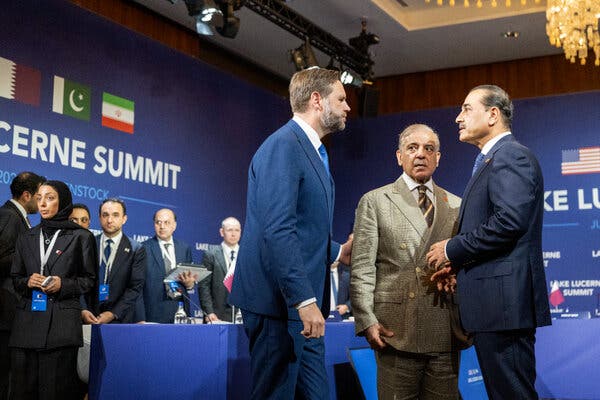
The latest round of discussions between the United States and Iran, which aims to transform a temporary truce into a permanent peace treaty, begins with optimism. The negotiation, hosted in Switzerland, involves representatives from both nations making strides toward a resolution.
Mediators from Pakistan and Qatar announced on Monday that noticeable progress was made during talks led by Vice President JD Vance and Iranian officials. They expressed optimism about reaching a conclusive peace agreement within the next 60 days. Swiss officials described the talks as ‘constructive.’
However, behind the closed doors of the luxurious Bürgenstock Resort Lake Lucerne, complexities in the negotiation remain. Challenges are expected over the coming months, with periods of progress and setbacks likely.
The Iranian delegation, led by Parliament Speaker Mohammad Bagher Ghalibaf, temporarily exited the talks on Sunday. This protest was in response to a social media statement from President Trump, which threatened to resume attacks on Iran if no deal materializes. Both parties eventually returned to the discussion table.
Key issues yet to be addressed have taken center stage at the talks. These unresolved matters highlight the negotiation’s ongoing complexity, suggesting further discussions are necessary to bridge differences.
 British Police Arrest Man Suspected of Terror Plot
  Activists Push for Nationwide Ban on Child Marriage in the U.S.
  Investigation into Alleged Incident at Cornell University
  Rising Drone Threats Highlight Vulnerabilities in Moldova’s Airspace Defense
  Bolivia Faces Security Test Amid Unrest
  Incident on FlyDubai Flight Raises Security Concerns