
Bob Mondello reflects on how a period drama titled The History of Sound reminded him of his father and the evolution of sound recording. The film, starring Josh O’Connor as David and Paul Mescal as Lionel, follows two music conservatory students in 1919 who journey into Maine’s backwoods to record folk songs using wax cylinder technology. This setting coincides with the year of Bob’s father’s birth.
The fictional characters’ pursuit highlights the newfound marvel of sound preservation. Before recording technology, sounds would dissipate into the air. This fact sparked Mondello’s musings on the historical significance of sound recordings. He noted that for most of his life, he didn’t realize sound could be captured until France’s Édouard-Léon Scott de Martinville invented the phonautograph in the 1850s. This device etched sound waves onto soot-covered paper, akin to a seismograph recording earthquakes. However, playing back these etchings wasn’t possible until digital advancements allowed the First Sounds research team to recover a 1860 recording of someone singing “Au Clair de la Lune.”
Thomas Edison then revolutionized this concept in 1877 by recording his voice on tin foil, paving the way for commercial applications of sound capture. Edison’s invention eventually advanced to wax cylinders, the media on which the film’s characters recorded in 1919. This was also the year of Mondello’s father’s birth, tying his father’s timeline to this technological milestone.
Mondello laments that although his career in audio involved countless recordings, he never recorded his father’s voice. The only instance was a short message on his work phone, now lost due to a system update. He regrets not having a recorded keepsake of his father.
The film’s climax, where an older Lionel discovers a lost recording of David’s voice singing “Silver Dagger,” struck Mondello deeply. He yearned for a similar rediscovery of his father’s voice. By coincidence, a friend’s memory led him to a Supreme Court case recording where his father, Tony Mondello, presented an argument in front of Justice Earl Warren. This encounter, recorded in 1963, allowed Bob to hear his 43-year-old father’s voice after decades.
Listening to this voice from the past was profoundly moving. The sound of his father’s assured, youthful voice was a reminder of their shared experiences and knowledge exchanges. This rediscovered audio was reminiscent of the solace Lionel found in the movie.
Mondello expresses gratitude for the historical development of sound recording—thanks to innovators like Edison and Scott de Martinville—allowing him and many others to capture and replay precious memories. He acknowledges the role these inventors played in preserving voices and stories over time.
 Fox News Leads in Viewership Ahead of 30th Anniversary
  Midwest Underground Railroad Network Gains National Recognition
  Art Collective Critiques Administration with Mall Installation
  American Hagwon: A Tale of Family and the Korean Diaspora
  Volunteer Enthusiasm Shines at Frank Lloyd Wright Home and Studio
 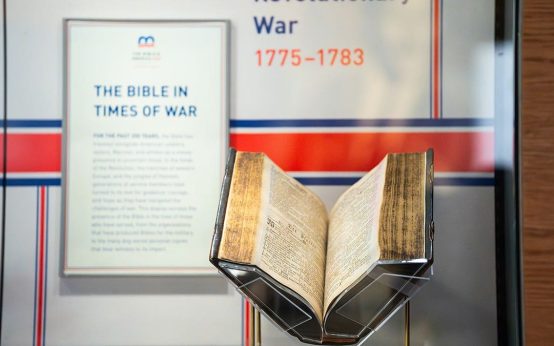 Bible’s Role in Times of War