In a Congress led by Republicans, some members are increasingly willing to challenge President Donald Trump. Despite his strong hold on party voters, this growing faction poses potential obstacles to his agenda on issues like the Iran war and immigration funding. This is significant as the Republican majority in Congress remains fragile.
A New Dynamic in Congress
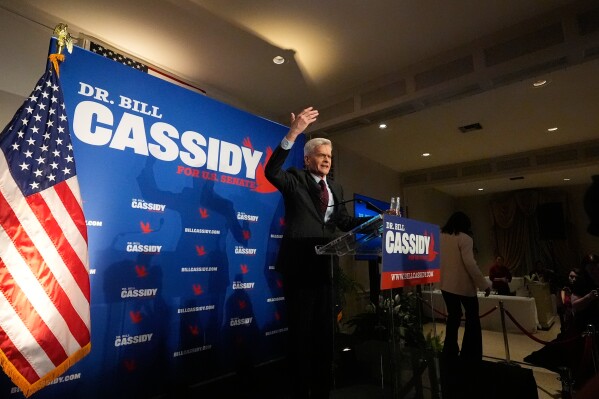
Senator Bill Cassidy from Louisiana recently joined this group. After losing his primary to a Trump-endorsed opponent, Cassidy voted with Democrats to limit U.S. military action in Iran. He emphasized the importance of Congressional oversight over the executive branch, reinforcing his stance.
Similarly, Senator John Cornyn of Texas may join, following Trump’s endorsement of his opponent, Ken Paxton, in the upcoming runoff. Rep. Thomas Massie of Kentucky, a long-standing critic of Trump, has consistently opposed the president’s policies. Massie remains defiant even after losing his primary, emphasizing his commitment to his principles.
Wider Republican Dissent
Other Republicans are also distancing themselves from Trump. Senator Thom Tillis criticizes Defense Secretary Pete Hegseth, and Senator Lisa Murkowski of Alaska voted with Democrats on Iran. Senators Susan Collins and Mitch McConnell have opposed some of Trump’s Cabinet picks, while Representative Don Bacon seeks to reclaim Congressional power over tariffs.
Massie’s comments highlight a concern about unchecked presidential power, asserting that constant alignment with the president creates a monarchy. This sentiment does not signal a revival of the ‘Never Trump’ movement, but it underscores growing willingness among some Republicans to oppose Trump.
Complexity for Republican Leadership
This trend challenges Majority Leader John Thune and House Speaker Mike Johnson, who already manage tight majorities. Even minor shifts in Republican support could make passing significant legislation more difficult ahead of the midterm elections.
An impending test is a party-line vote on immigration funding. Democrats, led by Hakeem Jeffries, aim to exploit divisions, possibly through discharge petitions—a tactic used to advance legislation previously.
Implications of Trump’s Influence
California Governor Gavin Newsom notes Trump’s political power is limited to the Republican base, not the broader public. He suggests Trump’s endorsement of Cornyn’s opponent illustrates his confined influence.
Republicans face the challenge of securing enough votes for legislation. Senator John Hoeven expresses confidence in Cassidy’s principles despite setback. Senator John Kennedy expects Cassidy to continue making rational decisions. Cassidy dismisses notions of causing trouble, pledging to focus on national and state interests.
His independent action reemerged as he critiqued a $1.8 billion fund to compensate Trump allies, focusing on citizens’ concerns over financial hardship.
Correction: The compensation fund for Trump allies is valued at nearly $1.8 billion, not $1.8 trillion. Additionally, the correct name is Customs and Border Protection.
 The Surveillance Threat to U.S. Federal Agents
  Trump Administration Distributes ACA Refund Checks
  Trump Administration’s Approach to Illegal Alien Deportations
  New Jersey Voter Fraud Prompts Renewed Push for SAVE Act
  Concerns Over Changes to Voter-Registration Form for Americans Abroad
  Trump’s 2024 Campaign Targets Young Men Through Cryptocurrency