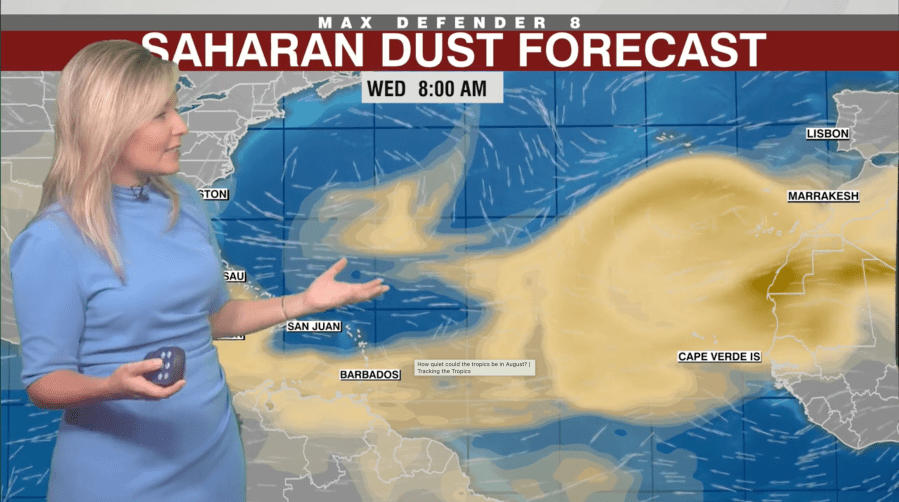
The weather in the southern U.S. has been notably affected by a phenomenon originating from Africa: the Saharan Air Layer, commonly known as Saharan dust. This atmospheric layer, which measures about 2.5 miles in thickness and begins approximately a mile above the ground, travels across the Atlantic Ocean impacting local weather conditions.
Jason Dunion, a meteorologist from the University of Miami associated with NOAA’s Hurricane Research Division, explains the nature and timing of these dust events. According to Dunion, these large dust plumes are as expansive as the contiguous U.S. states and occur every three to five days during summer from Africa, usually peaking between mid-June and mid-August. They play a significant role in weather patterns across the U.S. by affecting storm formations.
The Saharan dust’s warm, dry nature disrupts the formation of thunderstorms and hurricanes. Dunion highlights, “It really helps to cap the atmosphere. It makes it very hard for thunderstorms and clouds to break that really warm layer.” This atmospheric capping is a contributing factor to the calm start of the Atlantic hurricane season.
Rebecca Barry, a meteorologist at Nexstar’s WFLA, observed an interesting development in August, noting a rare and significant plume of Saharan dust. She described it as appearing more typical of May or June rather than late in the season, a rare occurrence strengthening the dust plume analysis.
Besides inhibiting storm formation, the dust results in elevated temperatures, especially in the southern U.S. “We don’t really get those cool afternoon thunderstorms that we usually get when we’ve got these dust outbreaks overhead,” mentioned Dunion. This has led to heat indexes reaching as high as 110 degrees.
The impact extends beyond the South and Gulf states. For instance, KXAN meteorologist Freddy Vela noted consecutive waves of Saharan dust impacting Texas and reaching as far west as Arizona. Another notable effect of these dust layers is their impact on sunrise and sunset visuals. The dust disperses light, creating stunning orange hues across dawn and dusk in affected regions such as Florida. Dunion commented on the phenomenon, noting the dust travels thousands of miles yet remains visible.
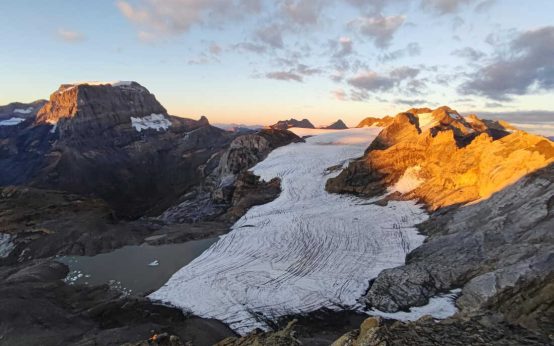 Swiss Glaciers Show Effects of Ice Loss Amid Global Warming
  Climate-Resistant Rock Glaciers: Hidden Water Resources
  Senators Reach Bipartisan Agreement on Permitting Reform
  Experts Warn of Critical Period for the Colorado River
  Future Cities: Ambitious Projects Aiming for Innovation and Sustainability
  Supreme Court Case Suncor vs. Boulder: Implications for Accountability in Climate Change