A NASA telescope is facing a critical situation with its rescue mission encountering a significant hurdle. Katalyst Space Technologies announced that its satellite, Link, has developed thruster issues leading to an uncontrollable spin, disrupting communication. This issue occurred over the weekend, three weeks post-launch of the robotic spacecraft.
Efforts are underway to restore Link’s functionality to proceed with the mission of capturing Swift, a NASA telescope, and elevating it to a higher orbit. If Swift is not rescued, it risks crashing to Earth this fall. NASA allocated $30 million for this urgent rescue operation, organized in less than a year.
Launched in 2004, the Swift telescope is descending faster than anticipated due to recent solar activity. It’s urgent to reposition it to continue vital observations of cosmic events such as gamma-ray bursts and supernovae. Scientific work is paused until the situation resolves.
“The mission remains active and we continue to believe that with these changes, Link has a viable path to rendezvous with Swift,” Katalyst stated.
While the thrusters face issues, all other significant systems in Link are reported to be stable. Both Katalyst Space Technologies and NASA remain hopeful for a successful outcome.
The Associated Press Health and Science Department acknowledges the support of the Howard Hughes Medical Institute’s Department of Science Education and the Robert Wood Johnson Foundation. The AP maintains complete editorial control over its content.
 Climate-Resistant Rock Glaciers: Hidden Water Resources
  California Voters to Decide on $7.5 Billion State Research Fund
 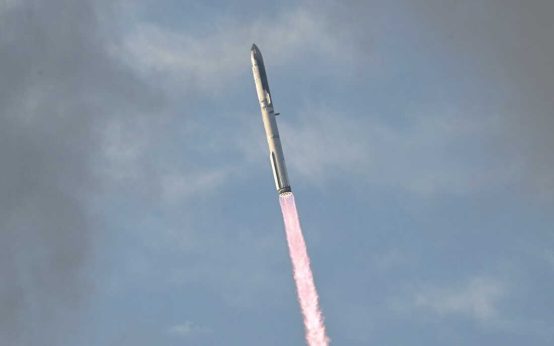 SpaceX Successfully Launches Starship Flight 14 into Orbit
  Ancient Pottery Unearthed During Roadworks in Tbilisi
  U.S. Space Academy Announcement
  The Need for New Strategies in Oregon’s Wildfire Management