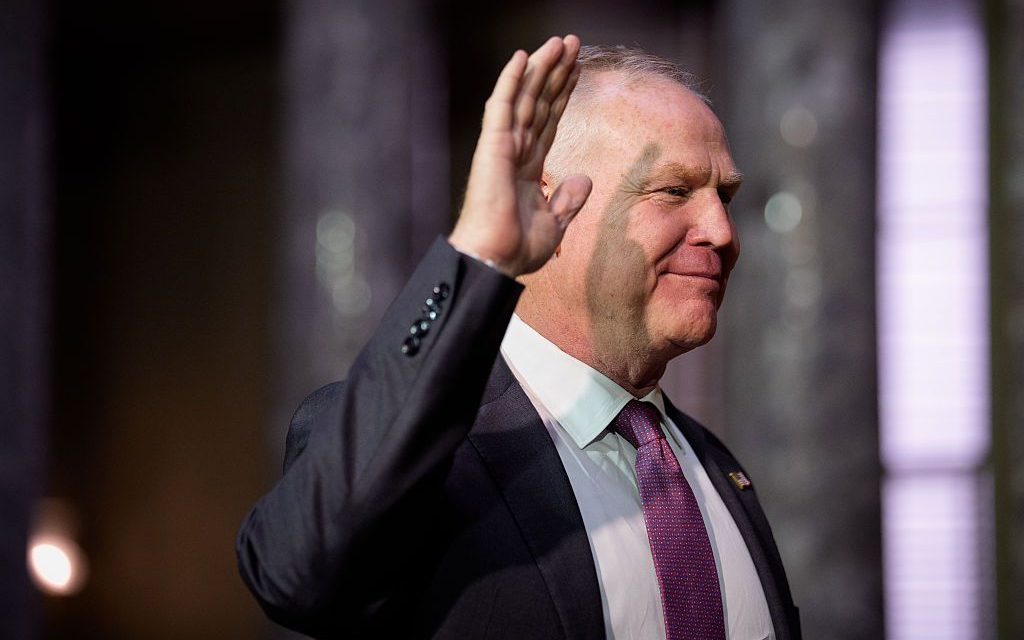
Oklahoma Republican Senator Alan Armstrong is advocating for changes in federal permitting rules to support new power infrastructure in the face of growing electricity demands from data centers. In a Newsweek interview, he highlighted the importance of accommodating energy needs without burdening households with additional costs. The call for reform coincides with mounting concern over artificial intelligence infrastructure becoming a key affordability issue, with 71 percent of Americans opposing local AI data centers, according to Gallup.
Data Centers and Electricity Demand
Armstrong identified current generation and grid infrastructure as inadequate and stressed the need to assign costs of large new energy users, like data centers, to those entities rather than to households. This sentiment reflects broader concerns in Oklahoma, where proposed data centers have faced criticism over increased electricity costs and community disruptions.
Public Opposition and Political Response
Public resistance to data centers spans political affiliations. A Gallup survey showed substantial opposition to local AI data centers, even higher than opposition to nuclear plants. Concerns include resource consumption and economic impacts like increased utility bills. Armstrong dismisses the notion of restricting industry growth, asserting that halting advancement is neither sustainable nor beneficial.
Economic Implications and Research
The debate over data centers and household electricity rates is ongoing. A report by the Lawrence Berkeley National Laboratory and the Brattle Group predicts a significant rise in data-center electricity demand, straining current utilities. Research by Cameron Scalera and colleagues highlights data centers’ contribution to rising residential electricity prices, noting less severe impacts in regions with surplus capacity. Conversely, an Electric Power Research Institute study suggests that increased capacity from data centers may lower average retail electricity rates.
Armstrong’s Proposal and Future Research
Armstrong proposes large-load tariffs to shield residential customers from new infrastructure costs. Berkeley Lab’s examination of large-load tariffs shows provisions aimed at isolating costs to avoid existing customers subsidizing new demands. However, the effectiveness of these proposals awaits further evaluation.
‘I think that we have to have data centers,’ Armstrong noted, arguing they’re unfairly blamed for high energy prices.
Break with Trump and Broader Implications
Senator Armstrong diverged from President Donald Trump regarding Russian diesel imports, advocating for domestic infrastructure expansion instead of funding adversarial nations. His broader permitting agenda ties into easing domestic energy shortages.
Despite his stance, Armstrong clarified he has no presidential aspirations for 2028. His short Senate tenure, marked by an emphasis on long-term policy reform, reflects a desire for a government focused on sustainable progress.
 Over 3,000 ‘No Kings’ Events Aim to Mobilize Early Voters
  Lake County Clerk Election: Mike Brown Vs. Leslie Dallner
  Safeguarding Finances from Cybercrime
  Trump Accuses Abdul El-Sayed of Muslim Brotherhood Ties
  U.S. Military Enhances Preparedness Amid Emerging Threats
  Historic Preservation Faces Challenges Amid Proposed Regulatory Changes