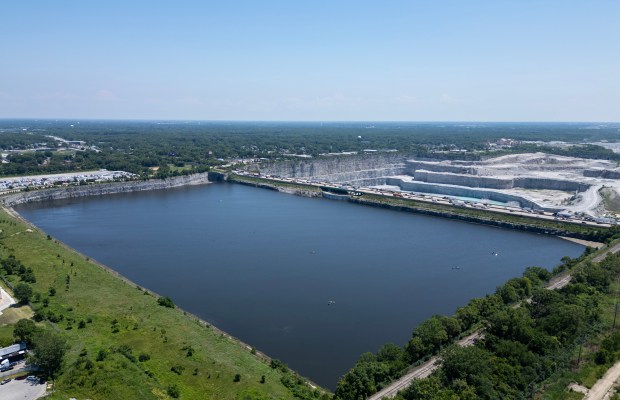
The Thornton Composite Reservoir recently reached unprecedented levels, causing concerns for residents in south suburban areas. The Metropolitan Water Reclamation District of Greater Chicago reported the reservoir at 94% capacity following a weekend of heavy rain. By Tuesday, it decreased slightly to 93%, which translates to roughly 7.3 billion gallons of water. This level is a significant increase from 2019, the previous peak, when it was at 54.5%.
The high water volume exposes nearby communities to unpleasant odors from the vast storage of sewer water. Thornton Village Clerk Nikki Kitakis highlighted the ongoing odor issue, worsened by the reservoir’s current near-capacity state. Residents experience disruptions due to the pervasive smell.
Efforts to reduce the reservoir’s water level involve operations at the McCook Reservoir in Bedford Park, which services central Chicago, and other measures. The Thornton reservoir collects water from 14 communities, including parts of Chicago’s Far South Side, and it is the largest combined sewer reservoir globally.
There is a risk of overbank flooding if the reservoir reaches its full capacity, prompting concerns in affected areas. Dolton residents recounted personal flooding experiences during a recent village meeting. Mayor Jason House acknowledged the issue, empathizing with residents and indicating that comprehensive flood infrastructure updates would cost approximately $50 million.
Matt Stacy, Dolton’s public works superintendent, encouraged residents to hope for dry weather to avoid further complications. The National Weather Service forecasts potential rain later in the week. A Flossmoor rain gauge recorded over 6 inches during the weekend storm.
The district uses gravity to move water from the reservoir to the Calumet Water Reclamation Plant, located 5 miles away. There, the water is elevated approximately 300 feet for treatment, cleaning, and eventual discharge into the Little Calumet River. Although the reservoir can store up to 7.9 billion gallons, approximately 600 million gallons of capacity remain. The district has not provided details on how long it will take to drain the water.
 Atlantic Ends September Without a Hurricane for First Time Since 1994
  Bobcat Sightings and Conservation Efforts in Illinois
  2026 El Niño: A Historical Comparison and Future Projections
  U.S. Records Warmest September in History
  Increased Funding Needed for Psychiatric Hospitals
  Higher Consumption of Ultra-Processed Foods Linked to Increased Health Risks