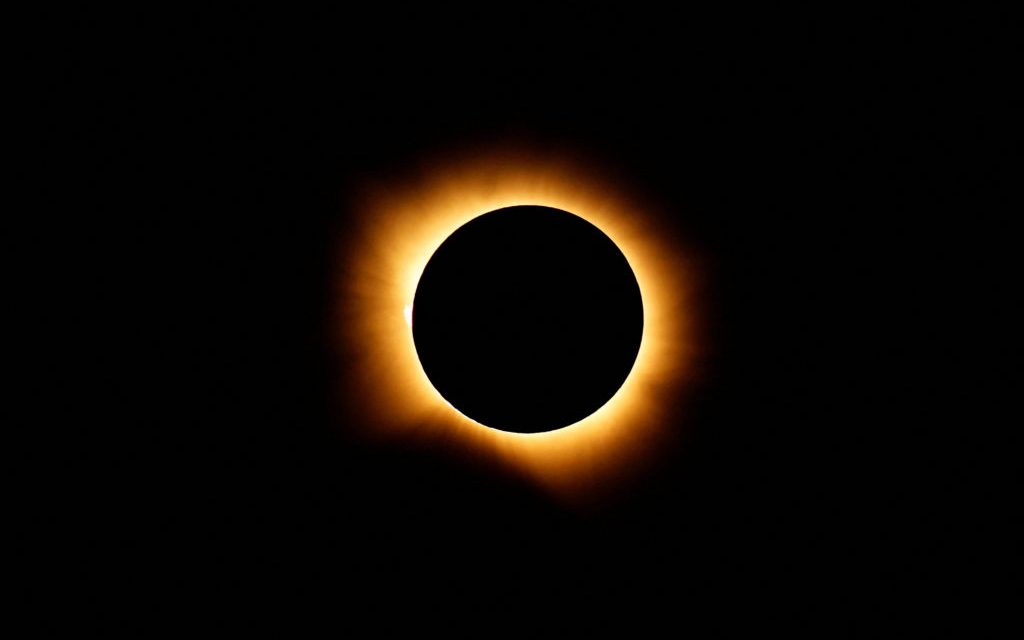
On a clear Wednesday, millions in Spain gathered to view a rare total solar eclipse. For the first time in over a century, the alignment of the sun, moon, and Earth brought parts of the country into temporary darkness.
In cities and small towns alike, people equipped with lawn chairs, umbrellas, and hats eagerly awaited the event. In the village of Villalba del Rey, the eclipse cast its shadow on August 12, 2026, a moment captured by Reuters photographer Ana Beltran.
Totality, the brief period when the moon completely obscures the sun, was eagerly anticipated. This phenomenon, lasting under two and a half minutes at its peak, reached its longest duration west off Iceland before moving towards Portugal and Spain.
The event triggered excitement across Spain’s northern and central regions, known for their optimal eclipse viewing conditions. Visitors from abroad, such as 24-year-old Óscar Pérez, a physics student, traveled to witness the event in Spain, marking it as a once-in-a-lifetime experience.
Safety Precautions and Tourism Impact
Spanish officials prepared extensively for the influx of tourists and potential safety concerns. The Interior Ministry designated 350 official viewing areas while restricting access to 123 others due to environmental concerns.
With wildfires recently impacting the region, authorities emphasized prevention. Over 33,500 law enforcement officers have been deployed to oversee the observation areas. Visitors were advised against activities that could ignite fires, such as lighting campfires or parking on dry vegetation.
Special glasses, essential for safe eclipse viewing, went in high demand, with many stores running low on stock. Telmo Fernández Castro, director of the Madrid Planetarium, stressed the importance of using proper protection to avoid eye damage.
Impact on Hospitality and Tourism
The eclipse significantly impacted travel and accommodation sectors, with room prices in places like Reykjavík soaring. Iceland, expecting its first visible eclipse from the capital since 1433, saw hotel rates surpass $1,000 per night.
Many tourists booked accommodations years in advance, causing a surge of visitors during the peak tourist season. Even cloudy forecasts didn’t deter the anticipation of witnessing this celestial event.
Memorable Experiences
As the world braced for this event, people like Captain Sverre Rud sought the perfect vantage points for observing the eclipse. His ship, the MS Spitsbergen, navigated Greenland’s waters, ensuring passengers an unclouded view.
The anticipation mirrored festive occasions, with comparisons to Christmas Eve made by observers. Reykjavik hotelier Steinþór Jónsson likened the demand to historic events like the Reagan-Gorbachev summit in 1986.
The Associated Press reported further contributions from journalists based in Madrid, London, and Iceland to cover this significant event.
 The Threat of Melting Glaciers: A Call to Action
  Climate-Resistant Rock Glaciers: Hidden Water Resources
  California Voters to Decide on $7.5 Billion State Research Fund
  Ancient Pottery Unearthed During Roadworks in Tbilisi
  U.S. Space Academy Announcement
  The Need for New Strategies in Oregon’s Wildfire Management