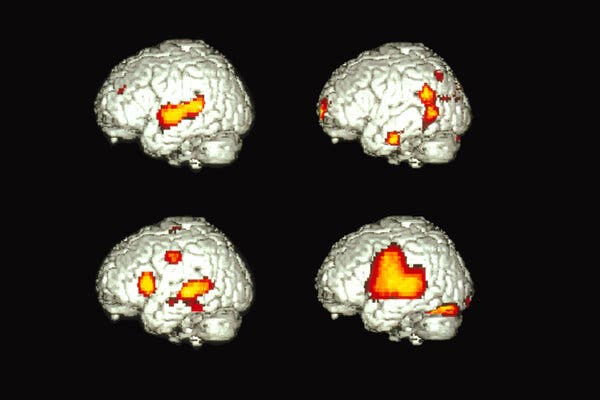
A recent study suggests that bilingual speakers use a single ‘grammatical engine’ in the brain to manage multiple languages simultaneously. This challenges long-standing beliefs about language processing in bilingual individuals.
A prominent finding indicates that brain activity patterns in bilingual speakers are more similar than previously thought. For instance, when making a word singular or plural, their brain activity remains consistent, regardless of whether they speak in their first or second language. This emphasizes a shared processing mechanism for different languages.
“It wasn’t obvious that it was going to be so shared,” remarked Esti Blanco-Elorrieta, a psychologist and neuroscientist at New York University, and an author of the study. She described these findings as very revealing about how deeply integrated two languages can be in the brain.
Historically, bilingualism was seen as an addition or even a disruption to processing native language. However, researchers like Judith Kroll from the University of California, Irvine, acknowledge that bilingual brains show physical differences. These include more efficient white matter and alterations in gray matter, which have been associated with improved memory and concentration tasks.
 Scientific Debate Surrounds Mysterious Object Near the Sun
 Voyager 1 Reaches Light-Day Distance from Earth
 The Value of Kindness: New Research Insights
 SS United States Transformed into World’s Largest Artificial Reef
 Mini-Moon 2026 QQ8 Temporarily Orbits Earth
 California Approves Proposition 38 for Health Research Funding