
In September 2020, the Almeda Fire devastated Southern Oregon’s Rogue Valley. It destroyed thousands of homes, worsening an already difficult housing market in the area. Affected neighborhoods, like Medford Estates, faced serious challenges in recovery.
Artist and contractor Jacob Fry and his wife, Elize, avoided direct damage from the fire but felt a strong need to assist those displaced. They decided to construct two small rental units on their property. Despite financial costs, their focus was on community support and providing housing options for affected families.
These units are known as Accessory Dwelling Units (ADUs). ADUs are secondary, small homes located on the same property as a main residence, typically aimed at providing additional housing without extensive new infrastructure. Names for these units include granny flats, carriage houses, or mother-in-law suites.
Recent legal reforms have simplified the process of adding ADUs. These reforms make construction faster, cheaper, and easier. In California, laws now permit several units per single-family lot while restricting them to long-term residencies. Airbnbs and similar short-term rentals are not allowed. This has significantly impacted the housing industry.
Dana Cuff, a UCLA professor involved in these legislative changes, highlighted the growth potential. She explained that California currently has 82,000 active building permits for ADUs.
Cuff’s own residence provides an example. Her husband designed their ADU to fit seamlessly into their existing backyard layout, replacing items such as an old citrus tree and a children’s treehouse. They rent their main home to young families while living comfortably in their ADU.
Cuff emphasized the environmental and practical benefits of ADUs, stating that urban sprawl is unsustainable. She argued for building within existing spaces to maximize infrastructure use.
Despite advantages, ADUs face criticism from some community members concerned about overextended infrastructure. Parking, sewage, and garbage facilities originally designed for fewer residences might struggle to accommodate increased density.
In Oregon, the Frys found creating ADUs not only tested their relationship but also became financially viable. They offer below-market rates to support tenants such as young newlyweds.
The compact nature of ADUs doesn’t mean sacrificing comfort. Residents like Kaetriauna Bowser-Smith and her family find that 400 square feet feels spacious when properly planned.
Alternatives to massive suburban homes are increasingly appealing. People prioritize housing and collaboration over expansive property. Mona Field in Los Angeles converted her garage into a two-bedroom ADU for herself, choosing simplicity in retirement. This decision offered her house as affordable space for her daughter’s family.
Field’s family proved cohabitation on one property can succeed. Regular shared activities emphasized their close-knit relationships.
Times and priorities evolve. While traditional homes once represented success, ADUs offer variety and efficiency for modern needs.
Professor Dana Cuff urged communities to adapt and imagine new living arrangements, responding creatively to space limitations and expanding options for future residents.
 Swiss Glaciers Show Effects of Ice Loss Amid Global Warming
  Climate-Resistant Rock Glaciers: Hidden Water Resources
  Senators Reach Bipartisan Agreement on Permitting Reform
  Experts Warn of Critical Period for the Colorado River
 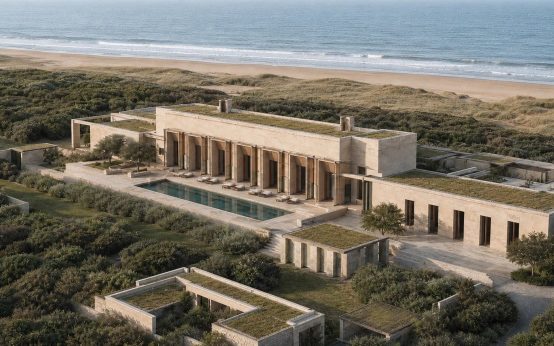 Future Cities: Ambitious Projects Aiming for Innovation and Sustainability
  Supreme Court Case Suncor vs. Boulder: Implications for Accountability in Climate Change