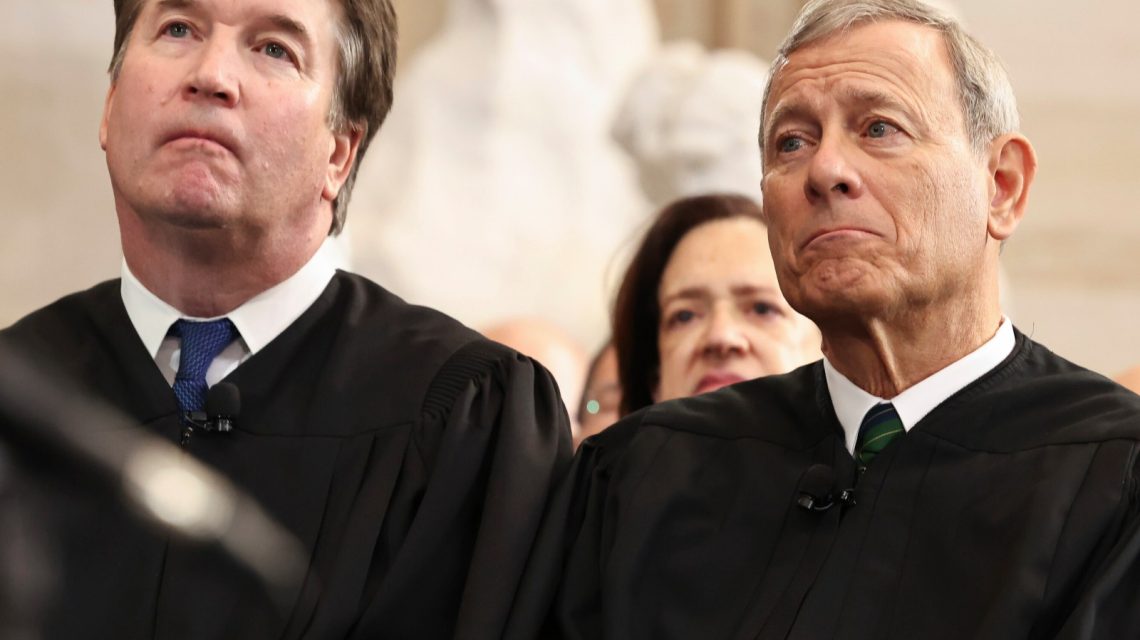
The Supreme Court has ruled that Terry Pitchford, a Black Mississippi death row inmate, can renew challenges to his conviction. Chief Justice John Roberts and Justice Brett Kavanaugh joined the liberal justices, resulting in a 5-4 decision.
This decision highlights differing opinions within the conservative-majority court regarding racial bias in jury selection. It reinforces existing precedents that prohibit discrimination against Black jurors.
The ruling reopens Terry Pitchford’s decades-long legal battle, sending his case back to the lower courts. His conviction and death sentence may be reconsidered. Joseph Perkovich, Pitchford’s Supreme Court attorney, stated, “Mr. Pitchford is now entitled to a fair trial in the state court.”
A Divided Opinion on Racial Bias
The central issue was whether Black prospective jurors were improperly removed during Pitchford’s 2006 trial. Pitchford was sentenced to death for involvement in the robbery and murder of grocery store owner Reuben Britt. Prosecutors excluded four of the five eligible Black jurors, leaving only one on the panel. The defense argued these moves were racially motivated.
The case hinged on the Batson v. Kentucky decision from 1986, which forbids juror exclusion based on race. It requires courts to scrutinize reasons given by prosecutors for such exclusions. Pitchford’s attorneys claimed they lacked a meaningful chance to argue that those reasons were pretextual. This conclusion had been reached by a federal district judge in 2023, overturning his conviction.
A Court of Appeals subsequently reversed this ruling, siding with the Mississippi Supreme Court. They claimed Pitchford’s attorneys did not adequately preserve their objections during the trial. However, the Supreme Court’s decision now allows Pitchford’s challenges to be reconsidered.
Justice Kavanaugh, in the majority opinion, expressed that the trial court did not give Pitchford’s counsel enough chance to counter the prosecutor’s race-neutral reasons. He noted a failure in ordinary trial-court procedure to resolve Batson claims.
Conversely, Justice Neil Gorsuch dissented. He argued the record showed prosecutors had legitimate reasons for striking jurors. Gorsuch cited reasons such as returning late to court, history of mental issues, familial criminal history, and lack of opinion on the death penalty.
The Prosecutor and the Shadow of Flowers v. Mississippi
This case resembles Flowers v. Mississippi. In 2019, the Supreme Court overturned a conviction also involving prosecutor Doug Evans. Justice Kavanaugh described Evans’ consistent effort to exclude Black jurors.
Evans prosecuted both Pitchford’s and Flowers’ cases. The same trial judge presided over both trials.
Background on Terry Pitchford
Terry Pitchford, currently 40, participated in the 2004 robbery that resulted in Britt’s death when he was 18. His accomplice shot Britt but was ineligible for the death penalty due to being under 18.
Pitchford was convicted in 2006 and sentenced to death. He has spent almost two decades on death row. His appeals center on racial bias allegations in jury selection, emphasizing judiciary inadequacies in evaluating racial discrimination during his trial.
Pitchford argues the trial judge prevented full examination of prosecution’s explanations for juror exclusion, hiding potential racial motives. The Supreme Court’s decision supports closer scrutiny of this issue.
This article includes reporting by the Associated Press.
 Lindsay Clancy Faces Potential Retrial After Mistrial
  Tennessee Prepares for Rare Execution of Woman on Death Row
  Mistrial in Lindsay Clancy Case: Juror Speaks Out
 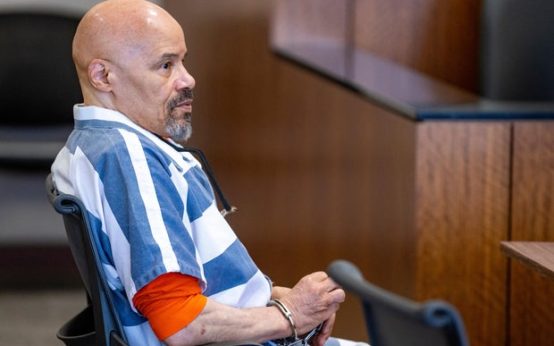 Utah Judge Orders Release of Man on Death Row After DNA Evidence Emerges
  Kurt Olsen Resigns from the Justice Department Amid Investigation
  New Developments in Cornell University Fraternity House Assault Case