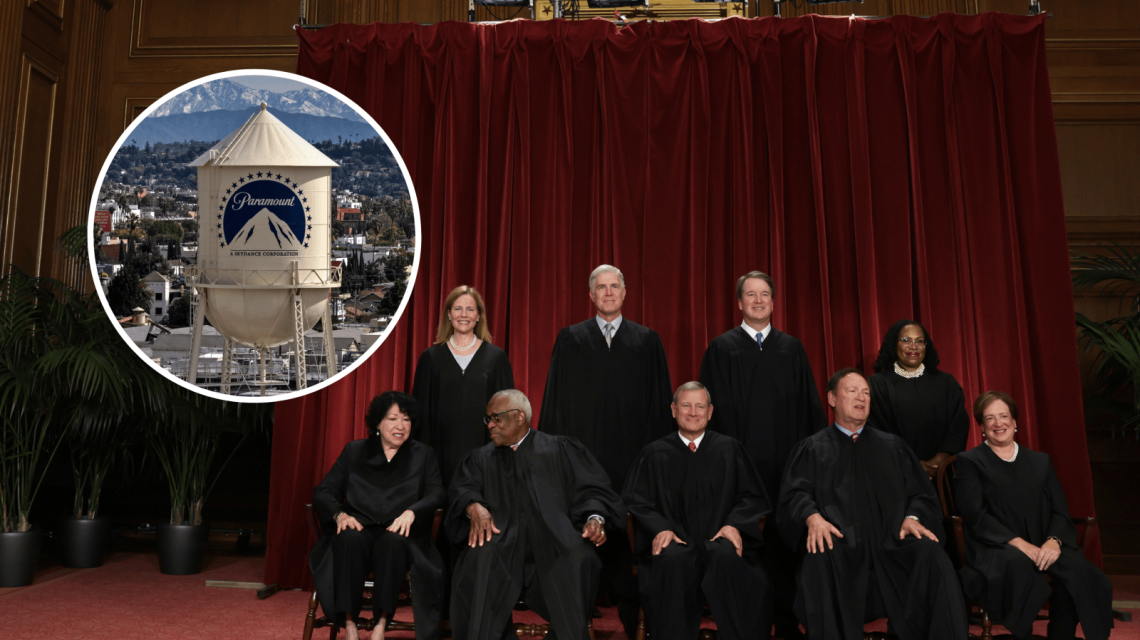
The Case at Hand
During recent arguments in Salazar v. Paramount Global, Supreme Court justices reacted humorously to a lawyer’s response. This case holds significance for digital privacy in the context of the Video Privacy Protection Act (VPPA) of 1988. Originally designed to safeguard consumers’ personal information, the case seeks to determine the law’s relevance in today’s digital environment.
Michael Salazar initiated the lawsuit, claiming that Paramount violated the VPPA. He alleges that Paramount disclosed his video viewing history on 247Sports.com to Facebook without consent. This action, he argues, counters the 1988 law which restricts video providers from sharing personal identification and viewing details without permission. Previously, Salazar was part of a similar litigation involving the NBA.
Paramount’s Argument
Paramount contends that Salazar doesn’t qualify as a protected consumer. They argue that his subscription to a newsletter, not a dedicated video service, doesn’t meet the criteria. Paul Clement, Paramount’s attorney, brought several examples forward. He argued that websites like Chick-fil-A have videos but aren’t primarily video providers.
“That’s not what the website is mostly about. But if you go to the website, the first thing you’ll see is like a video starts playing. You don’t even have to click on anything, it just starts playing,” Clement stated.
Chief Justice John Roberts challenged these hypotheticals. He suggested that focusing only on simple examples isn’t sufficient, as other stores offer varied products, including specific videos.
Clement’s quick-witted response that he focuses on the easier hypotheticals drew laughter from the justices. Roberts, in response, indicated that the focus should be on challenging examples.
Court and Appeal
The lower court sided with Paramount, stating that Salazar’s subscription primarily to the newsletter doesn’t classify under audiovisual materials. However, other courts have ruled that newsletter subscriptions from video service providers indeed define one as a “consumer,” according to Salazar’s attorneys.
Video Privacy Protection Act Explained
The VPPA originated during the time of video rentals, prompted by a leak involving Supreme Court nominee Robert Bork’s movie rental records. Although the Senate rejected Bork’s nomination for his judicial stance, bipartisan discontent led to the VPPA’s enactment.
Key Issues
The Supreme Court needs to clarify whether “goods or services from a video tape service provider” includes all offerings or exclusively audiovisual products. During the hearing, Clement suggested that Salazar was misapplying the statute by including non-video transactions.
“Just as one when referring to goods or services from a medical service provider, would not logically refer to a cup of coffee or valet parking when one refers to goods or services from a videotape service provider, one does not logically refer to chicken sandwiches or dog bandanas,” he explained.
Salazar’s attorney, Joshua Hammack, countered by stating that Paramount seeks to restrict the law’s interpretation unduly. He emphasized that Congress specified audiovisual limitations uniquely in relevant sections, excluding the “consumer” definition.
“It’s not everyone who happens to deliver them. It’s not everyone who provides a video once. You have to be engaged in that business,” Hammack noted regarding what constitutes a video service provider.
Awaiting a Decision
The Supreme Court will deliver a decision on the Salazar case by the end of its term, expected by June 2027. The Court will also address other cases with significant ramifications, including those on the Second Amendment and climate change.
For further details and comments, the Newsweek staff, including editor Gray R. Thomas, have been contacted.
 Bear’s Halloween Candy Adventure in Alaska Hospital
  High School Athletes Protest Gender Policy at Cross-Country Meet
  Trump Announces Weapons-Testing Facility in Montana and Defends Policies
  Tony Romo Faces Challenges Amidst Career Changes
  A Cybersecurity Approach to AI Offers Potential Solutions
  Who Should Bear Responsibility for AI Mistakes?