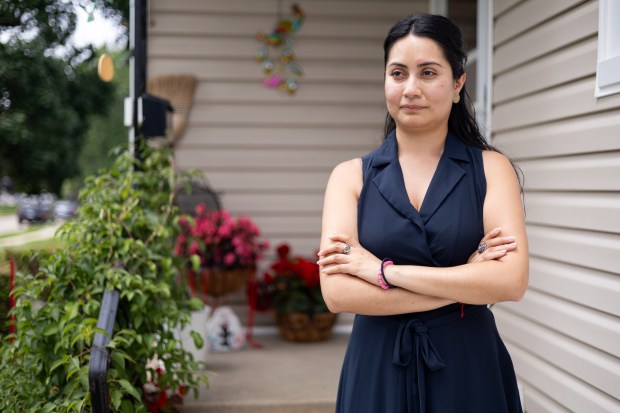
In Chicago, an expectant mother feared her daughter might be born without the typical rights of an American citizen. The woman, 42 years old and undocumented, faced considerable anxiety as the Supreme Court debated birthright citizenship. On Tuesday, she felt relief as the Court upheld this practice, countering President Donald Trump’s executive order. This order had aimed to deny citizenship to children born to undocumented or temporary residents.
“It’s like a weight lifted off my shoulders,” said the woman, originally from Mexico. She sought anonymity due to her immigration status. “I’m excited that my baby won’t be stripped of her rights.” Many in Illinois celebrated the Supreme Court’s 6-3 decision, which dealt a significant blow to Trump’s anti-immigration efforts. The court confirmed that under the Constitution’s 14th Amendment, those born on U.S. soil are citizens regardless of their parents’ immigration status, with few exceptions.
Trump had signed an executive order ending automatic birthright citizenship during his second term, challenging over a century of legal understanding. His measure, set to apply to births after February 19, 2025, was blocked by lower courts. Experts estimated it could have affected over 250,000 babies born annually in the U.S.
Illinois Governor JB Pritzker called the ruling an “important victory,” adding, “Today the Supreme Court sided with the Constitution.” He cautioned that Trump might continue to bypass the law. “Trump’s racism made him unable to understand that birthright citizenship helps make America great,” Pritzker added.
Challenging birthright citizenship was a key part of Trump’s campaign promises. The order was part of broader immigration restrictions, including refugee caps and mass deportations targeting major cities. Illinois State Rep. Barbara Hernandez shared an emotional response when she learned of the Supreme Court’s decision. Her mother came to the U.S. while pregnant with her, and Hernandez was born in America.
“Hate lost today because this executive order was done by hate,” said Hernandez. Her comments align with others who viewed the decision as upholding the United States’ inclusive values.
Attorney General Kwame Raoul and 20 other states had legally challenged Trump’s order. Raoul noted the personal significance as he is a birthright citizen born to an immigrant mother.
Not everyone welcomed the news. Illinois Rep. Mary Miller criticized it, calling it “disappointing.” Trump remarked the decision was “too bad for our Country.” The decision hinges on constitutional grounds and would require an amendment to change.
Online reactions varied, with some calling the ruling common sense and others expressing concern over immigration policies. Local immigration advocates praised the Supreme Court’s decision as a reaffirmation of citizenship rights. Fred Tsao of the Illinois Coalition for Immigrant and Refugee Rights described it as a reaffirmation of the principle that those born in the U.S. are citizens.
The court cited the landmark 1898 case United States v. Wong Kim Ark. Wong Kim Ark was born in San Francisco to Chinese immigrants and denied reentry to the U.S. under the Chinese Exclusion Act. The Court ruled in favor of Wong, stating that the 14th Amendment ensures citizenship for anyone born in the U.S. with few exceptions.
The American Civil Liberties Union of Illinois highlighted the decision as a constitutional reaffirmation but warned of future legal challenges. The moment calls for engagement to ensure no president dictates constitutional interpretations. Jason Mazzone of the University of Illinois praised the Court’s decision, remarking on its significance as the nation approaches its 250th anniversary.
 The Trump Team’s Challenge to the Military Leadership
  Cargo Plane Crash at Miami International Airport
  Maryland First State to Restrict Electronic Pricing in Grocery Stores
  Activists Push for Nationwide Ban on Child Marriage in the U.S.
  Marine Veteran Suing Oregon School District Over Curriculum Reimbursement
  Democratic Hopes and Historical Warnings in 2026 Senate Race