Switzerland voted against a proposal to limit its population to 10 million in a recent national referendum. The Swiss People’s Party pushed for the cap to control population growth driven by immigration.
Switzerland, known for its multilingual success, formed its federal union through medieval and early modern European wars. The country consists of German, Italian, French, and Romansh-speaking cantons. Strategically protected by mountains, the Swiss enhanced their defense with military readiness. The Swiss Guard has been protecting the Pope since 1506, evolving into a versatile agency combining police, security, and investigation functions.
Switzerland maintained neutrality during World War I and II, a stance supported by mandatory military service for men. Upon completing service, Swiss men must regularly retrain and keep a military rifle and ammunition at home. With a population of 9 million, Switzerland can quickly mobilize up to 200,000 men.
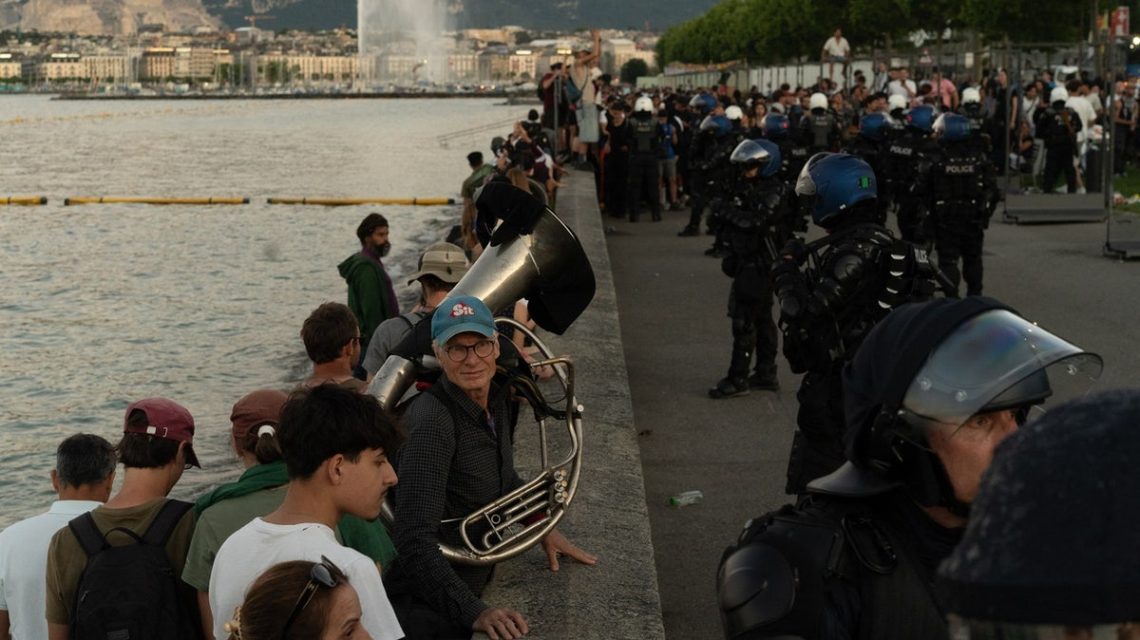
Police encircled protesters during the No G7 demonstration in Geneva, Switzerland, on June 15, 2026, in a large-scale kettling operation.
Switzerland developed a vast network of tunnels, bunkers, and hidden weapons to deter foreign aggression. During WWII, gun emplacements and tanks were concealed behind houses facing mountain roads. The country boasts shelters sufficient for its entire population, comparable only to Israel.
Instead of guns or tanks, planes, cars, and foot traffic bring the latest wave of immigration. Since 2002, Switzerland’s population has grown by nearly a quarter, largely from immigrants. With native Swiss fertility rates low at 1.29, immigration drove this growth. Most newcomers are from Europe, but many arrive from other regions, including Algeria and Somalia. The Muslim population now exceeds 6%.
Population growth strains housing, jobs, education, and healthcare. This prompts natives to have fewer children, but lower fertility rates lead politicians and businesses to push for more immigration. This cycle resembles patterns in places like Sweden and U.S. states such as California.
Opposition to the cap included multinational businesses, the EU, UN, NGOs, academics, and pro-migration advocates. NPR reported the Swiss rejection as defeating the “right-wing’s bid.” Economists favor open national borders, arguing they are key to economic prosperity.
Voting for the cap were mainly rural Swiss concerned about pressures on housing, healthcare, and infrastructure. Proponents aim to preserve Switzerland’s countryside and lifestyle. Some migrant groups outnumber the minority Romansh speakers, one of the official languages.
If approved, the cap would limit asylum seekers and family reunification upon reaching 10 million and end free movement with the EU. Concerns about EU reactions impacted urban opposition due to Switzerland’s trade reliance.
Globalist interests triumphed, but with ongoing pressures, another referendum on migration control may arise. Next time, the outcome might differ.
 Dutch Review Board’s Euthanasia Ruling and International Debate
  Israeli PM Commends Heroic Actions in Flight Emergency
  Rabbi and Jewish Leaders Criticize Adam Brody for ‘Genocide’ Comment
  Flydubai’s Emergency Landing Highlights Cockpit Security
  Former Israeli PM Naftali Bennett Commends Passengers and Crew for In-Flight Heroism
 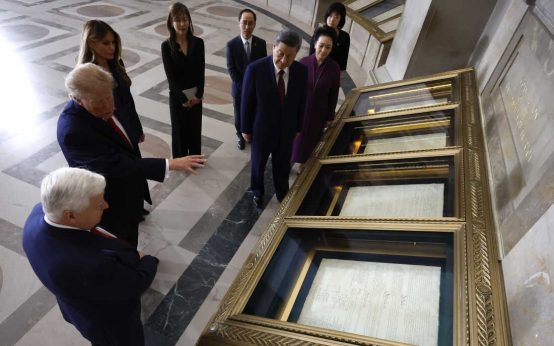 Diplomatic Complexities Unfold at U.S. National Archives Visit