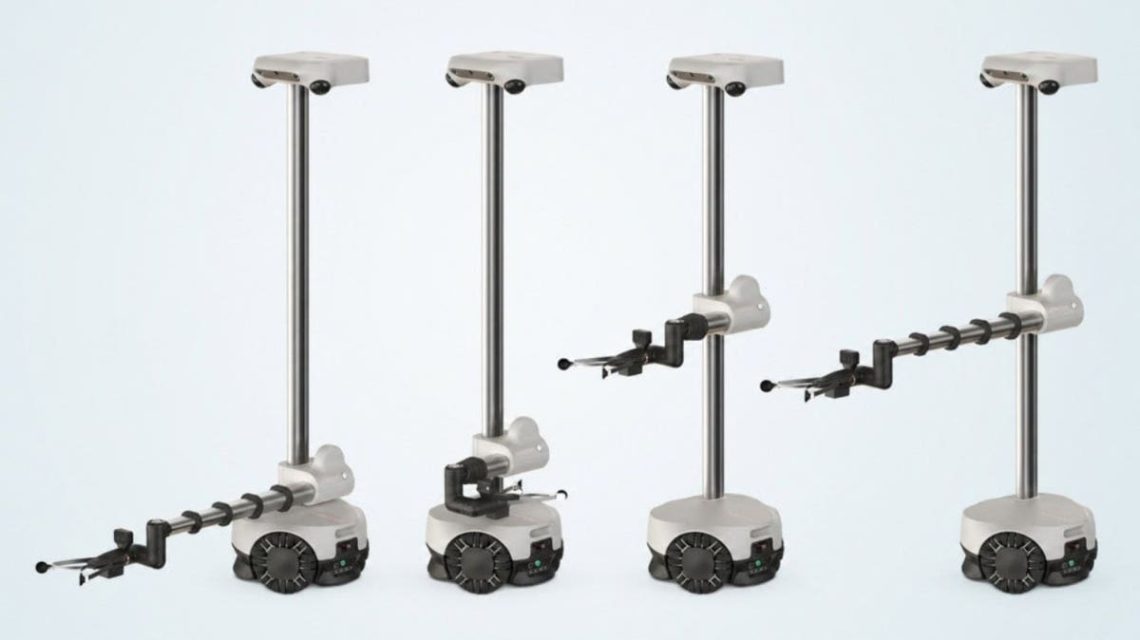
A new wheeled robot is poised to provide assistance in homes before humanoid robots become commonplace. Hello Robot’s Stretch 4 focuses on practical, everyday utility. Unlike many robots that mimic human shape and motion, Stretch 4 opts for a wheeled design, suitable for navigating real home environments with rugs, cords, and obstacles.
Stretch 4 stands out with its lifting column and extendable arm, designed to reach objects at various heights. This design prioritizes safe movement and assistance. It aims to offer a realistic approach to home assistance, potentially making daily tasks easier for people with mobility challenges.
What is Hello Robot’s Stretch 4?
Stretch 4 is a mobile robot tailored for indoor use. It resembles a sleek rolling assistant rather than a humanoid figure. Its structure includes a wheeled base, a lifting column, and an arm capable of reaching objects. It also features tools for mapping, navigation, and self-charging.
The robot is intended primarily for research and laboratory environments. However, the company plans home pilot tests to better evaluate its real-world performance. Such tests are crucial for demonstrating its utility beyond controlled environments.
The Rationale Behind Wheeled Movement
Unlike humanoid robots that attract attention for their human-like appearance, Stretch 4 uses wheels, sidestepping the risk and complexity of robotic legs. Wheeled mobility suits homes already adapted for wheelchairs. This approach raises a simple question: why choose walking when rolling is more practical?
Enhanced Navigation in Tight Spaces
Stretch 4 features an omnidirectional wheelbase, allowing it to move in any direction without turning. This facilitates easy navigation in cramped spaces, such as around beds or kitchen islands. The design borrows from wheelchair technology, emphasizing practical assistance.
Advanced Sensor Capabilities
The robot’s sensor suite includes lidar and wide-angle cameras to avoid obstacles and handle objects with precision. These sensors enable the robot to adapt to changing environments, making it suitable for use in dynamic home settings.
Human Oversight Remains Important
Despite sophisticated automation, Stretch 4 involves human control. Users can direct or supervise the robot, enhancing safety and practicality. Full autonomy in home robots is not yet viable due to the unpredictable nature of home environments.
Potential Benefits for Users
Stretch 4 is particularly beneficial for individuals with severe mobility issues. Simple tasks, such as picking up items or reaching for objects, can significantly affect independence for these users. The wheeled robot’s stability provides practical support.
Why Safety is Crucial
Safety features on Stretch 4 include force limiting, collision and tilt avoidance, and an emergency stop button. These reduce risks around people, pets, and household furnishings. Robots with added complexity, like humanoid designs, face greater safety challenges.
Market Position and Cost
The Stretch 4 costs $29,950, targeted at researchers and organizations rather than typical households. While not yet available for general consumer use, these early deployments will refine its capabilities and performance in real settings.
For families needing assistance due to mobility challenges, Stretch 4 offers a promising look at the future of assistive technology. It emphasizes a practical design over flashy aesthetics, with potential to impact daily life significantly.
 Trump’s 2024 Campaign Targets Young Men Through Cryptocurrency
  How Modern Windows Improve Home Insulation
  State Department Simplifies Passport Process with Online Applications
  Senate Democrats Block Data Center Bill Over Efficiency Concerns
  Future Cities: Ambitious Projects Aiming for Innovation and Sustainability
  High-Profile Hearing and AI Developments: Key Political Moves