“Tax the rich” serves as a simplified political solution in America. This approach often emerges when there’s a call for more funding for government initiatives, such as free college, universal healthcare, or expanded Social Security. Increasing taxes on the wealthy seems like a straightforward answer.
A glimpse into this concept unfolds within a broader discussion about its feasibility. A pivotal element in understanding this narrative involves the actual financial numbers. The Cato Institute assessed the costs tied to several proposals from the Democratic Socialists of America’s 2026 platform.
The Financial Implications
Cato’s findings suggest these proposals could amount to a range from $71 trillion to $212 trillion over a decade. These figures stem not from a single budgetary assessment but from a compilation of estimates to show potential costs.
Richest Americans’ Contribution
Analyzing the wealth of America’s richest individuals provides perspective. Cato’s analysis reveals that the collective wealth of the 400 wealthiest Americans was about $6.6 trillion in 2025. Assuming the improbable scenario of confiscating all of their wealth, it would cover merely 9% of Cato’s $71 trillion low-end estimate.
Corporate Profits as a Revenue Source
Consider redirecting all corporate after-tax profits to fund these proposals. Cato estimates these profits could total around $35 trillion over a decade. Capturing all of it would only cover about half of the lower cost estimate. This drastic move would ignore the roles of shareholders, reinvestment, and jobs.
The Income-Tax Rate Factor
The potential revenue from significantly raising top federal income-tax rates is another avenue. However, Cato’s use of calculations from Joint Committee on Taxation economists suggests it might yield approximately $400 billion in additional revenue over ten years. This amount is surprisingly small due to taxpayers’ ability to adjust behaviors in response to changes in tax rates.
Consequence of Exhausting the Rich
Politicians might avoid discussing what happens when billionaire funds dry up. The burden then starts shifting down the economic ladder, initially affecting millionaires, followed by business owners, and eventually reaching upper-middle-income families. Ultimately, the average taxpayer could face increased financial demands.
Margaret Thatcher once noted socialism’s flaw in running out of other people’s money. Today, discussing politics might continue, but the challenges in addressing the arithmetic persist.
 Becerra and Hilton Clash in California Gubernatorial Debate
  California Voters to Decide on $7.5 Billion State Research Fund
 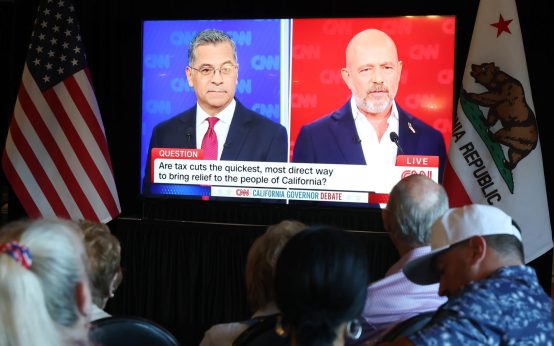 Highlights from the California Gubernatorial Debate: Becerra vs. Hilton
 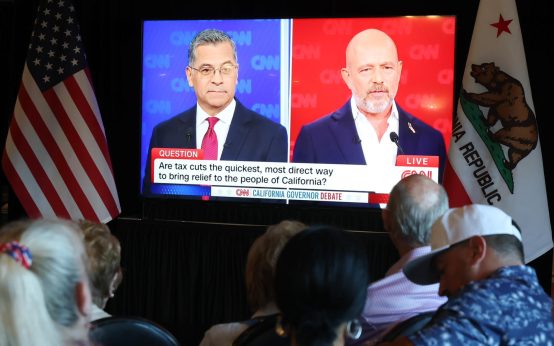 Becerra vs. Hilton: The Debate and Key Issues in the California Governor Race
  Senate Confirms New Labor Secretary
  Hegseth’s Ambitious Military Initiatives to Reshape Warfare