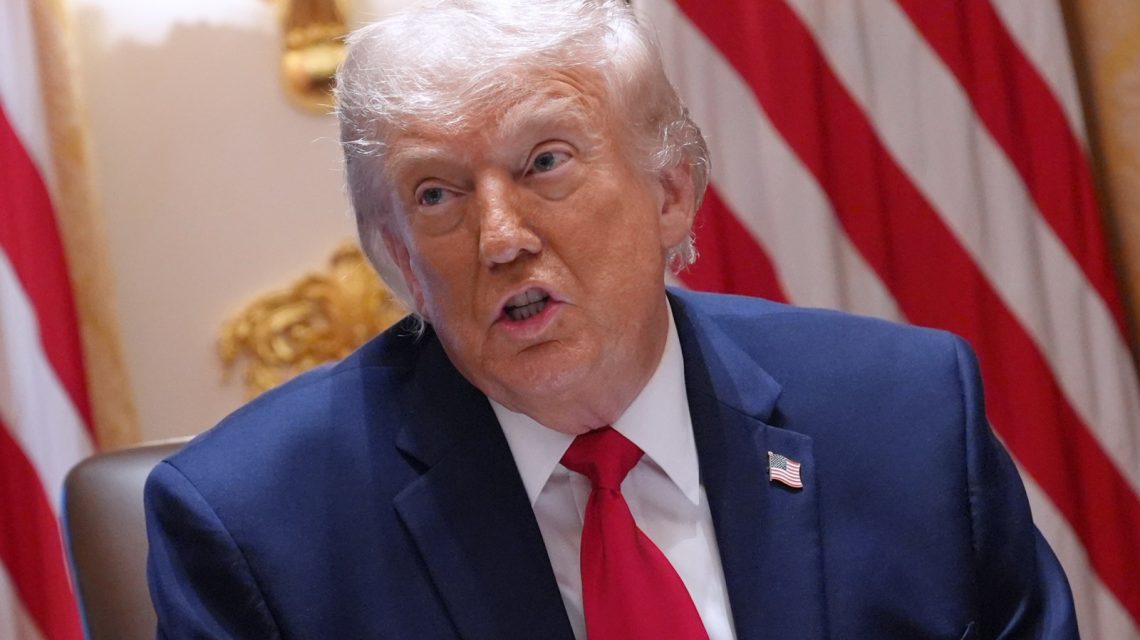
President Donald Trump has criticized the Supreme Court for its management of his attempt to limit birthright citizenship. He labeled the system as “rigged” and indicated concerns that the court might nullify his executive order, which is approaching a decisive verdict.
In a Truth Social post on Saturday evening, Trump mentioned that the court system was “RIGGED, no different than our Political System is RIGGED, and the people of our Country know it.” He credited this understanding for his election, committing to “FIGHT, FIGHT, FIGHT!”
The Supreme Court is reviewing a bundle of cases opposing Trump’s 2025 executive order aiming to reduce birthright citizenship protections under the 14th Amendment. This ruling might significantly impact Trump’s policy, focusing on the legal argument regarding birthright citizenship based on U.S. soil birth.
Trump Criticizes Judge and Family
In the same social media post, Trump targeted U.S. District Judge Christopher Cooper. Cooper, an Obama appointee, recently opposed Trump in a separate issue concerning the Kennedy Center. He blocked a plan to rename and renovate the center, calling the board’s decisions illegal.
Trump also commented on Cooper’s wife, Amy Jeffress, labeling her an “anti Trump Hater.” Jeffress is a partner at Hecker Fink and has represented notable figures against the Trump administration, including Lisa Page. She also served as a legal adviser for the House committee on the January 6 Capitol attack.
In 2025, Trump reshuffled much of the Kennedy Center’s board, appointing allies like second lady Usha Vance, Deputy Chief of Staff Dan Scavino, and Chief of Staff Susie Wiles.
Birthright Citizenship Legal Proceeding
Trump’s 2025 order, “Protecting the Meaning and Value of American Citizenship,” targets the 14th Amendment, denying automatic citizenship to certain children born in the U.S. Citizenship is proposed only if one parent holds U.S. citizenship or is a lawful permanent resident.
The administration argues that the term “subject to the jurisdiction thereof” excludes children of undocumented immigrants and select visa holders. This interpretation faces substantial legal opposition, with numerous lawsuits condensing into major challenges from Massachusetts, Maryland, and Washington.
The Supreme Court has engaged in oral arguments and a decision is forthcoming.
Supreme Court Justices’ Perspectives
During the oral arguments, justices expressed doubts about narrowing birthright citizenship. Chief Justice John Roberts questioned the government’s use of narrow historical exceptions for broadly excluding immigrant categories, calling some examples “very quirky.”
Roberts dismissed concerns from Solicitor General D. John Sauer about modern travel facilitating childbirth in the U.S., maintaining that “the same Constitution” applies.
Additional justices, including Neil Gorsuch, Brett Kavanaugh, and Amy Coney Barrett, scrutinized the historical and legal justifications for limiting birthright citizenship, noting gaps in the government’s reasoning.
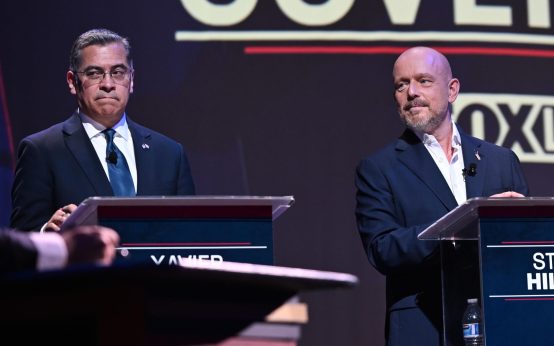 Becerra and Hilton Clash in California Gubernatorial Debate
  California Voters to Decide on $7.5 Billion State Research Fund
 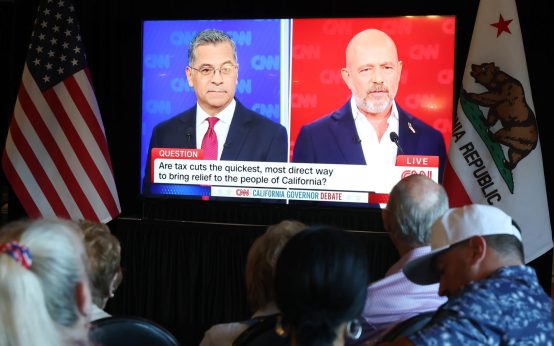 Highlights from the California Gubernatorial Debate: Becerra vs. Hilton
 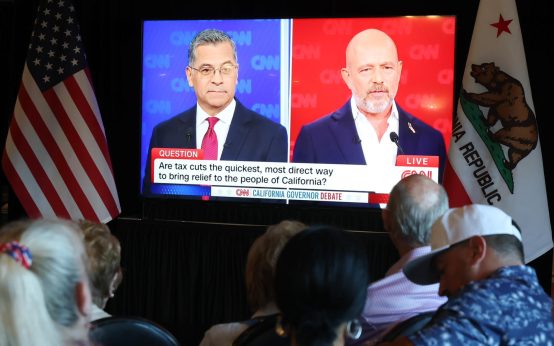 Becerra vs. Hilton: The Debate and Key Issues in the California Governor Race
  Senate Confirms New Labor Secretary
  Hegseth’s Ambitious Military Initiatives to Reshape Warfare