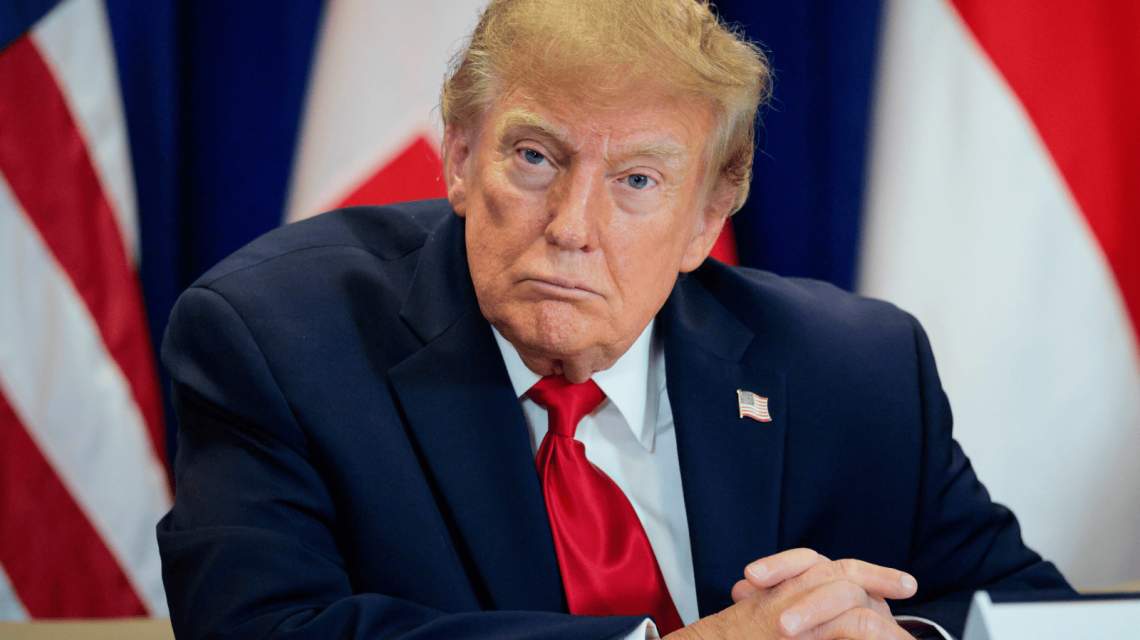
One month before the upcoming midterm elections, President Donald Trump faces low approval ratings across 39 states and in all major battlegrounds, according to new polling data. This information, derived from Civiqs’ continuous online tracker, gathers responses from 133,869 registered voters between January 20, 2025, and October 2, 2026. A Newsweek analysis compares these state ratings with those from Trump’s second term’s commencement, calculating net approval as approval minus disapproval.
Nationally, Trump’s approval rating stands at 34%, while 60% disapprove, resulting in a net approval rating of -26.
Key Battlegrounds
In key battleground states, Trump faces negative ratings. Georgia leads with -25, followed by Michigan and Nevada at -24, and Pennsylvania at -22. Kentucky exhibits the largest drop since January 2025, plummeting 33 points from +23 to -10. Meanwhile, Wyoming remains Trump’s strongest state, holding at +18, with North Dakota trailing at +15.
Younger voters, independents, and postgraduates represent some of the most significant opposition to Trump.
Why It Matters
Presidential approval isn’t a direct election forecast but indicates the political climate in which candidates operate. With Congressional control at stake on November 3, Trump’s negative ratings might influence Republican turnout and campaign strategies in competitive states.
Trump’s Positive States
Trump retains positive ratings mainly in Republican strongholds. Wyoming leads at +18, followed by North Dakota at +15 and West Virginia at +12. Additional positive ratings include Arkansas at +9, Idaho at +8, Alabama at +6, South Dakota at +5, Oklahoma at +4, Kansas at +3, and Utah at +2. Montana is the only tied state, with a 46% approval and disapproval split.
Nevertheless, his standing has weakened in many of these positive areas. For instance, Wyoming’s rating fell from +47 to +18, North Dakota from +34 to +15, and West Virginia from +35 to +12.
Demographic Insights
National demographic data sheds light on state-level perspectives. Among voters aged 18 to 34, only 20% approve of Trump’s performance, while 73% disapprove, creating a substantial 53-point gap. For those aged 35 to 49, the approval stands at 26%, against 66% disapproval. Older voters show less negativity, though Trump remains underwater. Among 50 to 64-year-olds, 44% approve, and 51% disapprove. Among those 65 and older, 44% approve while 52% disapprove.
Independents disapprove by 65% to 27%, whereas Republicans show strong support at 78% approval versus 12% disapproval. Female voters disapprove by 65% to 29%, compared to a narrower 54-to-39 split among male voters.
Educational attainment also highlights divisions. Trump’s approval among postgraduates is 24%, 32% among college graduates, and 37% among non-college graduates, though disapproval exceeds approval in all categories.
Disapproval among Black voters is stark at 90% to 7%, Hispanic voters disapprove by 70% to 26%, and white voters by 52% to 41%.
Battleground Challenges
Trump’s battleground map looks challenging as the midterms approach. His net ratings include: Arizona at -18, Florida at -16, Georgia at -25, Michigan at -24, Nevada at -24, North Carolina at -15, Ohio at -17, Pennsylvania at -22, and Wisconsin at -18.
Notably, several of these states reported positive or neutral ratings at the onset of Trump’s term. For example, Florida shifted from +9 to -16, Ohio from +8 to -17, and Nevada from 0 to -24. North Carolina moved from 0 to -15. These figures do not directly predict congressional candidate support but underscore the political environment Republicans face.
Declining Approval
Since January 20, 2025, Trump’s net approval has decreased in every state. Key declines include Kentucky’s drop from +23 to -10, Wyoming from +47 to +18, Oklahoma from +31 to +4, Tennessee from +25 to -2, Texas from +6 to -21, Idaho from +34 to +8, Alaska from +9 to -6, Ohio from +8 to -17, Florida from +9 to -16, Montana from +25 to 0, and Nevada from 0 to -24.
Many most significant declines occurred in states initially showing favorable ratings for Trump, not in Democratic territories where his disapproval was already high.
Strong Disapproval in Blue States
Trump’s weakest ratings persist in Democratic areas. Hawaii reports the lowest net approval at -58, followed by Maryland at -52 and Vermont at -51. California and Massachusetts stand at -47, Connecticut at -46, Washington at -42, New York at -39, and Oregon and Rhode Island both at -38. Movements in these states are less dramatic due to Trump’s already low starting approval levels.
White House Response
The White House has minimized the importance of polling, emphasizing Trump’s 2024 election win as a true measure of support. Spokesperson Davis Ingle highlights the nearly 80 million voters who supported Trump as evidence of the administration’s mandate. Ingle states that Trump remains focused on job creation, reducing inflation, and enhancing housing affordability.
The White House claims significant progress so far and promises continued impact as Trump’s agenda unfolds. Newsweek reached out to the White House for additional comments.
 Tucker Carlson’s Comments on Britain’s WWII Decision Ignite Controversy
  Trump’s White House Ballroom Project Faces Challenges and Rising Costs
  The Role of JD Vance in Addressing Working-Class Concerns
  Trump Advocates for Expanded Use of Capital Punishment Amid Execution Controversy
  Investigation into Thomas Crooks’ Assassination Attempt
  Supreme Court Allows Trump Administration to Continue Third-Country Deportation Policy