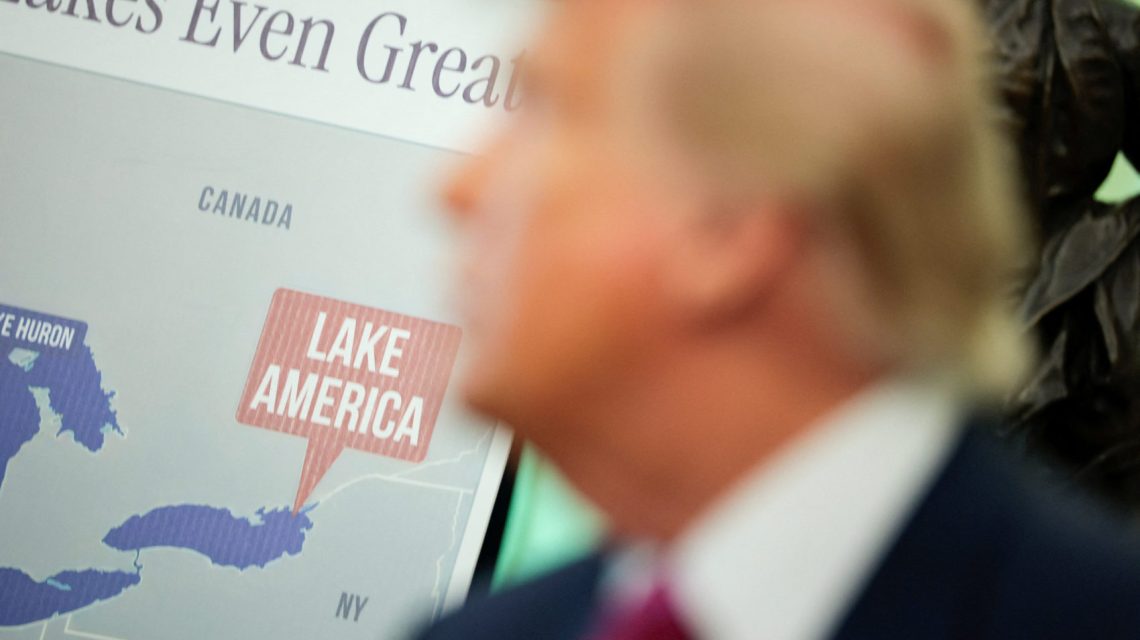
The evolving political scene presents numerous challenges as the U.S. navigates an eventful election cycle. Notably, in the early days of this period, significant events such as unrest with Iran or major domestic changes like threats to landmarks hadn’t yet surfaced. Meanwhile, artificial intelligence’s portrayal in politics and the rise of democratic socialism remained marginal.
President Donald Trump’s presence has consistently shaped the national dialogue over his decade-long political journey. As the upcoming midterms of his presidency loom, volatility defines the landscape. Trump frequently fuels this unpredictability.
Mike Johnson, House Speaker, expressed that some factors are beyond control, highlighting uncertainty’s potential impact on Republican election prospects.
The political map is in flux, exemplified by Texas, California, and Florida adjusting congressional districts. Missouri’s Republican attorney general is contesting a court ruling that obstructed a Trump-endorsed map.
Economic impacts from tariffs on Canada may escalate as elections near. Trump’s move to restrict mail voting adds unpredictability as ballots circulate, notably affecting states like North Carolina, key in Senate races.
Financially, Trump commands over $400 million, which might influence the election trajectory. His economic gains in office are unparalleled, with a $1.2 billion intake from crypto businesses, drawing attention to legislative debates on cryptocurrency regulation.
Senator Angela Alsobrooks voiced concerns over the president’s enrichment, insisting on stricter provisions in upcoming legislation.
Agreement on Trump’s Role
Despite varied issues, both parties concur that Trump’s role remains central. Former White House Secretary Ari Fleischer ranked Trump as the primary issue. Meanwhile, Rep. Suzan DelBene cited voter frustrations from Trump’s administration as a motivator for candidate selection.
Historically, midterms challenge a sitting president’s party, with past elections noting substantial seat changes. Current redistricting hampers such shifts, yet public discontent with Trump’s policies, like the economy and immigration, remains significant.
Democratic Strategies
Democrats aim to reclaim the House and potentially the Senate, targeting key states. They focus on governorships in places like Georgia and Nevada, currently under Republican control.
Gov. Andy Beshear expressed optimism over Democrats gaining seats, despite potential hurdles in areas like Arizona.
Republican efforts to associate Democrats with socialism face challenge from candidates pushing centrist narratives. Beshear countered GOP accusations, pointing to Trump’s government equity actions as closer to socialism.
Voting Concerns
Concerns persist about federal election influence, as expressed by Republican leaders like Wyoming’s Gov. Mark Gordon and Oklahoma’s Gov. Kevin Stitt, who both advocate for state-controlled election processes.
Democrats, especially in pivotal states, stress the election’s broader implications. Nevada’s Attorney General Aaron Ford emphasized its significance for future national contests.
 The Trump Team’s Challenge to the Military Leadership
  Maryland First State to Restrict Electronic Pricing in Grocery Stores
  Activists Push for Nationwide Ban on Child Marriage in the U.S.
  Democratic Hopes and Historical Warnings in 2026 Senate Race
  Republicans Face Challenges Amidst Cost of Living Concerns
  A Different Kind of Fall for Congress This Year