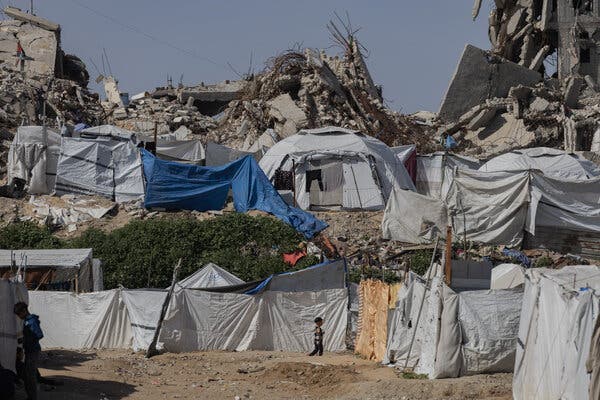
President Trump’s approach to ending the war with Iran involves postponing the most challenging issues. This strategy has shown mixed outcomes in similar situations, such as the Gaza cease-fire agreements.
Previous truce negotiations in Gaza, mediated by Trump last year, aimed for a cease-fire between Israel and Hamas. The plan included a Phase 2 where Hamas would disarm, and Israel would support Gaza’s reconstruction. However, progress stalled, highlighting potential risks for the Iran talks.
The U.S. proposal emphasizes lifting Iran’s blockade of the Strait of Hormuz. This strait, crucial for global oil and gas shipments, has been under blockade since a U.S. and Israeli attack on Iran in February, which led to a rise in energy prices and pressure on Trump domestically.
Discussions around key issues like Iran’s nuclear program, missile stockpiles, and support for militias will be deferred to a later date.
Michael Koplow of the Israel Policy Forum suggests a phased negotiation can be advantageous. However, in Trump’s case, it might serve as a way to declare success without resolving fundamental problems.
The ongoing conflict has strengthened Iran’s position, possibly making its leaders reluctant to compromise in future discussions.
 Support for White Nationalism Among Young White Males in the U.S.
  Exhaustion Among Americans in Trump’s Second Term
  The Inhumanity, Cost, and Bias of the Death Penalty
  Trump’s Promise of $5,000 for Every American Adult
  Australia Investigates FlyDubai Incident Amid Security Concerns
 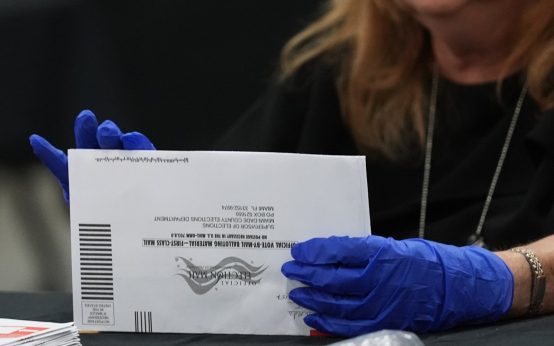 Trump Encourages Mail Voting Despite Prior Criticisms