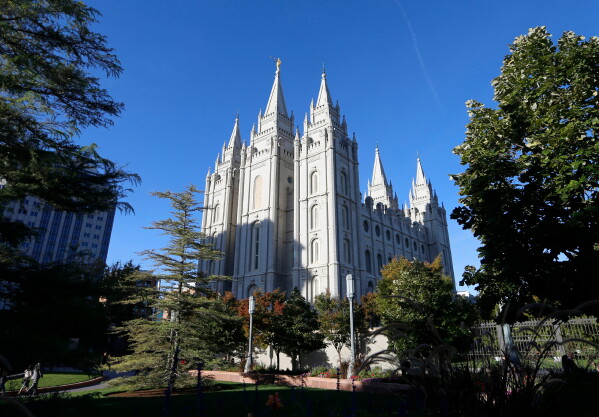
Catholic bishops from across the United States plan to gather on Thursday to consecrate the nation to the Sacred Heart of Jesus. This event marks the 250th anniversary of the country and will take place during the bishops’ spring assembly meeting in Orlando, Florida. The service draws from a longstanding Catholic tradition centered on Jesus’ sacrificial love for humanity. Many Catholics also dedicate their homes and businesses in similar ways.
However, the devotion to the Sacred Heart is not without controversy. It has been linked to political implications, sometimes associated with Catholic nationalism or proposed as a counter to state idolatry. The U.S. Conference of Catholic Bishops aims to use this consecration to inspire dedication to God, country, and aiding others. Archbishop Alexander Sample of Portland, Oregon, who leads the bishops’ committee on religious liberty, expressed this sentiment. He noted, “As we reflect with gratitude on the blessings God has bestowed on our country, our devotion to the Sacred Heart demands that we consider how we might foster truth, justice, and charity in American life.”
Global Traditions and Political Controversy
This will be the first instance of U.S. Catholic leaders holding such a service. However, other countries, particularly in Europe and Latin America, have previously dedicated their lands to the Sacred Heart. This practice started in Ecuador in 1874, often involving political leaders in nations with significant Catholic populations. Pope Leo XIII, for example, consecrated the entire world to the Sacred Heart in 1899, underlining its global influence. Successive Popes, including the late Pope Francis, have advocated for this devotion as a source of service and justice.
Despite its spiritual foundation, the devotion has sparked political debate. The Basilica of Sacre-Coeur in Paris symbolizes Catholic defiance against secularism. A recent French film, “Sacre Coeur,” depicts a 17th-century nun’s visions which fueled modern devotion. Although the film attracted large audiences, some viewed it as promoting a Christian nationalist agenda. The film began showing in American theaters recently.
Additionally, a Catholic organization launched billboards promoting June as the Sacred Heart month. James Fishback, a Republican candidate for Florida governor, has dedicated his campaign to the Sacred Heart. Such expressions are often politically charged.
Historical Context and Modern Unity
The phrase “Christ is king” has appeared in political arenas in the U.S., sometimes linked to Christian nationalism or inappropriate claims. Catholic scholar Robert Fastiggi researched the devotion’s history, viewing the bishops’ consecration as unifying during divisive times. He argues it discourages state idolization, promoting Jesus as “a king with a heart.”
Fastiggi highlights the polarization in current political discourse. “There’s such polarization or infelicitous language even coming from the president of the United States, threatening violence and annihilation on a whole civilization,” he said. “Pope Leo was correct in saying this is unacceptable.” According to Fastiggi, consecrating to the Sacred Heart serves as “a reminder that we’re answerable to the law of God and of love.”
The Sacred Heart’s Historical and Spiritual Roots
The devotion to the Sacred Heart dates back to ancient times, but its modern form began with a French nun, St. Margaret Mary Alacoque, in the 17th century. She claimed Jesus revealed mysteries of His love and the “inexplicable secrets of His Sacred Heart” to her. This inspired various religious orders and organizations to advocate for this devotion. Many schools and parishes, named Sacred Heart, have emerged.
In the 19th century, Blessed Marie of the Divine Heart, a German nun, urged Pope Leo XIII to consecrate the world to the Sacred Heart. She predicted his recovery from a severe illness, which he later reported in an encyclical. Today, images of Jesus with His Sacred Heart exposed, along with flames, a cross, and a crown of thorns, are common in Catholic homes, businesses, and churches. The devotion often aligns with the veneration of the Immaculate Heart of Mary.
Associated Press religion coverage is supported by The Conversation US, with contributions from Lilly Endowment Inc. The AP maintains sole responsibility for this content.
 California Bans Child Marriage, Protecting Minors
  U.S. States Extend Gas Tax Waivers Amid Rising Fuel Costs Due to Iran Conflict
  Historical Events in Chicago on October 1st
  Patrick McEnroe Advocates for Collegiate Athletic Reform
  Push for Reparations Faces Challenges and Calls for Strict Eligibility
  Texas Man Arrested for Threatening State Capitol Attack