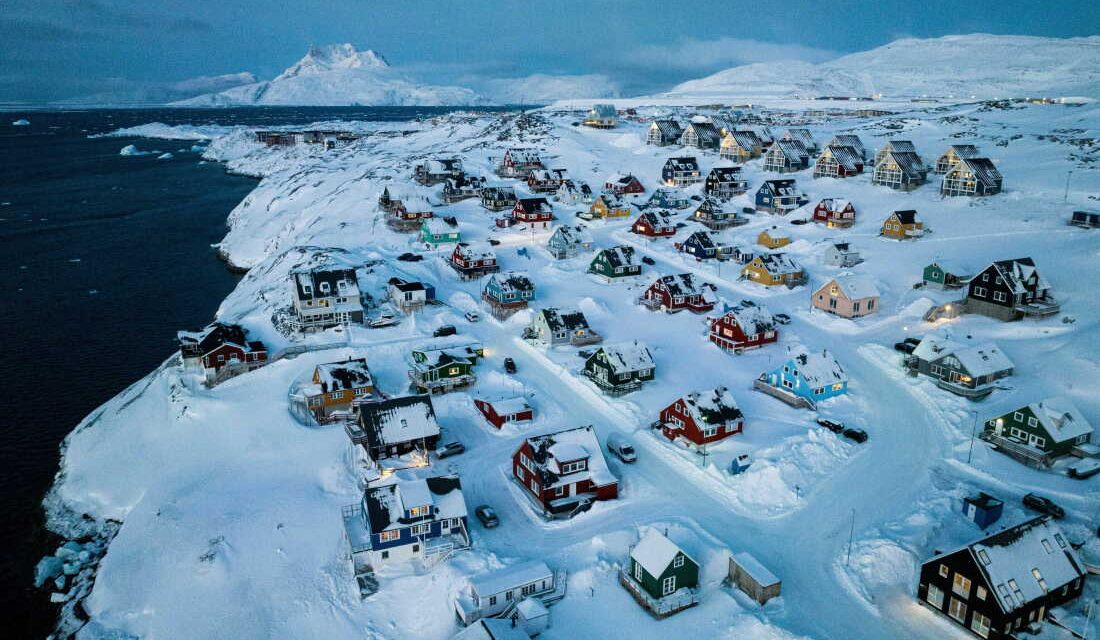
On March 7, 2025, a significant announcement shook international relations. President Trump revealed that the U.S. had reached an agreement with Denmark to enhance the American military presence in Greenland. This decision followed months of tension and threats to take the island by force from Denmark, a NATO ally. Notably, this deal allows Denmark to maintain sovereignty over the Arctic territory.
In a statement, Trump highlighted the agreement’s benefits. He claimed it grants the U.S. permanent control over security in Greenland, addressing many of America’s concerns. Plans are set to develop a substantial military footprint in the resource-rich Danish territory swiftly.
This agreement comes after intensive, discreet negotiations among U.S., Greenland, and Danish officials, aiming to address Trump’s security issues regarding Greenland’s approximately 56,000 residents. While Trump previously focused on international conflicts, the Greenland deal serves as a strategic foreign policy achievement as midterm elections approach.
The Iran conflict that erupted six months ago has shifted the political landscape, challenging Trump’s earlier commitments to avoid foreign wars. This has put pressure on Republicans who hold slim majorities in Congress.
Next week, the agreement is set to be signed during the United Nations General Assembly by representatives from the U.S., Denmark, and Greenland. However, Denmark and Greenland’s parliaments must still approve it before enforcement. Denmark’s Prime Minister, Mette Frederiksen, expressed that the agreement respects the sovereignty and self-determination of both Denmark and Greenland. Greenland’s Prime Minister, Jens-Frederik Nielsen, also supported the deal as it considers Greenland’s interests.
Resistance and Acknowledgment of Sovereignty
Trump had previously pushed for the purchase of Greenland, asserting its importance to U.S. security, but did not rule out using force, drawing criticism. Both Denmark and Greenland firmly declared that Greenland was not for sale. The proposal also faced strong opposition from Russia and much of Europe. However, the recent agreement marks an apparent end to what Denmark viewed as a severe crisis.
The U.S. agreement with Denmark prohibits any non-NATO military base in Greenland and restricts adversarial investments, limiting China’s and Russia’s military presence, according to a State Department official. Secretary of State Marco Rubio hailed the agreement as a historic victory, reinforcing North America’s strategic defense region.
Historical and Strategic Importance
The U.S. has maintained a military presence in Greenland for decades, particularly notable during the Cold War. It currently operates the Pituffik Space Base in northwestern Greenland, which has strategic significance for missile defense and space operations.
Greenland’s strategic position off Canada’s northeastern coast within the Arctic Circle has made it crucial for North American defense since World War II. The U.S. initially occupied Greenland to prevent Nazi control and secure North Atlantic shipping routes.
Despite Trump’s confrontational rhetoric, Danish officials were open to increasing U.S. military and commercial activity in Greenland. Nevertheless, Trump’s aggressive assertions about acquiring Greenland strained the NATO alliance and European relations, according to Imran Bayoumi of the Atlantic Council. He emphasized the lasting damage to the U.S. image in Europe due to these actions.
 The Threat of Melting Glaciers: A Call to Action
  Police Discover Ancient Roman Artifacts Off Sardinian Coast
  Urgent Need for Action in East Africa’s Food Crisis
  Suspected Plague Death in Siberia Sparks Health Measures
  G7 Nations Agree to Release 100 Million Barrels of Oil Amid Fuel Price Surge
  Co-Pilot Attempts Hijack on Flight to Tel Aviv