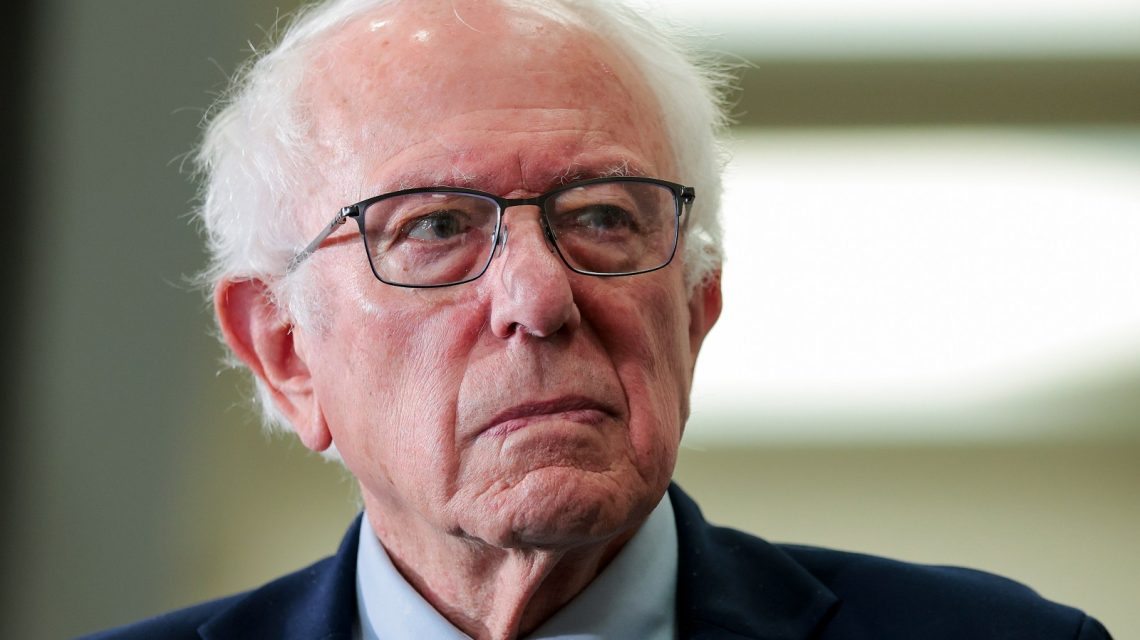
A legislative proposal in the U.S. Congress aims to transition the country to a 32-hour standard workweek. Proposed by independent Senator Bernie Sanders of Vermont and Democratic Representative Mark Takano of California, the Thirty-Two Hour Workweek Act seeks to adapt existing federal overtime laws. The goal is for workers to benefit from productivity gains associated with artificial intelligence and automation.
The bill suggests lowering the threshold for overtime pay eligibility. Currently set at 40 hours per week, the new plan would reduce this gradually to 32 hours. Specifically, overtime eligibility would decrease to 38 hours in the first year, 36 in the second, and culminate at 32 hours in the third year. Employers would incur higher costs for requiring workers to exceed these standard hours, as the federal overtime law would extend greater protections.
Functioning of a 32-Hour Week
Under existing federal law, overtime pay is mandated for qualifying employees working over 40 hours a week, as enforced by the Department of Labor. Reducing this requirement to 32 hours would entitle employees working 40 hours to eight hours of overtime pay. This change wouldn’t restrict employers from requesting longer work hours but would ensure they compensate adequately.
The proposal would also introduce overtime protections for daily working hours — providing time-and-a-half for over eight hours worked in a day and double pay for over twelve hours worked. Importantly, the act prohibits employers from decreasing employee pay or benefits due to reduced standard working hours.
The bill doesn’t necessitate a specific arrangement of working days. While it allows 32 hours to be spread over four days, it doesn’t prescribe which days must be worked. It also doesn’t apply uniformly to all U.S. workers, due to existing exemptions in federal overtime law for specific categories, such as executive and professional employees.
Push for a Four-Day Workweek
The concept has circulated in Congress for several years. Representative Takano introduced similar bills in 2021 and 2023, and Senator Sanders followed with related Senate legislation in 2024. That year, the Senate Health, Education, Labor, and Pensions Committee examined the potential shift.
The Department of Labor highlights that the Fair Labor Standards Act initially set the overtime threshold at 44 hours in 1938, which later reduced to the current 40 hours.
State and local experiments have also been conducted, such as Maryland’s proposed voluntary four-day workweek pilot, which considered tax incentives for employers. Although this initiative was withdrawn, San Juan County in Washington implemented a permanent 32-hour week after a successful pilot. Benefits observed included reduced sick leave usage and increased job applications, though challenges in scheduling and service coverage annotated the model.
An international perspective comes from a 2022 trial in the UK, where 61 organizations reduced working hours by 20%, without diminishing salaries. University of Cambridge researchers noted a 65% decrease in sick days and a 57% reduction in staff departures during the trial period. Despite positive outcomes, the experiment remained voluntary and did not lead to legislative changes.
U.S. Perspective
Proponents argue that technological advancements allow efficient production with less human labor. They assert workers should enjoy productivity benefits through more leisure time. Senator Sanders emphasized AI and automation should better workers’ lives, not solely boost corporate profits.
In contrast, opponents caution that reducing work hours without cutting pay might elevate labor costs. This was addressed during a 2024 Senate hearing where concerns were raised about potential price increases, employment reductions, and offshoring as employer responses.
 Sen. Cotton Opposes Permanent Daylight Saving Time
  Steve Hilton’s Latino Outreach and Gubernatorial Ambitions
  The Need for Reform in Presidential Nominations
  Controversy Surrounds Performances at Gillette Stadium
  Celebrity Controversies Over Political Activism and Speech
  Trump Pushes for Permanent Daylight Saving Time, Sharing Senator’s Contact Information